Man Repeatedly Leaves Fiancée Waiting While He Chats With Strangers, Ends Up Losing The Relationship

Twenty-nine-year-old Ethan believed he had found the perfect partner when he proposed to his fiancée, Grace, after four years of dating. Their families celebrated the engagement, wedding plans were underway, and everyone assumed they would soon begin a happy married life together. Grace was known for being patient, supportive, and understanding, often adjusting her own schedule to accommodate Ethan’s busy work commitments. She never complained when he had to stay late at the office or cancel plans because of unexpected meetings. However, one habit of Ethan’s slowly began creating distance between them. Whenever they went out together, he constantly became distracted by conversations with complete strangers, leaving Grace standing alone for long periods while he chatted as though she wasn’t even there.
At first, Grace tried to laugh it off. Whether they were at restaurants, shopping malls, airports, or family gatherings, Ethan seemed unable to resist striking up conversations with random people. A quick greeting would often turn into a twenty-minute discussion about sports, travel, business, or whatever topic happened to come up. Grace would wait patiently beside him at first, but eventually she found herself wandering around stores alone or sitting quietly on nearby benches while Ethan continued talking. She gently explained several times that it wasn’t the conversations themselves that bothered her—it was being abandoned without warning while he gave complete strangers more attention than the woman he planned to marry. Ethan apologized each time but insisted she was overreacting because he was simply being friendly.
Advertisement
As the months passed, the problem became impossible to ignore. Important dinners started late because Ethan was chatting with people in parking lots. During a weekend vacation, Grace spent nearly forty minutes waiting outside a museum while Ethan became absorbed in a conversation with another tourist. Even during wedding planning appointments, he occasionally stopped to talk with vendors or people he had just met, forcing Grace to handle important decisions by herself. Friends began noticing the pattern and quietly asked Grace if everything was okay. Although embarrassed, she defended Ethan, hoping he would eventually realize how hurtful his behavior had become. Deep down, however, she felt increasingly lonely despite being in a committed relationship.

Advertisement
The breaking point came on Grace’s birthday. Ethan had promised to take her to an elegant restaurant before surprising her with tickets to a concert she had wanted to attend for years. On the way inside the restaurant, he encountered a group of travelers asking for local recommendations. Instead of briefly helping them, he spent nearly half an hour laughing and exchanging stories while Grace waited alone near the entrance in formal clothes, watching other couples walk inside together. By the time Ethan returned, their dinner reservation had been canceled, and they were running too late to enjoy the evening as planned. Grace quietly told him she was exhausted from constantly competing with strangers for his attention. Ethan dismissed her frustration once again, saying she should appreciate that he was a sociable person.
A few days later, Grace asked Ethan to have one final conversation about the issue. She explained that a successful marriage required making each other feel valued, respected, and emotionally present. She wasn’t asking him to stop being friendly—she simply wanted him to recognize when his conversations crossed the line into neglecting the person standing beside him. Ethan refused to admit there was a serious problem and argued that anyone who loved him should accept his personality exactly as it was. Hearing those words made Grace realize that he wasn’t willing to change or even acknowledge the pain his actions caused. With tears in her eyes, she ended their engagement, saying she deserved a partner who made her feel like his priority instead of an afterthought.
The breakup shocked Ethan more than he expected. Friends and family who had witnessed his behavior admitted they understood why Grace had walked away. Looking back, Ethan finally recognized that relationships are rarely destroyed by one dramatic mistake; they often end because of repeated moments in which one partner feels unseen and unimportant. By the time he understood that his habit of leaving Grace waiting had slowly eroded her trust and happiness, it was too late to repair the damage. Grace eventually moved forward with her life, while Ethan was left with an unforgettable lesson: kindness toward strangers is admirable, but it should never come at the expense of the person who loves you most.
Read Story…
I’m About to Break Up with my Fiancé due to his Extremely Extroverted Behaviour
I have been with my fiancé for three and a half years. We got engaged after one year of dating and have been living together for about two years now.
On our first dates, I could see how much he loved talking to people. I mean random people. We would be somewhere, like in a shopping mall, and he would start talking to a random person about anything. Or we would be in a restaurant having dinner and he would start talking to the people sitting at the table next to us.
Now, I’m not a fan of talking to strangers, so I didn’t really like this behavior of his. But I sometimes joined the conversation a bit or stayed on my phone waiting for it to end. The problem is that he started doing it more and more. Sometimes I could see the person he was talking to was trying to end the conversation, but he kept on talking. It started feeling a bit off…
One day, we had a really bad situation with some girls in a restaurant. He started talking to them – they were sitting at the table next to us – and they started saying some very embarrassing and awkward things to us. We just wanted to be left alone at that point, but they wouldn’t stop talking.
Later that day, I finally gathered the courage to tell him that I didn’t really like this talkative behavior, especially because sometimes it made me feel completely put aside and ignored while he was talking to a total stranger. He apologized, but his behavior didn’t really change. Then I started realizing a few things… Every time we were in public, he wasn’t fully paying attention to me. He was always looking around, trying to find someone to start a conversation with.
At first, I thought he was just extroverted, but there was always this voice in my head telling me something was very wrong with this behavior.
We traveled abroad for my birthday and we were at this party, drinking and having fun. Out of the blue, he started talking to this guy and completely forgot about me for about 10 minutes. When we went home, I talked to him about it and we had a really bad argument. That was the first time I thought about breaking up with him because of that. But in the end, we talked and he apologized and said he was going to start controlling himself more.
His behavior changed for the first few weeks, but then he started talking to random people again. The only difference was that he started apologizing to me right after talking to a stranger.
About three weeks ago, we went to a restaurant and right before finding a table to sit at, he started talking to this guy who was waiting for a takeaway. I was just so tired of it by then, so I found a table myself and sat there and waited for him to finish talking. After some minutes, he came to our table and apologized for talking to that guy, but I didn’t even say anything. I was just like, “What’s the point?”
The next day, I arrived home from work exhausted and just wanted to sleep, but he insisted we should check out this apartment – we were looking for places to buy – and told me it was going to be quick. I ended up going, and after the inspection, he was driving us home and saw his friend’s car and started honking and stopped the car. I was boiling at that moment when he left the car to talk to this guy for about 10 minutes while I was there in the car waiting. He knew I was tired after working for 10 hours, but he still couldn’t resist talking to this person. Again, he came back to the car, apologetic, and I just said I was not in the mood for his apologies and just wanted to go home to sleep. He got quiet and drove home.
We talked about it later and he apologized again. The thing is: he apologizes but doesn’t stop. And it hurts me so much because that really makes me feel like literally any person is more interesting than me in his eyes.
The last straw was when we were in the supermarket and he started talking to these guys. One more time, I was there, put aside on my phone, waiting for him to finish his conversation. At one point, he mentioned to the guys something along the lines of him being the “girls’ chosen one” – I’m not going to say exactly what he said because that would break his anonymity. I was there, next to him, hearing him say something like that to a bunch of guys he had just met.
In that moment, something snapped in me. Something made me see that I had indeed become invisible to him when he was talking to random people. Something made me see that, for him, strangers’ attention was more important than my attention.
I didn’t say anything in the moment, but I told him once we were home and he was furious, saying “he was tired of me controlling him.” I never meant to control him. I just expected more from him as my partner – more respect, more attention.
Now, we are sleeping in separate bedrooms and I’m trying to find another place to go. He is being extremely apologetic again, but I’m just tired of that. Just tired of forgiving him so he can do this all over again. I really think I deserve something better.
A Happy Engagement That Seemed Destined for Forever
Thirty-year-old Ethan believed he had found the woman he wanted to spend the rest of his life with when he proposed to Grace after nearly four years of dating. Their engagement was celebrated by both families, and wedding preparations quickly became the center of their lives. Friends admired how calm and loving Grace was, while Ethan was known for his outgoing personality and ability to make friends wherever he went.

Advertisement
Grace loved Ethan’s confidence at first. She admired how easily he could start conversations with strangers and make people smile. Whether they were at a coffee shop, grocery store, or airport, Ethan always found someone to chat with. She thought it was one of the qualities that made him unique.

Advertisement
Over time, however, Grace noticed something troubling. Those quick conversations rarely stayed brief. A simple greeting often turned into a twenty-minute discussion, leaving her standing alone with nothing to do but wait. At first, she laughed about it, assuming it was harmless.
The pattern slowly became more frustrating. Whenever they went shopping, Ethan would stop to speak with strangers while Grace wandered through stores by herself. Sometimes she would finish buying everything they needed before Ethan had even ended his conversation.
One Saturday afternoon, they planned to have lunch at Grace’s favorite restaurant. As they approached the entrance, Ethan stopped to chat with another customer about sports. Grace waited patiently outside, expecting the conversation to end quickly. Instead, nearly half an hour passed.
By the time Ethan finally walked inside, their reservation had been given away. Grace tried to hide her disappointment, but Ethan simply apologized with a smile and suggested another restaurant. To him, it seemed like a minor inconvenience.
Grace gently explained that the real issue wasn’t losing the reservation. It was feeling ignored whenever they were together. She wanted Ethan to understand how lonely she felt while watching him give complete strangers more attention than the woman he planned to marry.
Ethan listened but didn’t truly hear her. He insisted he was simply being friendly and accused Grace of being overly sensitive. He promised to “try harder,” yet he never changed his behavior.
Months passed, and similar situations kept happening. During family gatherings, Ethan often disappeared into long conversations with people he had just met. Grace spent more and more time sitting alone, pretending she didn’t mind.
Even their closest friends began noticing the problem. Some quietly asked Grace whether everything was okay between them. She always defended Ethan, saying he had a kind heart and didn’t mean to hurt anyone.
Wedding planning became increasingly stressful. During meetings with photographers, caterers, and venue managers, Ethan frequently became distracted by unrelated conversations. Grace ended up making important decisions on her own.
She started wondering what married life would look like if things continued this way. Would she spend every vacation, anniversary, and family celebration waiting for Ethan to finish talking to strangers?
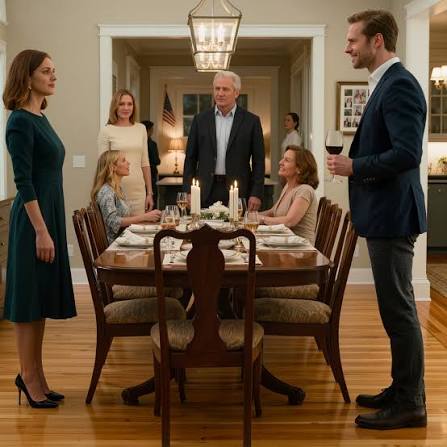
One evening, Grace planned a surprise dinner to celebrate Ethan’s promotion at work. She decorated the table, prepared his favorite meal, and waited excitedly for him to arrive. Ethan stopped at a gas station on the way home and became involved in a long conversation with another customer.
He arrived nearly an hour late. The food had gone cold, and the candles had burned out. Grace smiled politely, but inside she felt heartbroken. Ethan apologized briefly before talking about the interesting stranger he had met.
Grace realized this wasn’t about one missed dinner. It was about constantly feeling like she came second. She began questioning whether Ethan truly understood the importance of making his partner feel valued.
A few weeks later, the couple attended a friend’s wedding. During the reception, Ethan spent much of the evening chatting with guests he had never met before. Grace danced alone, ate dinner alone, and watched other couples enjoying the celebration together.
Driving home that night, Grace remained unusually quiet. Ethan asked what was wrong, genuinely confused. She calmly explained that she had spent most of the evening by herself despite arriving with her fiancé.
Instead of reflecting on her feelings, Ethan became defensive. He argued that being sociable was simply part of his personality and that Grace should appreciate how friendly he was. His response hurt her even more than his actions.
Grace decided to give him one final opportunity to understand. She carefully explained that she wasn’t asking him to stop speaking to people. She simply wanted him to recognize when a conversation was becoming disrespectful to the person waiting beside him.
Ethan nodded, but a few days later history repeated itself. During a visit to a local market, he once again disappeared into a lengthy conversation, leaving Grace standing alone with shopping bags in her hands.
Something changed inside Grace that afternoon. She realized she was no longer angry. Instead, she felt emotionally exhausted. She understood that love alone couldn’t fix a relationship when one person refused to acknowledge the other’s feelings.
That evening, Grace asked Ethan to sit down for a serious conversation. She spoke honestly but calmly, explaining that she no longer felt like a priority in his life. She said she needed a partner who chose her first, especially in ordinary everyday moments.
Ethan still believed the issue was being exaggerated. He insisted that ending an engagement over casual conversations with strangers made no sense. Grace quietly replied that it wasn’t about strangers—it was about years of feeling invisible.
After a long silence, Grace removed her engagement ring and placed it on the table. Tears filled both of their eyes. Ethan finally realized how serious the situation had become, but by then her decision had already been made.
The breakup shocked their families and friends. Many who had witnessed Ethan’s behavior admitted they understood Grace’s perspective. Ethan spent months reflecting on the relationship and recognized that small habits, repeated over time, could slowly destroy even the strongest love.
Grace eventually found peace and moved forward with her life, while Ethan carried an unforgettable lesson into the future. He learned that kindness toward strangers is admirable, but a lasting relationship depends on making the person you love feel seen, respected, and valued every single day. Sometimes, the smallest moments of attention matter far more than the longest conversations with people you’ll never meet again.