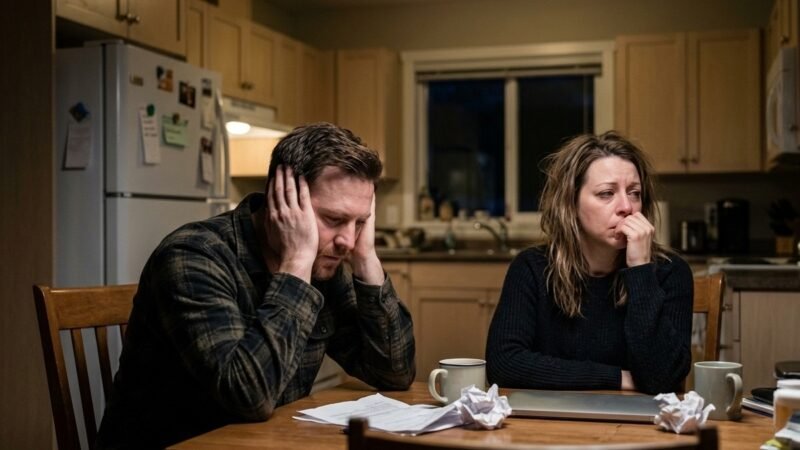
Man Wants To Sue Ex-Wife And Get Back Years Of Child-Support Money For Child That Wasn’t His, Friends Try To Talk Him Out

Forty-one-year-old David believed he had spent much of his adult life doing what he thought was right for his family. When he married Rachel, she already had a young son, whom David quickly accepted as part of his life. Although the boy was not biologically his, David treated him like his own child and eventually became deeply involved in raising him. He helped with school expenses, medical costs, clothing, activities, and everyday needs. After the marriage ended, David continued making child-support payments because he believed the child was his responsibility and because he had never questioned the child’s biological connection to him. Years later, however, David received information that completely changed his understanding of the past.
The discovery came after David was contacted about a family medical issue. During the conversation, someone mentioned information about the child’s biological father that David had never heard before. At first, he dismissed it as a misunderstanding, but the more questions he asked, the more suspicious he became. Eventually, David learned that the child was not biologically his. He confronted Rachel, expecting her to deny the claim, but she admitted that she had known the truth for years. According to David, Rachel had never told him because she was afraid he would leave and stop supporting the child. The revelation left David devastated. He felt that his entire understanding of his marriage and fatherhood had been built around information that had been deliberately hidden from him.
David’s anger became even stronger when he calculated how much money he had paid over the years. Between formal child support and additional expenses, he estimated that he had spent tens of thousands of dollars supporting the child. He began thinking about whether he could recover the money through legal action. In his mind, the payments had been made under a belief that he was the child’s father, and he felt that Rachel had knowingly allowed him to continue paying despite knowing the truth. He started researching whether he could sue his former wife and recover at least some of the money. The more he read about the situation, the more convinced he became that he had been financially and emotionally deceived.
David’s friends, however, were concerned about where his anger was taking him. They understood why he felt betrayed, but several warned him that pursuing the money might create consequences he was not prepared for. One friend reminded him that the child had never been responsible for what happened between the adults. David agreed with that point, but he said that did not mean he should simply accept years of financial loss without seeking accountability. He felt that Rachel had made a deliberate choice to keep the truth from him, and he wanted her to face consequences for that decision.
Another friend took a different approach and asked David to think about his relationship with the child. David had raised him for years and had been the only father figure he knew for much of his childhood. Even though the biological truth had changed, the emotional relationship had not disappeared. His friend worried that a lawsuit could make the child feel as though the years of love and support had been reduced to a financial transaction. David admitted that this was one of the hardest parts of the situation. He was angry with Rachel, but he still cared deeply about the child and did not want him to believe that he had never been loved.
Advertisement
David began struggling with conflicting emotions. Some days, he felt that he had been robbed of important years and wanted nothing more than to recover the money he had paid. Other days, he remembered birthdays, school events, family vacations, and countless ordinary moments when he had genuinely wanted to be there for the child. He wondered whether demanding the money back would make him feel better or simply create another painful chapter. He also questioned whether the child-support payments had truly been wasted if they had helped provide the child with a stable upbringing.
Despite his uncertainty, David arranged a consultation with a lawyer to understand his options. He learned that situations involving paternity, child support, and mistaken parentage can be legally complicated and that the answer could depend heavily on local law, court orders, and what David had known or reasonably believed when the support payments were made. The lawyer also explained that recovering past child-support payments was not necessarily straightforward simply because a person later discovered they were not the biological parent. David left the meeting realizing that the legal question was much more complicated than he had assumed.
Afterward, David spoke with his friends again. They encouraged him not to make a major decision while he was still overwhelmed by anger. They told him that seeking legal advice was reasonable, but turning the situation into a personal war might not give him the closure he wanted. David eventually decided that before taking any action, he needed to separate his anger toward Rachel from his feelings toward the child. He recognized that the child had not deceived him and should not be punished for an adult decision made years earlier.
In the end, David remained unsure whether he would pursue legal action against Rachel. He wanted accountability, but he also understood that no lawsuit could give him back the years he believed had been taken from him. His friends helped him realize that the real issue was not simply the money. It was the loss of trust and the feeling that a major part of his life had been built on a lie. David said he needed time before deciding what to do next, but one thing had become clear to him: whatever happened legally, he did not want his anger to erase the genuine relationship he had built with a child who had never been responsible for the deception.
Read Story…
AITA for suing stopping my child support and to get it back?
I didn’t know my son was not actually mine until he was about 5 years old and had a medical issue. The results of tests made me suspicious so I had a DNA test done which was when I found out he wasn’t mine. I divorced my ex but because we were married when he was born and the time I had to challenge the paternity had passed, I was on the hook for child support. I was a broken man afterwards and withdrew from all of my friends and family.
After a couple of years, I started meeting people again and eventually found out the ex was in a relationship with the affair partner and living with him. This broke me again so I went back to my isolation. Another year passed and I slowly came back out. It took some time before I could talk about my past but when I was able to, my brothers lit a fire under me. I found out through friends that the ex moved in with the father of the boy almost immediately after our divorce was finalized and they have been together ever since. My brothers pushed me to talk to their attorney friend which I eventually did. He’s a business attorney but listened to my history then gave me his opinion. He then recommended me to his friend in a family law firm.
In short, I paid almost 4 years of child support and according to my attorney, I have a good chance of stopping the child support payments and recovering at least some or possibly almost all of it because there is social media evidence that the boy was living with his biological father during that time. The attorney said that we can nail down the exact date they lived together during discovery then we’ll have a better picture of how much we can ask for. After talking with my family, I decided to file a lawsuit to stop and recover my child support payments.
I got immediate flack from my friends, ex, and her family. I don’t care what the ex and her family have to say but my friends who I’ve known since childhood (they know my ex through me) are saying that they support me in stopping the payments but I’m going too far in trying to get almost $50,000 back. They said it was spent on the boy and I should view it as donation to a good cause.
I know I’m angry and bitter but am I wrong?
David Raised Ethan Like His Own Son Despite Knowing He Wasn’t His Biological Father
Forty-one-year-old David had always believed that being a father meant showing up, providing support, and being there when a child needed him. When he married Rachel, she already had a young son named Ethan. David knew from the beginning that Ethan was not biologically his, but he quickly developed a close relationship with him. Over the years, David became deeply involved in Ethan’s life and eventually thought of himself as his father in every way that mattered. He helped with school expenses, bought clothes and supplies, attended important events, and contributed financially whenever something came up.
Advertisement
When David and Rachel later divorced, their relationship became complicated. Like many divorced couples, they had disagreements about money and responsibilities, but David continued making regular child-support payments. He believed that supporting Ethan was simply part of being responsible for a child he had helped raise. At the time, he had no reason to believe that anything about Ethan’s parentage was different from what he understood.

Advertisement
For years, David never questioned whether Ethan was biologically connected to him. He had known that Ethan was Rachel’s son from a previous relationship, but over time, David had become so emotionally attached to the boy that biology seemed less important to him. Their relationship was based on years of shared experiences rather than genetics. David considered himself one of Ethan’s parents, and he never imagined that a shocking revelation would eventually change the way he viewed his entire marriage.
The truth came to David unexpectedly. He was speaking with someone about a family medical matter when information about Ethan’s biological father came up. At first, David thought there had been a misunderstanding. He asked questions and tried to convince himself that the person had simply confused Ethan with someone else. But the more he investigated, the more disturbing the situation became.
Eventually, David confronted Rachel directly. He asked her whether there was something she had never told him about Ethan’s biological father. Rachel initially avoided giving him a clear answer, but eventually admitted that David was not Ethan’s biological father. The news completely stunned him.
David said he felt as though the ground had disappeared beneath him. He was not only shocked by the biological information but also devastated that Rachel had apparently known the truth for years. According to David, she had never told him because she was afraid he would leave and stop helping support Ethan. That explanation made David even angrier because it meant he believed Rachel had allowed him to make important financial and emotional decisions without knowing the full truth.
For several days, David struggled to process what he had learned. He thought about all the money he had provided over the years. He remembered school expenses, clothing, medical costs, activities, transportation, and regular support payments. He started calculating the total and was shocked by how much he believed he had spent.
The amount was significant enough that David began wondering whether he could recover some of the money. He believed Rachel had benefited from his support while knowingly withholding information that might have changed his decisions. In his mind, this was not simply a case of discovering that he was not biologically related to Ethan. It was a question of whether he had been deliberately deceived.
David started researching his legal options. He wondered whether he could sue Rachel for the money he had paid over the years. He also wanted to know whether a court could require her to repay child-support payments that had been made while he believed he had a different legal or parental relationship with Ethan.
The more David researched, the more complicated the situation appeared. He initially assumed that a DNA result or proof of non-paternity would automatically mean he could recover his money. However, he quickly discovered that family-law questions involving parentage, child support, court orders, and reimbursement can be complicated and depend heavily on the circumstances and applicable law.
David’s friends understood why he was furious, but they were concerned about his desire to immediately start a lawsuit. They told him that he had every right to seek legal advice, but they encouraged him not to make a major decision while he was still overwhelmed by anger.
One friend asked David a question that stopped him for a moment: “What do you want more—the money, or accountability?” David initially said he wanted both. But after thinking about it, he admitted that the money represented something larger to him. Every payment reminded him that he believed he had been making sacrifices based on a truth Rachel had supposedly hidden from him.
Another friend reminded David that Ethan had done nothing wrong. The boy had not chosen his biological parents, had not created the situation, and had not asked David to make financial sacrifices. If David decided to pursue Rachel legally, his friends urged him to make sure Ethan was not treated as though he were responsible for the adults’ decisions.
David agreed that Ethan was innocent. That was actually one of the reasons the situation hurt so much. He still cared deeply about the boy. Despite the revelation about biology, David’s memories of raising Ethan had not disappeared. He remembered helping him with homework, attending school events, celebrating birthdays, and watching him grow from a young child into a teenager.
David found himself asking whether learning the biological truth should change those memories. Part of him felt betrayed enough to want distance from everyone involved. Another part of him could not accept the idea of suddenly treating Ethan like a stranger.
Rachel’s actions were what David remained most angry about. He believed she had known the truth and allowed him to continue making financial and emotional commitments without giving him the information he deserved. He felt that she had taken away his ability to make informed decisions about his own life.
Rachel reportedly had a different perspective. She argued that David had voluntarily chosen to remain involved in Ethan’s life and that, regardless of biology, he had acted as a father for many years. She also suggested that Ethan had benefited from having David in his life and that reducing everything to money was unfair.
David understood that argument but did not find it satisfying. He said that if he had known the truth from the beginning, he could have made his own decision about what role he wanted to play. He believed the problem was not that he had loved Ethan or supported him. The problem was that he believed he had been denied the opportunity to make those choices with complete information.
The conflict became especially difficult because David had already experienced the emotional pain of divorce. He had spent years trying to rebuild his life and move forward. The new information made him feel as though the past had suddenly been reopened.
His friends encouraged him to speak with a qualified family-law attorney before doing anything else. They reminded him that online discussions and general assumptions could not determine whether he actually had a viable claim. Questions about reimbursement, legal parentage, prior court orders, and possible deadlines could all matter.
David eventually scheduled a legal consultation. He brought records of his payments, copies of relevant communications, and information about what he had known at different points during the marriage and divorce. He wanted a professional to explain what options, if any, were realistically available to him.
The consultation did not provide the simple answer David had hoped for. He learned that biological parentage and legal parentage are not always treated identically, particularly when court orders or previous legal determinations are involved. He also learned that recovering money already paid is not necessarily automatic simply because someone later discovers they are not the biological parent.
That information frustrated him, but it also forced him to slow down. David realized that his situation could not be reduced to a simple question of “DNA equals refund.” There were legal and personal issues that needed to be considered separately.
After the consultation, David told his friends that he was no longer planning to immediately file a lawsuit. He wanted to understand all of his options first. He also wanted time to decide what outcome would actually help him move forward.
One friend suggested that David consider whether financial recovery would genuinely give him closure. The friend did not tell him to forget what happened or forgive Rachel. Instead, he encouraged David to think about whether spending years fighting over the past might prevent him from building a better future.
David admitted that this was difficult to hear. He felt that walking away from the issue might allow Rachel to escape accountability. He worried that if he did nothing, he would always wonder whether he should have fought harder.
At the same time, he did not want Ethan caught in the middle. David knew that a prolonged legal conflict could affect the boy emotionally, particularly if private family information became part of a public dispute. He wanted to protect Ethan even though his own relationship with the boy had become painfully complicated.
Eventually, David reached out to Ethan. He did not discuss the adult financial dispute in detail. Instead, he told him that none of the recent revelations were his fault. David wanted him to understand that the years they had spent together were real and meaningful, regardless of biology.
The conversation was emotional. Ethan was confused and hurt by the situation, but he also reassured David that he still considered him an important person in his life. Hearing that did not erase David’s anger toward Rachel, but it reminded him that the relationship he had built with Ethan was not something he wanted to destroy.
David continued to struggle with the financial side of the situation. He felt that the money represented years of sacrifice and that Rachel’s decision had deprived him of informed choice. But he also began recognizing that not every financial loss can be emotionally separated from the experiences connected to it.
His friends continued advising him to take things slowly. They told him that seeking legal advice was reasonable and that he should not feel guilty for wanting accountability. However, they also encouraged him not to let anger make every decision for him.
David eventually decided that he would consider whatever legal remedies were genuinely available, but he would not pursue an unrealistic claim simply because he was angry. He wanted professional guidance and accurate information before taking any formal action.
He also decided that he would not demand money directly from Ethan or make the young man feel responsible for the situation. David’s anger was directed toward the adults who had made decisions, not toward a child who had simply grown up believing the family story he had been given.
Months later, David said his feelings were still complicated. Some days he felt betrayed and wanted every dollar back. Other days he remembered the years he had spent with Ethan and recognized that those memories had value that could never be calculated financially.
He also acknowledged that the money he had spent had helped provide Ethan with a stable childhood. That did not erase his belief that Rachel should have told him the truth, but it made him question whether viewing every payment as money “lost” accurately reflected his own intentions at the time.
David’s friends believed he was finally beginning to separate two different issues: his anger toward Rachel and his relationship with Ethan. They told him that he could hold Rachel accountable, if appropriate, without allowing the situation to convince him that his years of love and support had been meaningless.
Ultimately, David remained determined to understand his legal rights before making a final decision. He did not want revenge, even though he admitted that anger had initially motivated him. What he wanted most was acknowledgment that something important had been taken from him: the ability to make informed choices about his marriage, his finances, and his role in Ethan’s life.
The experience taught David that family relationships can become incredibly complicated when trust is broken. Discovering that he was not Ethan’s biological father did not erase the years he had spent being there for him. At the same time, the emotional value of those years did not automatically erase David’s concerns about the deception he believed had occurred.
In the end, David’s friends convinced him that whatever decision he made should be based on facts rather than anger. He could seek legal advice, examine his options, and decide whether pursuing financial recovery was worthwhile. But he did not need to turn Ethan into the enemy or pretend that their relationship had never mattered.
David still had unanswered questions, and he knew the situation might never have a completely satisfying ending. He could not recover the years that had already passed, and no amount of money could change the way he had learned the truth. But he could choose what happened next. For the first time since discovering the secret, David began focusing less on what had been taken from him and more on how he wanted to move forward.