Redditor Feels Bad For Demanding That Everyone Pays Their Share Of $1200 Dinner Bill
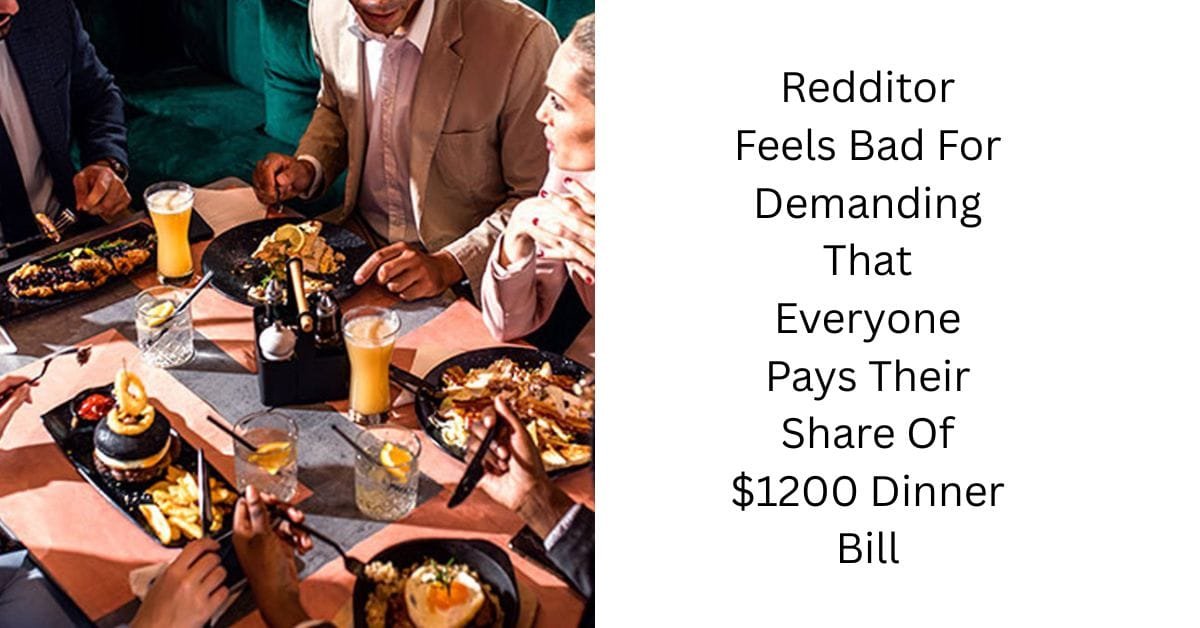
Twenty-nine-year-old Alex had always believed that splitting a large group bill fairly was the simplest way to avoid resentment. He was not someone who expected others to pay for him, and he was usually happy to cover a little extra when the difference was small. But after a recent dinner with several friends, he found himself in an uncomfortable situation involving a $1,200 restaurant bill. The group had gone out to celebrate a friend’s birthday, and everyone had ordered different food and drinks. Some people ordered expensive meals and multiple beverages, while others, including Alex, kept their orders relatively modest. When the check arrived, someone suggested splitting the entire bill evenly among everyone. Alex felt that this would be unfair because the spending differences were significant.
Alex quietly suggested that everyone pay for what they had ordered. He explained that he was not trying to make the evening uncomfortable, but he did not think it made sense for someone who spent $40 to contribute the same amount as someone who had ordered a $150 meal and several drinks. At first, the table became quiet. A few people looked uncomfortable, while others immediately said that splitting the bill equally would be easier. Alex understood that calculating individual expenses could take time, but he believed fairness mattered more than convenience when the total bill was $1,200.
The disagreement became more awkward when some friends accused Alex of being overly concerned about money. They said it was supposed to be a celebration and that nobody should be worrying about exact amounts during a special dinner. Alex responded that he had no problem celebrating, but he did not think celebrating required everyone to subsidize each other’s choices. He pointed out that some guests had ordered expensive steaks, premium appetizers, desserts, and multiple cocktails, while others had ordered much cheaper meals and water. The difference between the individual totals was large enough that an equal split would leave several people paying substantially more than they actually consumed.
Alex eventually calculated his own portion and showed the group the amount he believed he owed. He offered to add a little extra toward the birthday person’s meal as a gesture of goodwill. However, he still asked everyone else to cover their own expenses. A couple of people agreed with him, but others continued arguing that the bill should simply be divided equally. One friend even suggested that Alex was ruining the atmosphere by turning a fun night into a financial discussion. Alex began questioning whether he had handled the situation badly.
Later that night, Alex went home feeling guilty. He wondered if he should have simply paid the larger amount to avoid making everyone uncomfortable. He knew that friendships were more important than a few dollars, but he also felt that the situation had crossed a line. He had not refused to pay his share or complained about the restaurant. He had only objected to paying for food and drinks he had not ordered. The more he thought about it, the more he wondered whether social expectations around group dinners sometimes pressured people into spending beyond what they had planned.
Alex decided to post the situation on Reddit and ask whether he had been unreasonable. He explained that the total bill was around $1,200 and that the group had ordered very different amounts. He did not identify the restaurant or his friends, but he described the general circumstances and admitted that he felt bad about speaking up. He wanted to know whether asking everyone to pay their own share was considered rude or whether it was a reasonable request when the spending differences were substantial.
The responses were divided, but many commenters supported Alex. They argued that splitting a bill equally only makes sense when everyone orders roughly the same amount. If one person orders significantly more expensive food and drinks, expecting everyone else to share those costs can create resentment. Several commenters said that being honest about money is not the same as being cheap. They also pointed out that someone should not be pressured into paying for alcohol they did not drink or expensive dishes they did not order simply because the group wanted the convenience of one calculation.
Other commenters suggested that Alex could have handled the situation more carefully. They pointed out that group dinners can become awkward when people wait until the bill arrives to discuss payment arrangements. A better approach, they said, would be to establish beforehand whether the group planned to split everything evenly or pay individually. That would give everyone a chance to decide whether they were comfortable participating. Alex admitted that he had not considered this and said he would probably ask about payment expectations before future group dinners.
One commenter offered a compromise that Alex found particularly reasonable. They suggested that the group divide shared appetizers and other communal items evenly while allowing everyone to pay individually for their personal meals and drinks. That approach would recognize that some expenses benefited the entire table without forcing people to subsidize significantly different personal orders. Alex said that was essentially what he had wanted from the beginning. He did not mind contributing to shared costs; he simply did not want to pay hundreds of dollars more because other people chose expensive items.
In the end, Alex concluded that he had probably been too hard on himself. He realized that asking people to pay their fair share was not inherently rude, especially when the bill was as large as $1,200 and the spending differences were obvious. The experience taught him that money conversations can feel uncomfortable, but avoiding them does not always create harmony. Sometimes clear expectations prevent bigger problems later. Alex still wished the conversation had been handled more smoothly, but he no longer believed that he had done something wrong by asking everyone to contribute fairly.

Advertisement
Read Story…
AITA for insisting on splitting the dinner bill
My child is part of a sports team and usually after big events we will go and celebrate at a restaurant as a group. Usually the party will consist of the children who competed, the coaches who coached that day, and the parents of the children who competed. When the check arrives, normally the parents will split the bill evenly and cover the cost of the 2 or 3 coaches. This has been the norm for years. Sometimes there is a kid without a parent or an extra assistant coach (who didn’t coach) and we as the parents have covered their cost.
More recently, more people have joined our after event dinners. Kids without parents, former coaches, assistant coaches (who are not part of the coaching team that day), and random adult team members. The expectation being that the same group of parents will split the bill and cover the cost for the entire group. At one dinner, only myself and another parent showed up, and we had to split a $700 bill between the two of us. The other parent and I were really upset and after this, I voiced that the arrangement was not fair and I’m not sure if it is a cultural thing, but next time I was going to voice that all of the “extra” people needed to pay their share.
Last night, was probably the largest group we have had. There was a large group of assistant coaches who showed up (who were not part of yesterdays sporting event), there were about 5 adult team members, and about 4 kids present without their parents. I will add that these parents know their kids are going to dinner and will drop them off at the restaurant, but will not send them with any funds. The adult and coaching group also ordered alcoholic drinks the entire night.
When the bill came out close to $1.2k, I voiced to the other parents that we should ask all the adults (everyone except the coaches who coached yesterday) to pay their share of the bill and we can split what is leftover. This is where I think I became an asshole. The parents were uncomfortable asking the adult members to pay. The parents said since I only have one kid, to just pay his cost and they will take care of the rest. I told them that I want to pay for my share and help with the cost of the coaches that helped for the event to show my appreciation for them. I reiterated that I think it’s unfair for us to have to cover the bill for the other adults, especially when they were drinking and expecting us to pay.
I was shut down and the bill was paid. A few of the adults heard me and Venmo’d their share. I paid $100 to cover the cost of my son and his coach (I showed up about halfway into the meal and did not eat).I woke up this morning and I feel so crummy about all of it. I probably should not have insisted on splitting the bill, if the other parents were willing to cover the cost of everyone. I feel like I forced my indignation on the parent group. AITA?
Alex Believed Group Dinners Should Be Fair—Until a $1,200 Bill Created Tension
Twenty-nine-year-old Alex had always believed that group dinners were supposed to be enjoyable, not stressful. He was generally comfortable paying for his own meals and occasionally covering a little extra when celebrating a friend or family member. However, he had one strong belief when it came to expensive outings: everyone should contribute fairly. He did not expect people to calculate every tiny expense down to the cent, but he believed major differences in spending should be recognized. That belief was tested when Alex attended a large dinner with several friends and the final bill came to approximately $1,200.
Advertisement
The dinner had been planned as a celebration for one of the people in the group. Everyone seemed excited about getting together, and nobody had discussed payment arrangements beforehand. Alex assumed that each person would simply pay for what they ordered, especially because the group had different budgets and eating habits. Some people were drinking alcohol, while others were not. Some ordered expensive meals, appetizers, and desserts, while others chose relatively inexpensive dishes.

Advertisement
Alex had intentionally kept his own order modest. He chose a reasonably priced meal and skipped most of the extras because he was trying to stay within his budget. He did not mind spending money on the celebration, but he had not planned to spend a large amount of money on food and drinks that other people had chosen for themselves.
When the waiter brought the check, the group initially seemed relaxed. Someone picked up the receipt and suggested dividing the $1,200 total evenly among everyone at the table. Alex quickly realized that an equal split would mean paying considerably more than the value of what he had ordered.
At first, Alex did not say anything. He hoped someone else would point out the obvious difference in spending. But when the group started discussing the exact amount each person would owe, he finally spoke up. He politely suggested that everyone pay for their individual food and drinks, while the cost of shared appetizers could be divided equally.
Alex explained that he was not trying to make the celebration uncomfortable. He simply did not think it was fair for people who had ordered inexpensive meals to subsidize people who had ordered much more expensive dishes and drinks.
The atmosphere changed almost immediately. A few people became quiet, while others argued that splitting the bill equally was easier. One friend said that nobody wanted to sit around calculating individual amounts after a fun dinner.
Alex understood that convenience mattered, but he believed the difference was too large to ignore. If everyone had spent roughly the same amount, he would have had no problem with an equal split. But that was not what had happened.
Some guests had ordered expensive steaks, seafood, specialty drinks, appetizers, desserts, and several rounds of alcohol. Other people had ordered basic meals and water. The difference between the highest and lowest individual totals was significant.
Alex pointed this out, but one person accused him of being too focused on money. They said the dinner was supposed to be about friendship and celebration rather than keeping track of every dollar.
That comment made Alex uncomfortable. He did not want his friends to think he was cheap. He enjoyed spending time with them and was happy to celebrate the birthday person. But he also believed that friendship should not require someone to pay for things they never agreed to purchase.
Alex offered a compromise. He said he was willing to contribute extra toward the birthday person’s meal as a gift. He was also willing to divide shared appetizers and other items equally. However, he still wanted each person to cover their own expensive meals and drinks.
A few people agreed with Alex, but others continued pushing for an equal split. They argued that the difference would not matter much if everyone simply paid the same amount. Alex calculated his portion and realized that the difference actually mattered quite a bit to him.
He eventually paid what he believed was his fair share and left the restaurant feeling uncomfortable. Although he had not caused a scene, he kept replaying the conversation in his mind. He wondered whether he should have simply paid the requested amount and avoided the awkwardness.
On the way home, Alex started questioning himself. He knew that some people considered individual bill splitting impolite, especially during celebrations. He wondered if his insistence on fairness had made the evening less enjoyable for everyone else.
At the same time, he could not ignore the fact that he had never agreed to split $1,200 equally. He had made his own choices based on his budget, while other people had made theirs. He felt that everyone should be responsible for the financial consequences of those choices.
The next day, Alex decided to ask Reddit for opinions. He explained the situation honestly and admitted that he felt guilty about speaking up. He wanted to know whether asking everyone to pay their own share was reasonable or whether he had violated an unspoken social rule.
Many commenters immediately sided with him. They argued that equal splitting only makes sense when the spending is reasonably similar. If one person orders a $40 meal and another orders $150 worth of food and drinks, expecting both people to pay the same amount can be unfair.
Several commenters also pointed out that refusing to subsidize someone else’s alcohol does not make a person cheap. If someone chooses expensive drinks while another person chooses water, there is no obvious reason the person drinking water should pay for those drinks.
Other Reddit users offered a more nuanced perspective. They said the real mistake was that the group had failed to discuss payment before ordering. If everyone had agreed at the beginning that the bill would be split evenly, Alex would have known what he was signing up for.
One commenter suggested that Alex should make a habit of asking about payment arrangements before expensive group dinners. A simple question such as whether everyone planned to split the bill or pay individually could prevent uncomfortable conversations later.
Another commenter suggested using a hybrid approach. Shared appetizers, service fees, and other communal expenses could be divided evenly, while personal meals and drinks could be charged individually. That way, everyone contributes to the shared experience without forcing people to pay for significantly different personal orders.
Alex admitted that he liked this solution. He never objected to contributing to the birthday celebration. His main concern was being expected to pay a large amount more than he had personally spent.
The Reddit discussion also made Alex think about how people view conversations about money. Some people treat talking about finances as inherently awkward, but he realized that avoiding the subject can sometimes create even more tension.
In this situation, everyone had different expectations. Some people viewed the dinner as a shared experience where an equal split was part of the celebration. Alex viewed it as a group outing where everyone could make their own choices and pay accordingly. Neither perspective was necessarily unreasonable, but the lack of communication caused the conflict.
Alex later spoke privately with one of his friends about the situation. He explained that he had not intended to embarrass anyone or make the birthday celebration uncomfortable. He simply had not expected the bill to be divided equally when the orders were so different.
His friend admitted that the group probably should have discussed payment beforehand. They also acknowledged that some people at the table had spent much more than others. The conversation helped Alex feel less guilty about the situation.
Ultimately, Alex realized that fairness does not always mean everyone pays exactly the same amount. Sometimes fairness means everyone contributes equally to shared expenses while paying individually for personal choices.
He also learned that there is nothing wrong with having a budget. People have different financial circumstances, and a dinner that feels affordable to one person may be expensive for another. Assuming everyone is comfortable with the same spending level can create unnecessary pressure.
Alex said he would still happily attend future group dinners, but he would handle things differently. If the restaurant were expensive or the group were large, he would ask about the payment arrangement before ordering. He believed a thirty-second conversation at the beginning could prevent an uncomfortable argument at the end.
In the end, Alex no longer felt that he had done something terrible by asking everyone to pay their share. He admitted that the situation could have been handled more smoothly, but he stood by the basic principle that people should not be forced to subsidize expenses they did not choose.
The $1,200 dinner ultimately became less of a story about money and more of a lesson about communication. Alex learned that friendships can survive awkward financial conversations, especially when those conversations are handled respectfully. What matters is making expectations clear before everyone reaches for the check.
For Alex, the experience reinforced a simple rule: celebrating with friends should be enjoyable, but nobody should feel pressured to spend far beyond their budget just to avoid an uncomfortable conversation. Fairness may look different to different people, but discussing it openly is usually better than silently building resentment.