MIL Tries To Pull Rank On Bride’s Dad Using Her Lieutenant Son, Gets Shut Down By His Captain Son
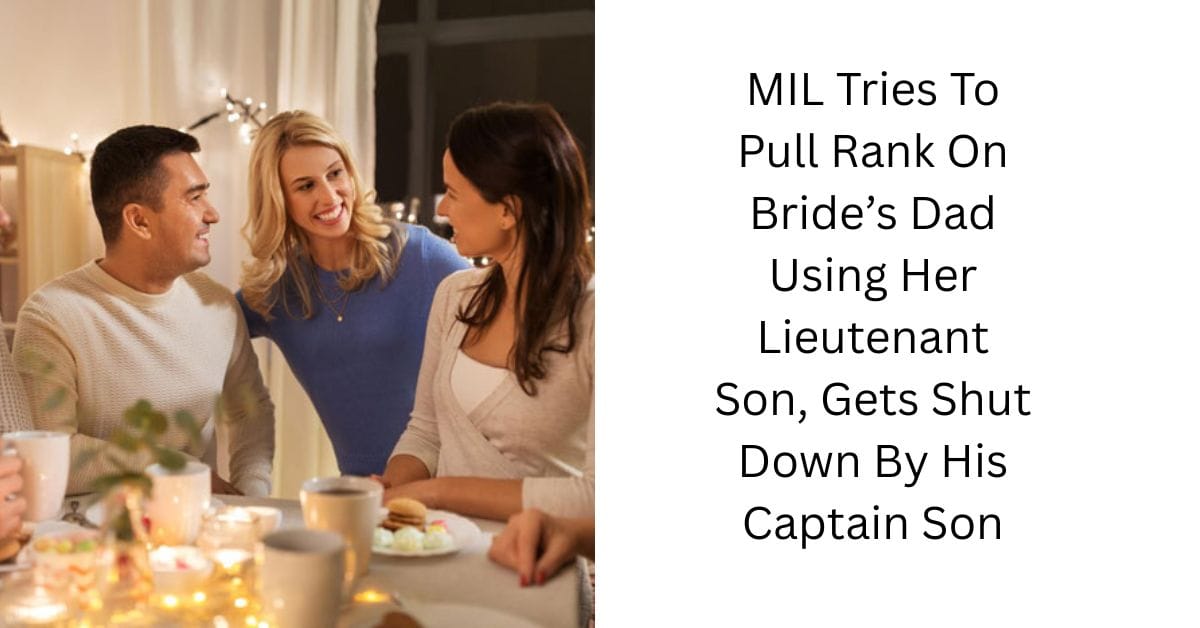
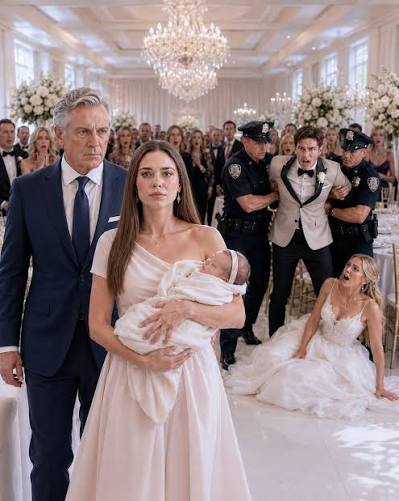
The wedding was supposed to be a joyful celebration that united two families, but tensions quietly began building long before the ceremony. The bride’s father had spent months organizing every detail, making sure his daughter would have the wedding she had always dreamed about. He coordinated with vendors, welcomed guests from out of town, and handled countless last-minute problems without complaint. His calm personality earned him respect from nearly everyone involved. Meanwhile, the groom’s mother often reminded people that her youngest son served as a lieutenant in the military, mentioning his rank whenever conversations turned toward leadership or responsibility. At first, most relatives dismissed her comments as harmless pride, but as the wedding day approached, it became clear that she expected her son’s position to give her family greater authority over important decisions.
During the rehearsal dinner, disagreements surfaced over seating arrangements, speeches, and the order of events. The bride’s father politely explained that the plans had already been finalized after careful discussions with both families. Instead of accepting the explanation, the groom’s mother insisted that her lieutenant son should have the final say because, according to her, “people in command know how to organize things better than civilians.” Her statement stunned several guests, who exchanged uncomfortable glances. The bride’s father remained respectful and refused to argue, calmly reminding everyone that the wedding was about celebrating the couple rather than comparing careers or titles. His composed response prevented the situation from escalating, but the atmosphere around the room grew noticeably tense.
Advertisement
The following morning, just hours before the ceremony, the groom’s mother became even more determined to assert her influence. She interrupted vendors while they were decorating the venue, attempted to change the reception schedule, and instructed staff members to follow her directions instead of the bride’s father’s carefully prepared timeline. She repeatedly referred to her son’s military rank, suggesting that people should naturally respect her authority because she was the mother of an officer. The vendors, confused by the conflicting instructions, paused their work until someone could clarify who was actually in charge. Guests who witnessed the scene began whispering among themselves, sensing that a much larger confrontation was about to unfold.
Advertisement
The bride’s father handled every interruption with remarkable patience, refusing to respond with anger despite the constant challenges. He quietly reassured the vendors that the original plans should remain unchanged and thanked them for staying professional under pressure. His focus never shifted away from ensuring his daughter could enjoy one of the most important days of her life without unnecessary stress. Family friends admired his self-control, noting that many people would have lost their temper in the same situation. Even members of the groom’s extended family appeared embarrassed by the mother’s behavior, privately apologizing for the disruption while hoping the conflict would end before the ceremony began.
Advertisement
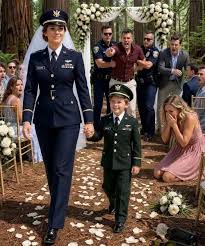
Just as emotions reached their highest point, another unexpected arrival changed the entire situation. A respected military captain, who happened to be the bride’s older brother, entered the venue after returning from an assignment. Unlike the groom’s mother, he never spoke about rank unless absolutely necessary. However, after witnessing her repeatedly using her lieutenant son’s position to pressure others, he calmly stepped forward and reminded everyone that military rank exists to serve the nation, not to dominate family gatherings or personal celebrations. His measured words immediately shifted the mood, leaving the room silent as guests realized the confrontation was about to take an entirely different direction.
Advertisement
Read Story…
That time my sister’s MIL tried to pull rank on my father
Premise: My sister and I hail from a military family. My father is a career E-8 (Master Sergeant) in the Army and is in his 50s at the time of this incident. Previously, our (me and my sister) parents and fiancé’s parents have met over an informal dinner, which by second hand accounts, ended up in some heated political discussions. I thought nothing of it, since politics and alcohol together is a fire hazard, and I figured both parties would be mature enough to not take anything personally.
Onwards to the incident: my sister and her fiancé are holding their engagement dinner. Full cast includes fiancé, MIL, GC (fiancé’s younger brother), me, sister, our older brother, father, and mother. MIL and GC arrive 20 minutes late and already I can tell something is off because 1. MIL is all scowls and frowns instead of the usual hospitable smiles one would expect for this occasion, and 2. GC is in his service dress, proudly displaying his shiny O-1 (2nd lieutenant) insignia. My father is in a normal suit, because it’s a private non-military affair and he was always rather humble about his career.
I steal a glance from my sister and I can see her face cycling through a range of emotions. “Uh-oh, somethings wrong” -> “She don’t look too happy” -> “Maybe she had a bad day” -> “Maybe GC came straight from work.” Personally, I’m a sucker for witnessing this kind of drama, so I’ve already mentally grabbed my popcorn.
We exchange pleasantries, with MIL giving out very curt acknowledgements before we start having dinner. Not 2 minutes in, MIL turns to my father and says, “Last time we met, you really offended me with our talk about {…} I demand that you apologize.” I think my father must’ve seen this coming, because he says without missing a beat, “We can agree to disagree, but my opinions are my opinions and I won’t apologize for that.” Of course, she doesn’t take too well to this and flares up like a pissed off cat in indignant yet harmless fury. Fiancé and sister are trying to mediate to no avail, and MIL goes off on this righteous tirade about how she deserved to be treated with respect and yadda yadda. My father is sitting stone cold silent until the storm is finally weathered and shoots back, “Sounds like a personal problem to me.”
GC makes his presence known and barks, “Sergeant! I expect a man of your rank to conduct himself more professionally!” Holy shit, did he just…? There are multiple layers of how bad of a fuck-up this is. First off, as far as military ranks goes, technically all officers (O-X) outrank all enlisted (E-X) men. In this case, GC being an O-1 2nd lieutenant, and my father being an E-8 master sergeant. In practice though, O-1 is the lowest of the officer ranks, and E-8 is a rank which generally takes at least 20 years of service to achieve. By that point, they have established close relationships with people who use O-1’s to fetch their coffee. This sometimes leads to a precarious situation where you have an idiot 23-25 year old 2nd lieutenant ordering around a 50 year old crusty master sergeant, like so. In addition, this is a private non-military affair and pulling rank in this environment is a big no-no as I have learned. This is also the first meeting between my father and GC, and since my father isn’t dressed, it can only be concluded that MIL conveyed his rank to GC, and probably even arranged for him to come in this service dress so that he could pull rank in this exact scenario.
The final fuckup is not realizing that my older brother is an O-3 Army Captain (I did say we were a military family). Like my father, he is also not in service dress, and had been pretty quiet throughout this ordeal. But the most recent statement by GC prompts him to action, like “Well, if they’re gonna play that game…” He holds up his ID card, snaps his fingers and points towards the other corner of the room, “Lieutenant, this way.” I witness the face of a truly fearful man. We can’t hear what my brother is saying, but he speaks loud enough so that we can all recognize his “chewing the fuck out of someone” voice. GC proceeds to get thoroughly emasculated, letting out little meek “yessirs” every now and then, while MIL watches as her best laid plans go awry.
Bride’s Dream Wedding Is Threatened by a Power-Hungry Mother-in-Law
The wedding was meant to celebrate two families coming together, but hidden tensions had been building for weeks behind the scenes. Sarah and Daniel had carefully planned every detail of their special day with the help of Sarah’s father, Michael, who had invested countless hours making sure everything would run smoothly. From coordinating vendors to arranging transportation for elderly relatives, Michael handled every challenge with patience and quiet confidence. Everyone admired his willingness to help without asking for recognition. Unfortunately, not everyone shared the same humble attitude. Daniel’s mother, Linda, believed her family’s military background gave them greater authority, and she wasn’t afraid to remind everyone that her younger son, Jason, was a lieutenant in the Army. What began as harmless pride soon turned into constant attempts to influence every wedding decision.
Advertisement
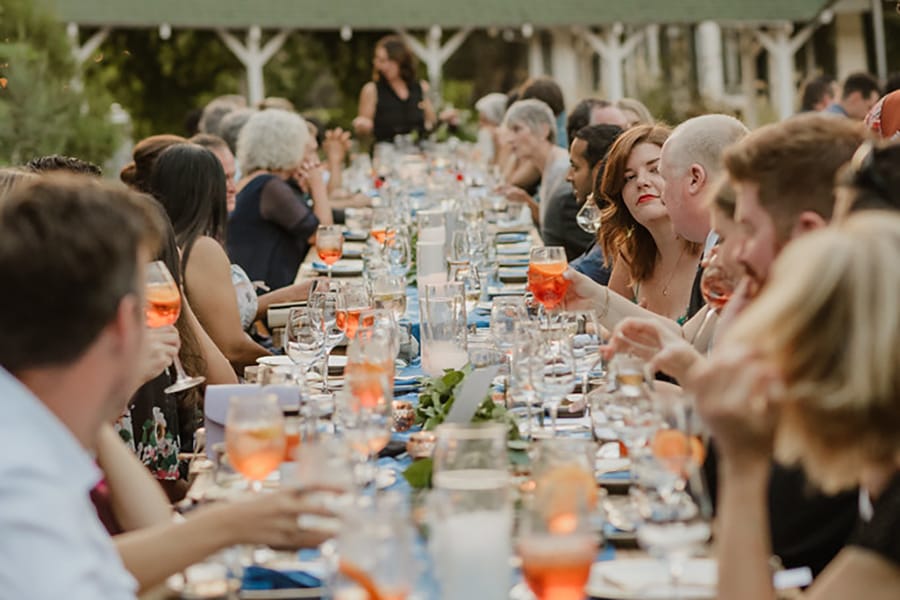
During the rehearsal dinner, Linda openly questioned the seating chart that Michael had finalized weeks earlier with the couple’s approval. She insisted that her side of the family deserved the front tables because, in her opinion, Jason’s military rank reflected honor and leadership that should be publicly recognized. Michael politely explained that the seating arrangements were designed to keep elderly relatives comfortable and allow both families equal visibility during the reception. His calm explanation satisfied nearly everyone else, but Linda refused to let the matter go. She declared that people should naturally defer to a military officer’s family when important decisions were being made. Guests exchanged awkward glances, unsure whether she was joking or genuinely expected special treatment.
Advertisement
Jason himself appeared visibly uncomfortable every time his mother mentioned his rank. He had always believed that military leadership required humility and respect rather than entitlement. Quietly pulling his mother aside, he suggested that the wedding wasn’t the proper place to discuss military hierarchy. Linda brushed off his concerns, insisting she was only protecting the family’s reputation. Jason chose not to argue further, hoping the issue would fade on its own. Unfortunately, his silence only encouraged Linda to become more outspoken as the evening progressed. By the end of dinner, several relatives were whispering about the growing tension between the two families instead of celebrating the happy couple.
Early the next morning, vendors arrived at the venue to finish decorating before guests began arriving. Florists arranged elegant centerpieces while photographers captured pictures of the empty ballroom bathed in morning sunlight. Michael quietly moved from one station to another, answering questions and making sure every detail matched the bride’s wishes. His organization impressed everyone working at the venue. Linda, however, interrupted multiple conversations, giving conflicting instructions about decorations, table placements, and the ceremony schedule. Some vendors became confused about whom they should follow. Rather than arguing, Michael calmly reassured everyone that the original plan approved by the bride and groom remained unchanged.
Linda’s frustration grew when she realized no one was treating her instructions as official. She loudly reminded everyone that Jason was a commissioned lieutenant responsible for leading soldiers and making important decisions under pressure. According to her, that experience made her family naturally more qualified to oversee wedding logistics than anyone else. Several guests looked away in embarrassment, while others quietly continued preparing the venue without responding. Jason, hearing his mother once again mention his military position, sighed deeply. He knew that leadership earned through service could not be borrowed by relatives simply because of family connections.
As guests slowly began arriving at the venue, whispers about the earlier disagreement spread among close relatives. Most people had no interest in taking sides, but they couldn’t ignore how gracefully Michael handled every interruption. Instead of responding with sarcasm or raising his voice, he welcomed guests with a smile and made sure everyone felt comfortable. His quiet confidence stood in sharp contrast to Linda’s increasingly demanding behavior.
The ceremony was scheduled to begin in less than an hour when Linda noticed the reserved front-row seating. She immediately complained that her family should occupy every seat closest to the aisle because, in her opinion, Jason’s military service deserved special recognition. The wedding coordinator politely explained that the seating arrangement had already been approved by both the bride and groom. Linda dismissed the explanation and insisted the coordinator change it immediately.
Jason finally stepped in, hoping to calm the situation before it became more embarrassing. He quietly reminded his mother that military rank had nothing to do with family weddings. He explained that his commission represented responsibility, discipline, and service—not personal privilege. Linda frowned and accused him of being too modest, insisting he didn’t understand how much respect his position commanded.
Just then, another vehicle pulled into the parking lot. Stepping out was Michael’s eldest son, David, who had driven through the night after returning from a military assignment. Wearing a neatly pressed civilian suit, he blended into the crowd without drawing attention to himself. Most guests had no idea he was an Army captain because he rarely discussed his career outside of work.
David greeted his father with a warm hug before congratulating his sister on her wedding day. He quickly noticed the tense atmosphere but chose not to ask questions immediately. Instead, he helped elderly relatives find their seats, carried supplies for the wedding staff, and thanked the vendors for their hard work. His calm demeanor reflected years of professional leadership.
Unfortunately, Linda spotted David speaking with several guests and overheard someone mention that he also served in the military. Assuming he was another junior officer, she confidently approached him and proudly announced that her son Jason was a lieutenant. She spoke as though that fact alone settled every disagreement taking place at the venue.
David smiled politely and congratulated Jason on his service. He shook Jason’s hand with genuine respect, thanking him for his dedication. Jason returned the gesture, immediately sensing that David carried himself with unusual confidence and professionalism. Before either man could continue the conversation, Linda interrupted again, insisting everyone should listen to her because she represented the family of an officer.

Advertisement
Several guests exchanged puzzled looks. David remained completely calm before quietly introducing himself. “I’m Captain David Carter,” he said with a friendly smile. “But today I’m simply the bride’s brother.” The room fell noticeably quieter as Linda realized she had been speaking to someone who outranked her son by several levels.
Rather than using his own rank to embarrass anyone, David spoke with remarkable humility. He explained that military leadership teaches people to respect others, remain professional under pressure, and avoid using rank outside appropriate situations. Weddings, he added, were family celebrations—not military operations.
Jason nodded in complete agreement. He admitted he had been uncomfortable every time his mother mentioned his position throughout the weekend. He apologized to Michael and the wedding coordinator for any confusion that had resulted from the repeated interruptions. His honesty earned immediate respect from everyone listening.
Linda attempted to defend herself by claiming she only wanted the best for her family. David responded respectfully, explaining that honoring military service never requires demanding special treatment. True leadership, he said, often means stepping back so others can enjoy their important moments without unnecessary conflict.
Michael thanked David for handling the conversation with dignity instead of turning it into a public confrontation. He reminded everyone that the day belonged to Sarah and Daniel, not to parents, siblings, or military titles. His words shifted everyone’s attention back to the joyful purpose of the celebration.
The ceremony finally began beneath a beautifully decorated floral arch. As Sarah walked down the aisle with her father, the earlier tension faded into the background. Guests focused on the couple’s smiles, heartfelt vows, and the emotional moment they officially became husband and wife.
During the reception, Jason approached Michael privately. He apologized once again for the uncomfortable situation and assured him he never expected anyone to treat him differently because of his military position. Michael appreciated the sincerity and accepted the apology without hesitation.
Later that evening, David and Jason found themselves talking about military life, deployments, and the challenges of leadership. They quickly discovered they shared similar values despite their families’ earlier disagreement. Their conversation became one of mutual respect rather than competition.
Linda spent much of the reception quietly reflecting on everything that had happened. Watching both officers interact with humility made her realize that she had misunderstood what military leadership truly represented. Respect, she finally understood, could never be demanded—it had to be earned through character.
Before leaving the reception, Linda approached Michael and offered a heartfelt apology. She admitted she had allowed pride to cloud her judgment and regretted creating unnecessary stress on such an important day. Michael accepted her apology graciously, hoping both families could move forward together.
The wedding ended with laughter, dancing, and countless family photographs. Guests no longer talked about the earlier conflict but instead remembered the kindness, patience, and maturity displayed by those who refused to let pride ruin the celebration. The newlyweds left surrounded by love and encouragement from both families.
In the months that followed, the story became a reminder shared at family gatherings—not about military rank, but about humility. Everyone agreed that the most respected person at the wedding wasn’t the one with the highest title. It was the person who chose patience over pride, respect over authority, and unity over winning an argument. That lesson remained far more meaningful than any rank ever could.