Mother Stops Babysitting After Grandma Secretly Skips Toddler Classes Behind Her Back
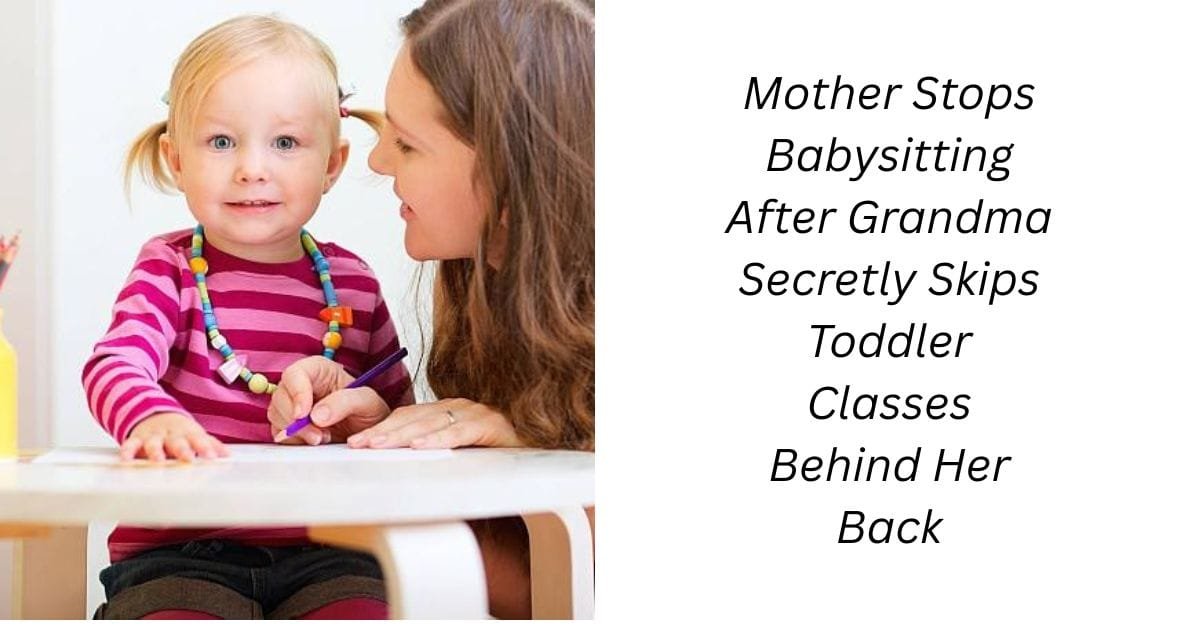
When this mother agreed to let her own mother babysit her toddler, she thought she was making a decision that would benefit everyone. She trusted her mom, appreciated the help, and believed her child was in safe hands while she handled work and other responsibilities. One of the things she specifically asked her mother to do was take the toddler to weekly classes. These classes were important to her because they gave her child a chance to socialize, learn new skills, and follow a routine. She never imagined that her mother would quietly stop taking the child without telling her.
At first, everything seemed normal. The grandmother would tell her daughter that she had taken the toddler to class, and the mother assumed everything was going according to plan. She didn’t have any reason to question her because she trusted her mother. The grandmother had always been loving toward the child, and the mother believed they shared the same goal of giving the toddler a happy and healthy childhood. It wasn’t until the mother noticed something unusual that she started asking questions.
The toddler’s teacher eventually mentioned that the child hadn’t been attending recently. The mother was confused because she had believed the classes were still happening every week. She checked the schedule and realized her child had missed several sessions. When she asked her mother about it, the grandmother admitted that she had stopped taking the toddler. Her explanation was that she didn’t think the classes were necessary and believed the child was too young to benefit from them. She said she had simply decided to spend the babysitting time doing other things instead.
The mother was shocked, not because she believed missing a few classes would seriously harm her child, but because her mother had made the decision without discussing it with her. She explained that the classes weren’t optional from her perspective. She had specifically arranged the schedule around them and had trusted the grandmother to follow those instructions. If the grandmother disagreed with the activity, she could have raised the concern and they could have discussed it. Instead, she quietly ignored the agreement and allowed the mother to believe everything was happening as planned.
The conversation quickly became tense. The grandmother argued that she was doing the mother a favor by babysitting and shouldn’t have to follow every instruction perfectly. She said that as a grandmother, she had her own experience raising children and knew what toddlers needed. The mother understood that her mom had experience, but she pointed out that babysitting her child came with certain responsibilities. She wasn’t asking the grandmother to parent exactly the way she had. She was simply asking her to follow a few important routines while caring for the toddler.
The mother eventually decided that the issue wasn’t really about the classes anymore. It was about trust. If she couldn’t rely on her mother to follow a simple agreement or tell her when she disagreed with something, she didn’t feel comfortable leaving her child in her care. She explained that she would rather handle the childcare herself or find another arrangement than constantly wonder whether instructions were being followed. Her mother accused her of being ungrateful and overly controlling, but the mother stood by her decision.
After that conversation, the mother stopped relying on her mom for regular babysitting. It wasn’t an easy choice because the arrangement had been convenient and had allowed her to manage her responsibilities more easily. She also hated the idea of creating tension within the family. However, she felt that her child’s routine and her role as a parent had to come first. She told her mother that she was still welcome to spend time with her grandchild, but regular babysitting would require trust and respect for parental decisions.
The grandmother initially refused to accept the change. She complained to other family members and said that her daughter was punishing her over something minor. Some relatives believed the mother should have been more forgiving because the grandmother hadn’t done anything dangerous. Others understood why the mother was upset, especially because the grandmother had intentionally kept the change from her. The mother didn’t believe her mom was a bad grandmother, but she felt that love alone wasn’t enough to make someone a reliable caregiver.
Eventually, the mother made it clear that she wasn’t trying to keep her child away from the grandmother. She simply wanted clear boundaries when someone else was responsible for her toddler. She explained that grandparents can have their own opinions, but parents still have the final say about their children’s routines and activities. The grandmother may have believed she was making a harmless decision, but secretly changing the child’s schedule damaged the trust between them. For the mother, stopping the babysitting arrangement wasn’t about punishing her mom. It was about protecting the relationship she had with her child and making sure anyone caring for the toddler respected the boundaries she had established.
Read Story…
AITA for “firing” my mom from childcare over a $5 class
My husband and I have a 16 month old daughter, Ellie. I just went back to work part time and I had my mom watching Ellie 2 days a week.
Ellie goes to this little toddler class through our rec center twice a week. It’s a 2 hour class and every class has free play, a circle time with a story and song, and an art project. During free play the kids have 4 different table stations that they could visit including an art table, a corner of the room with all cars, trucks, and trains, the house corner with a kitchen and baby dolls, the dramatic play area (changes biweekly, I’ve seen a grocery store, vets office, and pizza shop), the book area, the block area, and the patio. The patio has 2 water tables, 2 playhouses, a sandbox, tricycles, and little tykes cars. Each class is only $5. Parents/caregivers are required to stay and supervise their children.
Ellie loves this class. She’s addicted to the chalkboards there and is starting to approach other babies. She does taste test every foam block in the room and has eaten her fair share of crayons and finger paint, on top of drenching herself in water then rolling around in the sandbox and covering her in paint but it’s nothing that can’t be solved without a change of clothes and hosing her off. I love how great the class is for her development. She is starting to know the names of colors and she can sit down and play with toys for longer stretches.
My mom hated the toddler classes. She describes it as chaos and insists that a walk around the block or a trip to the library is just as good, if not better for her development and is much less messy. I still insisted that she take Ellie, which she agreed to, then stopped taking her behind my back. I only noticed when I realized we haven’t gotten art projects back in a while.
Since she lied to me about where she’s been going with my daughter and refused to take her to a class that I truly believe is good for her, I “fired” my mom from babysitting and hired a college student to stay with her while I’m working.
Now my mom is upset that I’m restricting her access to her granddaughter and leaving her with a stranger, which is the one thing she was trying to prevent by babysitting my daughter for me.
Now I want to know if I was the asshole for firing my mom and not having Ellie see her nearly as much over a $5 class.
Mother Trusted Her Mom To Babysit Her Toddler, But A Secret Decision Changed Everything
When this mother first asked her own mother to babysit her toddler, she thought she had found the perfect arrangement. Her mom loved spending time with her grandchild, and the mother felt comfortable leaving her child with someone she had known and trusted her entire life.
The babysitting arrangement also made life much easier. Between work, errands, appointments, and other responsibilities, having a trusted family member available gave the mother some much-needed flexibility.
There was only one condition she considered especially important.
Her toddler attended weekly classes designed for young children. The classes weren’t simply about learning academic skills. They gave the child an opportunity to interact with other toddlers, follow a routine, play in a structured environment, and become comfortable around people outside the family.
The mother had explained this to her mom before the babysitting arrangement began.
She told her that whenever her mother was babysitting on the day of the class, she needed to take the toddler there.
Her mom initially agreed without any argument.
The mother therefore assumed everything was going according to plan.
For several weeks, the grandmother would return the toddler after babysitting and casually mention how the day had gone.
The mother trusted her completely.
She never felt the need to call the class instructor or check attendance because she didn’t think there was a reason to.
After all, this was her own mother.
She believed that if her mom had a problem with the classes, she would simply tell her.
Eventually, however, something made the mother suspicious.
During a conversation with the toddler’s class instructor, the mother discovered that her child had missed several recent sessions.
At first, she wondered whether there had been a scheduling mistake.
She checked her calendar and realized the missed classes corresponded exactly with the days her mother had been babysitting.
The discovery immediately made her uncomfortable.
She decided to ask her mom about it directly rather than making assumptions.
The grandmother eventually admitted that she had stopped taking the toddler to the classes.
She explained that she didn’t think the classes were necessary and believed the toddler was too young to get much out of them.
According to the grandmother, she had decided that spending more relaxed time at home would be better.
The mother was stunned.
She wasn’t necessarily furious about the child missing a few classes.
What upset her was the fact that her mother had made the decision without telling her.
If the grandmother believed the classes were unnecessary, she could have raised the concern.
They could have talked about it.
The mother could have explained why the classes mattered to her.
Instead, the grandmother quietly changed the routine while allowing her daughter to believe everything was happening as agreed.
That made the issue much bigger than a missed toddler class.
The mother began questioning whether she could trust her mom with other instructions.
If the grandmother disagreed with something else, would she simply ignore that instruction too?
Would she tell the mother afterward?
Or would the mother only find out accidentally?
When the mother raised those concerns, the grandmother became defensive.
She reminded her daughter that she had raised children herself and knew how to care for toddlers.
She also pointed out that she was doing her daughter a favor by babysitting.
The mother acknowledged that she appreciated the help.
However, she explained that babysitting was still a responsibility.
She wasn’t asking her mother to raise the toddler differently.
She was asking her to follow the parent’s instructions while she was responsible for the child.
The grandmother disagreed.
She believed grandparents should have some freedom when caring for their grandchildren.
The mother understood that grandparents might have different opinions, but she didn’t think that gave them permission to secretly override parental decisions.
Eventually, the conversation became too frustrating for both of them.
The mother decided she couldn’t continue the babysitting arrangement under those circumstances.
She told her mom that she would need to find another childcare solution.
Her mother was deeply offended.
She accused her daughter of being ungrateful and said that stopping the babysitting arrangement over a few missed classes was ridiculous.
The mother tried to explain that the classes were only part of the problem.
The real issue was trust.
She needed to know that when she left her child with someone, that person would follow the basic instructions they had agreed upon.
She also wanted to be able to have an honest conversation if the caregiver disagreed with something.
The mother never wanted to control every minute of her child’s day.
She knew her mom would naturally do things differently sometimes.
She simply expected transparency.
If her mother wanted to skip a class because the toddler was tired or unwell, she could have called and explained.
If she genuinely believed the classes were unnecessary, they could have discussed whether the arrangement needed to change.
But secretly deciding that the rules didn’t apply was different.
The mother also emphasized that she wasn’t banning her grandmother from seeing the toddler.
She still wanted them to have a close relationship.
Her child loved spending time with their grandmother, and the mother didn’t want to take that away.
She simply didn’t feel comfortable relying on her mom as the primary babysitter anymore.
The grandmother initially refused to accept that explanation.
She complained to relatives and told them that her daughter was treating her unfairly.
Some family members agreed with the grandmother.
They argued that missing a few classes wasn’t a serious issue and that the mother should be grateful for the free childcare.
Other relatives understood the mother’s position.
They pointed out that the grandmother could have simply communicated her concerns instead of secretly changing the schedule.
The mother found herself caught between guilt and certainty.
She felt guilty because her mom had helped her so much.
She knew finding alternative childcare would create additional expenses and complications.
But she also knew that convenience couldn’t be the only consideration when it came to her child.
After thinking about everything carefully, she decided to keep her decision.
She thanked her mother for the help she had provided in the past and told her that she still wanted her to be an important part of the toddler’s life.
However, regular babysitting would only resume if they could rebuild trust and agree that parental instructions would be respected.
The grandmother eventually became quieter about the situation, although they still haven’t completely resolved their disagreement.
The mother hopes that time will allow both of them to understand each other’s perspective.
She doesn’t believe her mom was trying to harm the toddler.
In fact, she believes the grandmother genuinely thought she was making a harmless decision.
But good intentions don’t eliminate the need for communication.
For the mother, this experience became an important reminder that childcare arrangements require more than love.
They require trust, communication, and respect for the parent’s boundaries.
Grandparents can have years of parenting experience and still need to recognize that their adult children have the final say over their own kids.
The mother isn’t asking her mom to agree with every parenting decision.
She simply wants her to communicate when she disagrees rather than secretly changing the rules.
Ultimately, the toddler missing a few classes wasn’t what caused the relationship to become strained.
It was the secrecy.
The mother could have forgiven an occasional missed class if there had been an honest explanation.
What she struggled to forgive was discovering that her trust had been taken for granted.
For now, she believes stepping back from the babysitting arrangement was the healthiest choice.
She hopes that eventually she and her mother can rebuild enough trust to find a new arrangement that works for everyone.
Until then, she would rather deal with the inconvenience of alternative childcare than constantly wonder whether the instructions she gives are actually being followed.






One thought on “Mother Stops Babysitting After Grandma Secretly Skips Toddler Classes Behind Her Back”
Comments are closed.