My Husband’s Secret Friendship Revealed Something I Wasn’t Prepared For
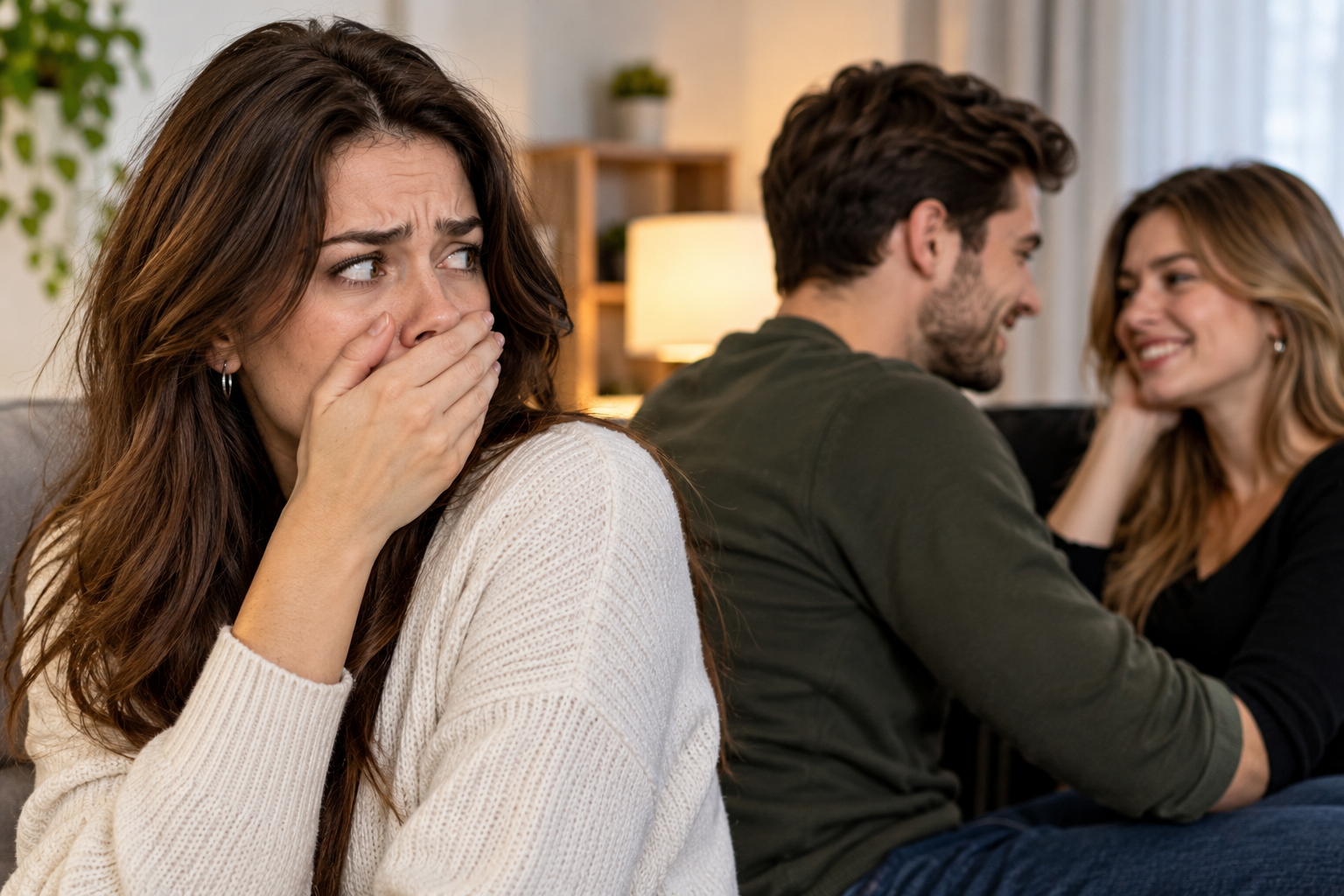
I never imagined that the one person I trusted most in the world would be hiding such a significant part of his life from me. My husband and I have been together for several years, and although our marriage has had its share of challenges, I always believed we had built our relationship on honesty, loyalty, and mutual respect. We have our disagreements like any other couple, but I never thought there was something so serious that he felt he needed to keep it hidden from me. The problem began with his best friend, a man he had known long before we met. My husband talked about his friends occasionally, but whenever this particular person came up, his behavior changed. He would become vague, avoid answering questions, or quickly change the subject. At first, I assumed there was a simple explanation. Perhaps they had experienced something embarrassing together, or maybe his friend was going through a difficult period and preferred privacy. I did not want to be the kind of wife who questioned every friendship or demanded to know everything about her husband’s life. However, as time passed, I started noticing that this was not an ordinary friendship he simply preferred to keep private. There was a deliberate effort to make sure I knew as little as possible about this man, and the more my husband tried to hide him, the more uncomfortable I became.
What made the situation especially confusing was that my husband had no problem introducing me to his other friends. I had met his coworkers, attended gatherings with people he knew from school, and even spent time with friends he had made more recently. Yet whenever I asked about this particular friend, I received the same dismissive responses. Sometimes he would say they barely spoke anymore, while on other occasions he would casually mention a conversation they had supposedly had that very week. His explanations did not always match, and I began to question whether he was deliberately misleading me. One evening, while we were having dinner, I asked him directly why I had never met this supposedly important person in his life. My husband immediately became defensive and accused me of making an issue out of nothing. He told me that not every friendship needed to involve me and that I was being unnecessarily suspicious. I tried to explain that I was not asking to control his friendships or monitor his conversations. I simply wanted to understand why one particular person seemed to be completely off-limits. Instead of reassuring me, he became irritated and told me to stop bringing it up. That reaction stayed with me long after the argument ended. I could have accepted a straightforward explanation, even if it was something uncomfortable, but his refusal to discuss the matter made me feel as though there was a much bigger story behind his silence.
Over the following weeks, I tried to convince myself that I was overthinking everything. I reminded myself that people were entitled to privacy, even within a marriage, and that suspicion alone was not proof of wrongdoing. Still, little things continued to bother me. There were moments when my husband would receive a message and immediately turn his phone away, only to act completely normal a few seconds later. Sometimes he would step outside to answer calls, claiming he needed a quiet place to hear the other person properly. I never saw anything that conclusively proved he was doing something wrong, and I did not want to invade his privacy just to satisfy my curiosity. However, I could not ignore the pattern anymore. One afternoon, I overheard him speaking on the phone in a tone I rarely heard him use with anyone else. He sounded unusually emotional, almost as though he were discussing something deeply personal. When he noticed me nearby, he abruptly ended the conversation and claimed it was just a friend checking in. I asked whether it was the same friend he never wanted to discuss, and his expression changed immediately. He denied that anything unusual was happening, but he looked so uncomfortable that I knew my question had touched a nerve. For the first time, I began to wonder whether the secret was not simply about an old friendship but about something from his past that he had never wanted me to discover.
Eventually, the uncertainty became more difficult to live with than the possibility of hearing an unpleasant truth. I told my husband that I could no longer pretend his behavior did not bother me. I explained that the secrecy itself was damaging my trust and that I needed an honest conversation rather than another argument about whether I was being unreasonable. At first, he insisted there was nothing to explain. Then, after a long silence, he admitted that his friendship with this man was more complicated than he had ever allowed me to understand. He told me that they had been through something significant together years before we met and that the experience had affected both of them in ways he still struggled to talk about. He said he had kept the friendship separate from our marriage because he was afraid that revealing the full story would change the way I saw him. I listened carefully, expecting him to explain that they had shared a painful secret, made a serious mistake, or experienced some event that he regretted. Instead, his explanation opened the door to questions I had never considered asking. There were details about his past that I had never known, people connected to his life whom he had never mentioned, and decisions he had made long before our relationship began. I suddenly understood that I had been trying to solve the wrong mystery. The real issue was not simply why he had hidden his friend from me, but why he believed the truth about their connection could threaten the life we had built together.
After that conversation, I found myself caught between wanting to understand my husband and feeling betrayed by the years of secrecy. I knew that everyone had a past, and I did not expect him to tell me every detail of his life before we met. But there was a difference between keeping certain memories private and deliberately allowing a spouse to believe something that was not entirely true. I wanted to know whether his friend had ever influenced decisions that affected our marriage, whether there were other things my husband had chosen not to tell me, and whether I could trust his explanations moving forward. He insisted that he had hidden the friendship because he was afraid of losing me, not because he wanted to hurt me. I could understand the fear, but I struggled to accept that fear as a justification for keeping such a significant secret. Now I am left trying to decide what this discovery means for our future. Part of me wants to move forward and believe that his honesty, even if it came late, is a sign that we can begin rebuilding our trust. Another part of me wonders how well I truly know the person I married. I cannot change what happened in the past, and I cannot force my husband to undo years of silence. All I can do is decide whether the truth he has finally shared gives us something solid enough to build on, or whether the secrecy has already damaged our relationship beyond what either of us is willing to admit.
Read Story…
I’ve found out why my husband hides his best friend from me, and I don’t think there’s anything I can do about it. [Old New Update]
I’m not the OOP. This was posted by u/alternative_sink_483 in r/offmychest.
Original BORU by u/prettiergenghis
Trigger Warning – infidelity
Original (2 Nov 2022)
I’ve found out why my husband hides his best friend from me, and I don’t think there’s anything I can do about it.
I’m writing this on a throwaway, because I have friends that use reddit on occasion.
I (26f) have been married to my husband Dylan (26m) for three years. We got together in when we were seventeen, but we’ve known each other since the fourth grade. I love my husband, he’s the total package. Funny, sweet, smart, and attractive. He’s made my life amazing, and he’s who I fully intended on spending the rest of my life with.
We attended all the same schools from the time we met, up until college. In that time we’ve both made our own friend groups. He’s been more connected with his friends than I have, and because of that I’ve become a part of the group as well, I’d like to think. In that time, I’ve been at around 50% of their group hangouts, mostly because of my job, but sometimes I’m just straight up not invited.
I didn’t question any of this because hey, they’re his friends, he doesn’t see them nearly as often as he sees me, it’s not my business.
My husband met his best friend, Karo (27m), long before he met me. I knew almost nothing about Karo up until recently. He wasn’t at our wedding, nor did he attend any of the same schools as us, and I was under the impression he wasn’t friends with anyone in our group. I thought all of this was because of his line of work, as I was told he traveled a lot.
Last year me and my husband went to a bbq hosted by another couple in the group. Karo was there. I didn’t recognize him at first, but when I realized who he was, I was honestly kind of shocked. I’d seen him in person before, but he always kept a very very good distance from me, which I’m realizing now was intentional. Anyways, he’s totally stunning, he looks like he could be a supermodel.
When I attempted to make conversation with him, he seemed really nervous and totally shut me down after a few sentences. When I mentioned this behavior to anyone else, they also shut me down, saying things like “That’s just how he is” Or “Maybe you said something that offended him”. In short, no one would tell me anything about Karo, at all. Any conversation that involved him was a no-go.
At the end of that night, I tried talking to Dylan about his behavior. He told me Karo didn’t like me. I was confused, because I’d hardly seen him in person at all, let alone actually talked to him. The excuse my husband gave was that he disliked me because I ‘cheated’ on my husband once in college, and Karo was too stubborn to let it go.
I’ve seen Karo less than a dozen times since then, mostly at birthday parties, huge get-togethers, and on one occasion he came to our house to watch a football game with my husband and a few of their other buddies.
Anyways, a few weeks ago my husband ‘went fishing’ with his ‘cousin’. That same night, I had some of the girls in our friend group over for a girls night type thing. Lily, (24f) was scrolling through some social media. I was glancing over her shoulder when I saw a selfie of Dylan and Karo sitting next to each other in a hottub.
The selfie had been posted maybe 30 minutes ago. I asked lily about what I had seen, and she went pale. She tried saying nothing, but I snatched the phone from her and went to the profile that posted the photo.
The profile belonged to my husband. It was a private profile, and scrolling through the photos, most of them were dirty jokes or memes, but the rest of them were photos of him and Karo. Either they were hanging out alone, or with the rest of the group, minus me. Most of the photos they seemed way too close, too touchy, or doing things that seem too personal or intimate for friends to be doing. I spent a good ten minutes looking before I couldn’t take it anymore.
I was horrified. All of the photos were dated to nights my husband told me he was working late, hanging out with this relative or that, times that he’d told me he was doing something else, and obviously hangouts i wasn’t invited too.
Lily just sat there looking dumb. She didn’t say anything, but all the girls were looking at us like a bomb had just gone off. They clearly knew what I had seen, and their reactions were enough to confirm exactly what I was afraid of. I was livid. I started yelling, Lily was crying, and the rest of the girls were freaking out.
When I started to calm down and demanded that they explain what was going on, Lily told me everything. Dylan and Karo had been sleeping together, and very essentially dating behind my back since before we even got married. They got together during a one month break me and Dylan had during college, and they stuck together ever since.
They all knew, and none of them told me until I found out the hard way. Karo wasn’t at our wedding because he felt guilty.
He avoided me like the fucking plague because he felt guilty. They arrange group meet-ups in a groupchat I wasn’t in, because they all like Karo enough “to spare his feelings”. Even the guys in the group felt the same way about him, apparently. Karo was never as distant as I thought he was, he was just being hidden. Dylan was hiding him from me because he didn’t want me to find out they were together.
By the end of it, half of us were sobbing, and everyone who wasn’t was apologizing to me.
I was so angry. I made them swear they wouldn’t say anything to Dylan, or anyone else.
I kicked them all out, and cried myself to sleep. I was basically in denial, like it was some kind of sick fucking prank.
My husband didn’t come home until the next morning. He told me all about the supposed fishing trip he’d went on. I didn’t say anything about what I knew. I guess he could tell something was up, because he kept asking me what was wrong, all day, every five fucking minutes. Eventually I just told him I’d been in an argument with my sister.
By the end of the week, I was totally numb.
Last night while my husband was handing out candy to kids, I saw a notification pop up on his phone, since I knew his password, I opened it. It was a text from Karo. I looked through the conversations they’d had, it confirmed everything. It was devastating, Dylan texted Karo the exact same way he texted me. He told Karo he loved him, every sweet thing he said to me had been said in his conversations with Karo. I was hardly mentioned. I put his phone back before he noticed.
Dylan is at work now. I don’t know what to do. I could never imagine myself leaving Dylan, because he’s such a loving partner and a good man. But I can’t see myself winning in a competition against Karo if that’s what it comes down to. I can’t even make myself be disgusted or angered by Dylan. I love him too much, I’m not even upset with karo. But I’m so hurt, I don’t want to risk losing my husband, and I don’t want to share him.
I called lily and my sister this morning and told them about what I had found. They both asked what I’m going to do, and I had nothing to say.
I don’t know what to do, at all.
Update 1 (2 Nov 2022)
Hi, I really appreciate the support and advice i was given on my last post. Dylan came home last night around 10. I had a whole speech prepared to confront him with, but I could only end up saying “i know about you and Karo”
I’ll spare the details of the conversation because it’s still raw, but he left around midnight. He only took a few of his things. I haven’t spoken to him since, aside from him telling me he was coming to get more of his things, and after our conversation I’ve decided to go through with divorce. I’ve collected all the necessary information, and I’ll be getting in touch with a lawyer shortly.
Again, Thank you all for the advice and help to come to my senses.
Update 2 (3 Nov 2022)
I was unaware it was a big trend to repost reddit posts onto tiktok. This is what happened with my first post, and the video has almost 700k views.
A friend of mine, noah, who i am namedropping because I know he will see this, and I appreciate him dearly, forwarded me the video because he knew it was my post. (i explained the situation to him prior, and he knew i had posted it.)
There are several things i want to address, and I ask that whoever made the video, because they clearly use reddit, posts this too, to clear my name. Everybody in my life knows by now, so i see no harm in addressing you personally.
To recap; yes I am leaving Dylan, no, I did not actually cheat on him, it was a huge misunderstanding between the two of us that lead him to believe, and tell people, that i cheated. I don’t even know if what he told me about Karos’ dislike for me is or was true.
No I am not going to “sue him for everything he has’
I will no longer be speaking to anyone from that group
I may have been naive, but i am not stupid.
No, i still do not know why they chose to betray me like that, and I don’t intend on finding out.
Yes, while his parents were accepting of lgtbq, I dont think they wouldve been okay with dylan marrying a man.
From here on out, I doubt i will have anything to say. That is all, thank you.
Also, I have never watched brokeback mountain, but the jokes about it did make me chuckle.
Old New Update 3 (30 June 2023)
About 8 months ago I posted here seeking a release from an ugly brutal situation involving my cheating (now ex) husband. I’ve been working really hard on getting better for myself and since then i’ve done okay. Until a week and a half ago.
10 days ago I heard from one too many distant mutual friends, that Karo left Dylan. It makes me so happy to hear that he got what he deserved. The man he had to have left him! Unfortunately, Karo hasn’t received his end of the karma and is still just as fucking perfect as the day i found out he was having an affair with my husband.
However I’d be lying if i said I cared or had any ill will towards him. I don’t, just my ex husband. Hell, if I saw him in a parking lot, I’d sprint over, shake his hand and tell him I’m glad he delivered my ex husband his much deserved karma.
I don’t know how Dylan is doing now but I hope he sees how it hurts, being betrayed like that. Anyways you can consider this the end of the line. No more updates, no nothing. All i can and will do from now on, is heal.
Reminder – I’m not the OOP
I Never Questioned My Husband’s Friendships Until I Realized He Was Hiding One Man From Me
I never imagined that the person I trusted most in the world would be hiding such a significant part of his life from me. My husband and I have been together for several years, and although our marriage has experienced its share of challenges, I always believed we had built our relationship on honesty, loyalty, and mutual respect. We have disagreements like any other couple, but I never thought there was something so serious that he felt he needed to keep it hidden from me. The problem began with his best friend, a man he had known long before we met. My husband occasionally mentioned his friends, talked about old memories, and shared funny stories from his younger years. However, whenever this particular person came up, his behavior changed. He would become vague, avoid answering questions, or quickly change the subject. At first, I assumed there was a simple explanation. Perhaps they had experienced something embarrassing together, or maybe his friend was going through a difficult period and preferred privacy. I did not want to be the kind of wife who questioned every friendship or demanded to know everything about her husband’s life. Still, as time passed, I began to realize that this was not an ordinary friendship he simply preferred to keep private. There seemed to be a deliberate effort to make sure I knew as little as possible about this man, and the more my husband tried to hide him, the more uncomfortable I became.
What made the situation especially confusing was that my husband had no problem introducing me to his other friends. I had met his coworkers, attended gatherings with people he knew from school, and spent time with friends he had made more recently. I knew the names of people he had worked with years ago, and I had heard countless stories about his childhood friends. Yet this one person remained completely separate from every other part of our life. Whenever I asked why I had never met him, my husband offered an explanation that seemed reasonable at first but became increasingly difficult to believe. Sometimes he claimed they barely spoke anymore. On other occasions, he casually mentioned a conversation they had supposedly had that very week. Their friendship appeared to be both unimportant and extremely important, depending on what question I asked. I tried not to make assumptions, but the contradictions stayed in my mind. If they were no longer close, why did he become so uncomfortable whenever I mentioned the man? If they were still best friends, why had my husband gone to such lengths to keep us from meeting? I could not find an explanation that made sense, and I began to feel as though I was missing a crucial piece of information about the person I had married.
One evening, while we were having dinner, I decided to ask him directly about it. I kept my tone calm because I did not want another conversation to turn into an argument. I simply asked why I had never met his best friend despite hearing about him occasionally over the years. My husband immediately became defensive and accused me of making an issue out of nothing. He told me that not every friendship needed to involve me and that I was being unnecessarily suspicious. I explained that I was not asking to control his friendships or monitor his conversations. I wanted to understand why one particular person seemed to be completely off-limits when everyone else in his life was welcome to meet me. Instead of answering, he sighed, put down his fork, and told me to stop bringing it up. The conversation ended with both of us frustrated, but I was the one left feeling confused. I could have accepted a straightforward explanation, even if it involved something uncomfortable or embarrassing. What I struggled to accept was his refusal to discuss the subject at all. His reaction made a simple question feel like an accusation, and I started wondering whether he was afraid I might discover something he had spent years trying to conceal.
Over the following weeks, I tried to convince myself that I was overthinking everything. I reminded myself that people were entitled to privacy, even within a marriage, and that suspicion alone was not proof of wrongdoing. I did not want to become someone who interpreted every unanswered question as evidence of betrayal. My husband had always been private about certain aspects of his past, and I had respected that because I believed trust meant allowing each other some independence. However, there is a difference between privacy and secrecy, and I was beginning to feel that we had crossed that line. Small incidents kept reminding me of the problem. Whenever his phone rang late in the evening, he sometimes stepped into another room to answer it. If I asked who had called, he would give me a brief answer and immediately return to whatever he had been doing. There were also occasions when he received a message, glanced at the screen, and turned his phone away before replying. None of these actions proved anything on their own, but together they made it increasingly difficult to ignore my concerns. I did not want to invade his privacy or secretly search through his belongings. I wanted my husband to trust me enough to tell me the truth without making me feel as though I had done something wrong by asking.
The first moment that truly unsettled me happened on a quiet afternoon when I returned home earlier than expected. My husband was standing near the kitchen window, talking on the phone in a tone I rarely heard him use. He sounded serious and emotional, as though he were discussing something deeply personal with someone whose opinion mattered enormously to him. I did not intend to listen to his conversation, so I continued putting my things away. Then I heard him say, “I told you I can’t keep doing this forever.” There was a pause, followed by another sentence that I could not hear clearly. When he noticed me nearby, he immediately lowered his voice and ended the call. I asked whether everything was okay, and he said it was nothing important. I then asked whether he had been speaking to the friend he never wanted to discuss. His expression changed almost instantly. He looked surprised, then irritated, and finally uncomfortable. He told me I was imagining things and accused me of listening to his private conversations. I explained that I had not been trying to overhear anything, but his reaction made me feel as though I had accidentally stepped into the middle of something I was never supposed to know about.
That evening, I tried once more to approach the subject without blaming him. I told him that I understood everyone needed friendships outside their marriage and that I had no intention of interfering with his relationship with his best friend. I also explained that the secrecy was beginning to affect my confidence in our relationship. I wanted to know why he felt he could not introduce us or even speak openly about the man. My husband insisted there was no affair, no financial problem, and no immediate danger to our family. He said I was making the situation far more complicated than it really was. When I asked why he could not simply arrange for us to meet, he said his friend preferred to keep his personal life separate. That explanation confused me even more. I could understand someone being shy, private, or uncomfortable around new people, but I could not understand why that preference would require my husband to behave as though the friendship itself were a secret. I asked whether his friend knew that he was married. My husband looked at me for a moment before answering yes. Somehow, that simple answer did not reassure me. It only raised another question: if his friend knew about our marriage, why had my husband worked so hard to keep us apart?
A few days later, I mentioned the situation to someone who had known my husband for years. I did not share every detail or ask the person to investigate anything. I simply wanted to know whether my husband’s best friend was someone people commonly knew about or whether he had always kept that relationship private. The response surprised me. The person recognized the name immediately and seemed confused that I had never met him. According to them, my husband and this man had been inseparable for a long time. They had shared an apartment when they were younger, supported each other through difficult periods, and remained close even after their lives took different directions. The person also mentioned that something had happened between them several years earlier that had changed their friendship in a significant way. When I asked what had happened, they became hesitant and said it was not their story to tell. I did not push further because I did not want to turn a private conversation into gossip. However, I left feeling more unsettled than before. I had always understood that my husband and his friend were close, but I had never realized how much history they shared or how deeply their relationship had been affected by something in the past.
That night, I asked my husband about the incident his old friend had mentioned. I explained that I had spoken to someone who knew them both and had learned that their friendship had gone through a difficult period. I did not accuse him of lying about anything specific. I simply asked whether something had happened between them that he was afraid to discuss with me. For several seconds, he said nothing. Then he asked who had told me about their past. His first concern was not what I had heard or whether I was upset. He wanted to know exactly who had spoken to me and what they had said. That reaction made my stomach tighten. I told him that the person had not shared any details and that I was asking him directly because I wanted to hear the truth from my own husband. He stood up, walked into the living room, and said he was too tired to have this conversation. I followed him only far enough to tell him that avoiding the question would not make it disappear. He turned around and told me I needed to stop treating him like a criminal. I was stunned because I had never called him one. I was his wife, asking him to explain a secret that had started affecting the trust between us.
For the next couple of days, we barely discussed the issue. We continued with our usual routines, went to work, prepared meals, and talked about ordinary responsibilities. Anyone looking at us from the outside would probably have assumed everything was normal. Inside, however, I felt as though an invisible wall had appeared between us. I kept replaying our conversations, wondering whether I had been too suspicious or whether I had ignored warning signs because I wanted to believe the best about him. I also worried about what would happen if I continued asking questions. I did not want our marriage to become a constant cycle of accusations and arguments, but I could not pretend that everything was fine. My husband seemed relieved whenever the subject was left alone, which only made me more certain that the silence was serving a purpose. One night, as we were getting ready for bed, I told him that I did not want to fight anymore. I wanted us to sit down, speak honestly, and find a way to move forward. He looked exhausted and said he would explain everything when he was ready. I asked him how long I was expected to wait. He had no answer.
The situation finally changed after a phone call that came while we were both at home. My husband was in the next room when his phone started ringing, and I heard him answer it. At first, his voice sounded normal, but then he became tense and spoke in short, urgent sentences. I could not hear the other person, but I heard my husband say, “You promised me we wouldn’t bring this up again.” There was a long pause. Then he said, “My wife is asking questions now, and I don’t know how much longer I can keep explaining it away.” I froze when I heard those words. I did not know the full context, but I understood that the secrecy was not accidental. My husband was actively trying to manage what I knew, and the person on the other end of the call was involved in that effort somehow. When he returned to the room, I asked whether he had been speaking to his best friend. He did not deny it this time. Instead, he looked at me with an expression I had never seen before and asked me to sit down because there was something he needed to explain. I knew then that whatever came next would change the way I understood our marriage.
We sat at the kitchen table, the same place where I had first asked him about his friend. For a while, he stared at his hands and struggled to find the words. Eventually, he admitted that his friendship with this man was more complicated than he had ever allowed me to understand. He explained that they had been through a serious experience years before we met, something that had affected both of them emotionally and changed the course of their lives. He said that he had made a promise to keep certain details private, and for a long time, he believed that honoring that promise was the right thing to do. When he later married me, he continued keeping the secret because he was afraid that revealing the truth would make me question his judgment and the person he had been before our relationship began. I asked him whether the secret involved another relationship, a crime, or something that could affect our family. He said it was not as simple as any of those things. His answer frustrated me because it sounded like another attempt to avoid being specific. I told him that I could not understand the significance of a secret if he continued refusing to explain what it actually was.
My husband finally began describing what had happened during the early years of his friendship. Before we met, he and his best friend had been involved in a situation that had caused serious consequences for several people they knew. They had both made mistakes, although he insisted that their roles had been different. One of them had taken responsibility for a decision that affected the other, and the experience had left them with feelings of guilt, obligation, and resentment that neither had fully resolved. Over time, they had developed an unspoken agreement not to discuss the incident with people outside their immediate circle. My husband said that the promise had originally been intended to protect someone who was already struggling, but it eventually became a burden that shaped their friendship. He had continued supporting his friend out of loyalty and because he felt responsible for what had happened. I listened carefully, trying to understand why any of this required him to keep the man’s existence separate from our marriage. My husband explained that his friend knew details about his past that he was ashamed of and that he feared I would see him differently if I learned them. It was the first time he had admitted that his secrecy was driven partly by shame, but it still did not explain why he had treated my questions as a threat.
I asked whether his friend had ever done anything that directly affected our relationship. My husband hesitated before answering, and that hesitation told me more than his previous explanations had. He admitted that there had been occasions when he had canceled plans with me to help his friend through a personal crisis. He had given me vague explanations because he did not want me to ask questions about where he was going or why the situation required his immediate attention. Some of those incidents had happened during important moments in our marriage, including a weekend when I had been expecting him to spend time with my family. At the time, he had told me that work had become unexpectedly busy. I remembered how disappointed I had been and how I had accepted his explanation because I trusted him. Learning that he had been helping his friend instead made me feel foolish, even though the reason for his absence might have been understandable. I told him that I was not upset simply because he had supported someone he cared about. I was upset because he had made decisions that affected me and then denied me the opportunity to understand them. He acknowledged that he should have been more honest, but I could tell he still believed he had been protecting me from unnecessary complications.
The next thing he told me was even more difficult to process. He explained that his friend had been struggling with a personal problem that had become increasingly serious over the years. My husband had become one of the few people the man trusted, and he felt that abandoning him would be a betrayal of everything they had experienced together. According to my husband, his friend had repeatedly asked him not to reveal the full story because he feared judgment and did not want his private circumstances discussed with people he barely knew. My husband had interpreted that request as an obligation that extended to me, even though I was his wife. He believed he could maintain both relationships by keeping them separate. I asked whether his friend had specifically demanded that I remain unaware of the friendship. My husband said no. The decision to keep us apart had largely been his own. He had convinced himself that if I never met the man, I would never ask questions that could force him to choose between keeping a promise and being completely honest with me. Hearing that made me feel worse rather than better. His friend had not necessarily demanded secrecy from our marriage; my husband had decided on my behalf that I could not be trusted with the truth.
I asked him why he had never simply told me that he had a close friend dealing with a complicated situation. He could have explained that some details were private without pretending the friendship barely existed. He could have told me that he was supporting someone through a difficult period without revealing information that did not belong to him. I would have understood that boundaries were necessary. Instead, he had allowed me to question his behavior for months while insisting that I was imagining things. My husband admitted that he had handled the situation badly. He said that the longer he kept the secret, the harder it became to tell me because every additional lie made the truth more difficult to explain. He had started with the intention of avoiding one uncomfortable conversation, then found himself trying to protect the original secret while hiding the fact that he had lied about it. I understood the pattern, but understanding it did not erase the damage. I told him that a difficult truth might have upset me temporarily, but discovering that he had deliberately misled me for so long had affected my confidence in our marriage. I needed him to understand that honesty was not something he could postpone until he felt emotionally prepared.
For the first time during our conversation, my husband did not argue with me. He admitted that he had been afraid of losing the relationship we had built and that he had made a terrible decision by trying to control what I knew. He said he had imagined that if he kept the friendship hidden, it would remain separate from our life together and eventually become less important. Instead, the secrecy had grown into something that affected how he spoke to me, how he responded to ordinary questions, and how much I trusted his explanations. He said he regretted making me feel excluded from a part of his life that clearly mattered to him. I wanted to believe that his regret was sincere, and perhaps it was. But I also knew that regret often comes most easily after a secret has been discovered. I asked whether he would have told me the truth if I had never started questioning him. He looked down and admitted that he did not know. That answer hurt more than I expected because it meant I could not be certain the truth would ever have come out on its own. I realized that the conversation was not only about his friend anymore. It was about whether my husband understood that trust required honesty even when the truth was inconvenient.
After we finished talking, I spent a long time alone trying to make sense of everything I had learned. Part of me felt relieved because the situation was no longer a complete mystery. I finally understood why my husband had reacted so strongly whenever I asked about his friend, and I had an explanation for some of the inconsistencies that had troubled me. Another part of me felt deeply disappointed. I had spent weeks wondering whether there was an affair, whether my husband was hiding financial problems, or whether something else was happening behind my back. Although his explanation did not confirm those fears, it revealed a different problem that was just as important: he had decided that preserving his secret mattered more than being honest with me. I kept thinking about the conversations we had had before the truth came out. Each time I had asked a reasonable question, he had treated me as though I were being unreasonable. I had even questioned my own judgment because I wanted to respect his privacy. Now I wondered how many times I had accepted explanations that were incomplete simply because I trusted the person giving them. I did not want to become suspicious of everything he said, but I could no longer pretend that trust meant ignoring my instincts.
The following morning, my husband asked whether I wanted to meet his best friend. I was surprised by the question because I had spent so long trying to understand why the meeting had been avoided in the first place. Part of me wanted to say yes immediately. I wanted to put a face to the person who had become such a major presence in my husband’s life without my knowledge. I also wanted to see how they interacted and understand whether their friendship matched the description my husband had given me. However, another part of me felt uncomfortable about being introduced to someone after discovering that I had been deliberately kept away. I did not want the meeting to become a performance designed to make everything appear normal again. I told my husband that I was willing to consider it, but only after we had established some boundaries. I needed him to understand that I was not asking to know every private detail of his friend’s life. I was asking for honesty about the parts of the friendship that affected our marriage. I also wanted to be certain that I was not being drawn into a situation where I would be expected to keep secrets or pretend that the previous months had never happened.
My husband agreed to speak to his friend before arranging anything. A few days later, he told me that the man was willing to meet me but felt embarrassed about the circumstances. I could understand that feeling, especially if he had been struggling with something personal. Still, I wanted to make sure the meeting was not being used to pressure me into forgiving my husband before I had processed what had happened. I told my husband that I would meet his friend as long as we could have an ordinary conversation without anyone expecting me to take sides in a situation I barely understood. He agreed, and we arranged to meet at a quiet café the following weekend. In the days leading up to it, I found myself feeling unexpectedly nervous. I wondered whether I would recognize the person from the stories my husband had told over the years. I wondered whether he would be friendly, defensive, or uncomfortable around me. Most of all, I wondered whether seeing them together would answer any of the questions that still remained. I knew that one meeting could not repair the damage caused by months of secrecy, but I hoped it might help me understand the relationship that had become such a source of tension in my marriage.
When the day arrived, I recognized my husband’s friend immediately because I had seen a photograph of him once, years earlier, without realizing how important he was. He greeted me politely and seemed genuinely nervous. We exchanged a few ordinary remarks about work, the weather, and how long it had been since my husband and he had spent time together in person. At first, the conversation felt awkward, as though all three of us were trying to avoid mentioning the reason for the meeting. Eventually, his friend apologized for the situation and said he had never intended to become a source of conflict in our marriage. He explained that he had asked my husband to respect his privacy, but he had not asked him to lie about their friendship. Hearing that directly from him confirmed something I had begun to suspect. My husband had taken a request for discretion and turned it into a much larger secret because he was afraid of the consequences of telling me the truth. His friend did not share every detail of their history, and I did not ask him to reveal information that was not his to disclose. Instead, I told him that I respected his privacy but hoped he understood how difficult it had been to discover that my husband had been hiding their relationship from me.
The meeting was not dramatic, and there was no sudden revelation that explained every unanswered question. In some ways, that made the situation harder because I had been expecting a single piece of information that would make everything fall into place. Instead, I saw two people with a long and complicated history, each carrying feelings and responsibilities that had developed long before I entered the picture. My husband’s friend appeared to care about him deeply, but he also seemed uncomfortable with the way the secrecy had affected our marriage. He admitted that he had sometimes wondered whether my husband would eventually tell me everything, but he had avoided asking because he did not want to create more problems. I asked him whether he thought their friendship could continue without affecting our relationship. He said he believed it could, provided my husband stopped treating the friendship like something that needed to be hidden. I appreciated his honesty, but I also understood that the responsibility for repairing my marriage did not belong to him. He had his own life, his own boundaries, and his own reasons for keeping certain things private. My husband was the person who had made promises to me, and he was the one who needed to decide how to balance his loyalty to an old friend with his responsibilities as my partner.
After the meeting, my husband asked whether I felt better about everything. I told him that meeting his friend had helped me understand the situation, but it had not erased my concerns about the way he had handled it. I was no longer wondering whether the friendship itself was automatically a threat to our marriage. Instead, I was trying to understand why my husband had believed secrecy was the best way to protect us. He said he had never intended to make me feel unimportant and that he had been trying to avoid hurting anyone. I told him that good intentions did not always prevent harm, especially when they involved making decisions for another person without giving them a choice. I had not needed to know every private detail about his friend’s life. I had needed my husband to speak honestly about the role that friendship played in his own life. If he had done that from the beginning, we might have avoided weeks of suspicion, frustration, and arguments. He admitted that he could see the difference now. For the first time, I felt that he was beginning to understand the problem as I experienced it rather than simply seeing my questions as an obstacle to keeping his secret.
Even after that conversation, I knew that rebuilding trust would take more than apologies. My husband had spent months responding to my concerns with defensiveness, and I needed time to feel comfortable asking questions again without worrying that I would be accused of being unreasonable. We agreed to be more direct with each other about situations that affected our marriage. He could maintain friendships and support people he cared about, but he needed to be honest when those commitments affected our plans or required him to make significant decisions. I agreed to respect the privacy of his friends and not demand information that did not concern me. We also discussed how we would handle difficult conversations in the future. Neither of us wanted our marriage to become a place where uncomfortable topics were avoided until they turned into major conflicts. We decided that if one of us needed time before discussing something, we would say so clearly and agree on a time to return to the conversation rather than using silence as a way to escape it. These were small changes, but they gave us a starting point. I knew that promises alone would not be enough. What mattered now was whether we could consistently follow through on them.
Over the following weeks, I began noticing small differences in my husband’s behavior. He became more open about his plans and stopped giving vague explanations when he needed to help his friend. He did not suddenly tell me every detail of their conversations, nor did I expect him to. Instead, he began treating me like a partner who could understand complicated situations without needing to control them. When his friend called during dinner one evening, my husband answered briefly, explained that he was spending time with me, and arranged to call him back later. The interaction was ordinary, but it meant something to me because there had been a time when even a simple phone call had created tension. I also made an effort not to react suspiciously whenever he mentioned his friend. I wanted to show that honesty could lead to understanding rather than automatically producing another argument. Still, I remained cautious. I did not want to mistake a few weeks of improved communication for proof that every problem had been resolved. Trust is not restored simply because someone begins behaving differently after being confronted. It is restored when those changes continue even after the immediate conflict has faded and the temptation to return to old habits appears.
There were also moments when I struggled with resentment. Sometimes I would remember how easily my husband had dismissed my concerns and feel angry all over again. I would think about the evenings when I had wondered whether something was wrong with our marriage while he knew exactly why I was feeling uncertain. I had tried to be patient, reasonable, and respectful, yet I had ended up questioning my own instincts because he repeatedly told me there was nothing to worry about. Those memories did not disappear simply because he had finally explained himself. I told him that I was still processing what had happened and that there might be times when I needed reassurance. He said he understood and would try not to become defensive when the subject came up. I appreciated that response, although I knew we would need to practice it. I also had to acknowledge my own feelings honestly. I could not demand that he become completely transparent overnight while pretending I had already forgiven everything. Healing required both of us to accept that the situation had changed the way I viewed our relationship. I wanted to move forward, but I needed to do so without denying the hurt that had brought us to this point.
One of the hardest things to accept was that my husband had not hidden the friendship because he no longer cared about me. According to him, he had hidden it because he cared about several people at once and was afraid that honesty would force him to disappoint someone. He wanted to protect his friend, preserve our marriage, and avoid confronting the complicated history that connected them. In trying to keep everyone comfortable, he had created a situation in which I was the only person left without the information needed to understand what was happening. I could recognize the fear behind his decision without agreeing with it. Sometimes people convince themselves that keeping a secret is an act of kindness because they focus on the discomfort they are trying to prevent rather than the damage their silence may cause. My husband had done exactly that. He had assumed that if he controlled the information, he could control the consequences. Instead, his secrecy created more uncertainty than the truth might have. I told him that I did not expect him to make every difficult situation easy, but I did expect him to trust me enough to face those situations with him. A marriage cannot function well if one partner is constantly deciding what the other partner is allowed to know.
I also realized that I needed to distinguish between the parts of this situation that belonged to my husband and the parts that belonged to his friend. I was not entitled to the details of every painful experience they had shared before I met my husband. Their history included private matters that might never be mine to know, and I could respect that boundary. At the same time, my husband was responsible for explaining how his commitments affected our marriage. I could accept that he might occasionally need to support his friend during a difficult period, but I could not accept being misled about important plans or being made to feel foolish for asking reasonable questions. That distinction helped me move away from the idea that I needed to uncover every detail before I could feel secure again. I did not need to know everything. I needed to know that the information my husband chose to share with me was honest and that he would not deliberately create a false impression when the truth became uncomfortable. Once I understood that, I felt less compelled to keep searching for hidden meanings in every conversation. I could focus instead on whether his actions showed the respect and reliability that I expected from a partner.
My husband and I have continued talking about the situation, although we do not discuss it every day. There are still details of his past that he is not comfortable sharing, and I have learned that I can respect those boundaries without automatically assuming the worst. He has also learned that asking for privacy is different from denying that something exists. When he needs time to think about a difficult subject, he now tries to tell me that directly rather than shutting down the conversation. I am making an effort to listen without immediately assuming that an incomplete answer means he is hiding something dangerous. We are both learning that honesty is not simply a matter of revealing information. It is also about responding to each other with enough respect that difficult questions can be asked without turning into personal attacks. I cannot say that our marriage has returned completely to the way it was before. In some ways, I no longer want it to. The experience forced us to confront weaknesses in our communication that we had ignored for too long. If we are going to remain together, I want us to build something more honest than the relationship we had before this secret came to light.
Looking back, I think the most painful part of the experience was not discovering that my husband had a complicated friendship. People have histories, loyalties, and responsibilities that existed before they met their partners. I never expected to become the center of every relationship in his life, and I would not want him to abandon a longtime friend simply because I felt uncomfortable. What hurt me was realizing that my husband had allowed me to question my own judgment rather than trusting me with a reasonable explanation. He could have told me that his friend was dealing with something personal, that their history was complicated, and that some details were not his to share. That would have been enough for me to understand why the friendship required certain boundaries. Instead, he made the friendship appear almost nonexistent while continuing to invest time and emotional energy in it. The contradiction damaged my trust far more than the friendship itself ever could have. I learned that even a secret created out of fear or misplaced loyalty can have consequences that last long after the original problem has passed. Good intentions do not automatically make a decision fair, and protecting someone from discomfort is not the same as protecting a relationship.
I still do not know whether I will ever feel completely comfortable with everything that happened, but I am no longer trapped in the uncertainty that once consumed my thoughts. I know who my husband’s best friend is, I have met him, and I understand that their relationship has a long history that I cannot rewrite. I also know that my husband made a mistake by keeping that friendship hidden and dismissing my concerns when I tried to understand it. We have talked about what needs to change, and now the important part is whether we continue putting those agreements into practice. I am trying to judge the future by consistent behavior rather than by fear or by promises made during an emotional conversation. Some days, I feel hopeful that this experience will help us become more honest with each other. Other days, I remember the way the secrecy made me feel and wonder why it took so long for him to trust me with the truth. I suppose both feelings can exist at the same time. I love my husband, but love does not mean pretending that trust has never been damaged. For now, I am choosing to give our marriage the opportunity to recover while remaining honest with myself about what I need from it.
If there is one thing I have learned from this experience, it is that a relationship can survive uncomfortable truths more easily than it can survive a prolonged pattern of secrecy. I do not believe spouses need to share every private conversation, reveal every painful memory, or abandon friendships that existed before their marriage. Everyone deserves a degree of personal privacy, and healthy relationships require boundaries as well as closeness. But there is a difference between respecting someone’s privacy and allowing that privacy to become an excuse for dishonesty. My husband and I are still working out where that line should be for us. We have not solved every problem, and I am not going to pretend that one difficult conversation has repaired everything that happened. What I can say is that I now understand the situation more clearly than I did when it first began, and my husband knows that I cannot rebuild trust through silence alone. I want a marriage where we can disagree, ask uncomfortable questions, and admit mistakes without fearing that the truth will destroy everything. Whether we can create that kind of relationship will depend on what we do next, not just what we say today. For the first time in months, at least, I feel that we are finally addressing the real problem instead of hiding from it.