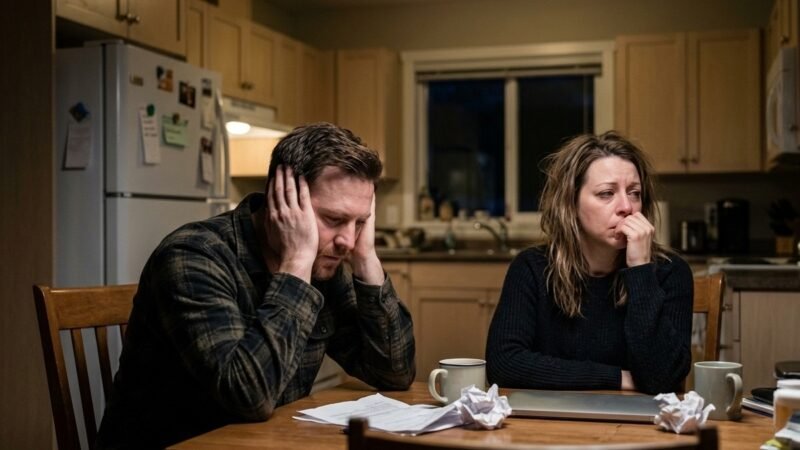
Wife Pushes Husband Into The Friend Zone, Then Panics When He Actually Becomes Just A Friend

Thirty-four-year-old Daniel had always believed that marriage was supposed to feel like a partnership, not a roommate arrangement. He loved his wife, Claire, and for years he tried to keep their relationship strong by planning dates, surprising her with little gifts, helping around the house, and making time for conversations after work. Claire, however, gradually became less interested in the romantic side of their marriage. She frequently told Daniel that she was exhausted, needed more personal space, or simply didn’t feel like making an effort. Whenever Daniel tried to talk about the growing emotional distance between them, Claire told him that he was putting too much pressure on her and that she wanted their relationship to feel more like a friendship. Daniel didn’t want to argue, so he tried to respect what she was asking for. He stopped expecting romantic gestures, stopped initiating affection, and began treating Claire exactly the way she said she wanted to be treated. At first, she seemed relieved. She told him that she finally felt like she could breathe and that there was no pressure anymore. Daniel quietly accepted the new dynamic, even though it hurt.
Over the next several months, Daniel changed the way he behaved around Claire. He remained respectful and helpful, but he stopped acting like a romantic partner. Instead of planning date nights, he started making his own plans with friends. Instead of waiting for Claire to come home so they could spend the evening together, he became comfortable watching movies alone, going to the gym, and pursuing hobbies he had neglected. He still answered when Claire needed something, but he no longer chased her attention or tried to convince her to reconnect emotionally. Claire initially enjoyed having more freedom, but eventually she began noticing that Daniel wasn’t looking at her the same way anymore. One evening, she asked why he had stopped complimenting her. Daniel calmly reminded her that she had repeatedly said she wanted them to feel more like friends. He told her that he had simply taken her seriously. Claire laughed nervously and said she didn’t mean that she wanted him to stop being her husband. Daniel responded that marriage wasn’t something he could switch on and off whenever it was convenient. If she wanted the emotional distance, he was going to respect it rather than constantly fighting against it.

Advertisement
The situation became more uncomfortable when Claire noticed Daniel becoming genuinely happy without her involvement. He started spending weekends with friends, taking short trips, and reconnecting with people he had neglected during the marriage. He also became more confident and independent. Claire suddenly seemed interested in what he was doing and who he was spending time with. She began asking questions about his plans and occasionally became irritated when he was unavailable. Daniel wasn’t trying to make her jealous; he was simply building a life that didn’t depend on receiving affection from someone who had repeatedly told him she didn’t want to provide it. When Claire finally confronted him and asked whether he still loved her, Daniel admitted that his feelings had changed. He cared about her deeply, but he no longer felt the same romantic connection because they had spent so long treating their marriage like a friendship. Claire was shocked. She had assumed that Daniel would remain emotionally devoted no matter how distant she became. She suddenly realized that asking someone to stop pursuing you can eventually make them stop pursuing you for real.
Claire tried to repair the relationship almost immediately. She suggested going on dates, becoming affectionate again, and spending more time together. Daniel appreciated the effort but told her that he couldn’t simply return to the way things had been. For years, he had been asking for emotional closeness and had been told that his expectations were too much. Now that he had learned to live without that closeness, Claire couldn’t expect him to instantly switch back. She became frustrated and accused him of punishing her. Daniel explained that he wasn’t punishing her. He was simply responding to the relationship she had asked for. The two eventually began marriage counseling, where they discussed how resentment and emotional neglect had slowly damaged their connection. Claire admitted that she had taken Daniel’s devotion for granted, while Daniel admitted that he had stayed quiet for too long because he was afraid of losing her. They both realized that neither person could demand emotional intimacy from the other, but neither could expect a relationship to remain romantic while consistently rejecting romantic connection.
The experience forced both of them to confront an uncomfortable truth about marriage. Love may survive difficult periods, but relationships still require effort, affection, communication, and mutual desire. Claire had believed she could place Daniel in the “friend zone” while keeping all the security and devotion of a husband. Daniel eventually showed her that relationships don’t work that way. When someone repeatedly asks for emotional distance, the other person may eventually stop waiting for closeness. Whether their marriage survived depended on whether they could genuinely rebuild trust rather than simply return to old habits. Daniel wasn’t interested in revenge, and Claire wasn’t interested in losing her husband. They had reached a point where they needed to decide whether they were willing to become romantic partners again or accept that their relationship had changed. The biggest lesson for both was simple: you cannot repeatedly tell someone that you only want them as a friend and then be shocked when they finally believe you.
Read Story…
My wife friend-zoned me and wants a platonic “companionship”
My wife (35f) and I (35m) have been married for 15 years and we’ve been together for 20 years. We have two kids (12,14) we absolutely adore and work tirelessly to provide the best possible life for them. For the past 3 years, things have been somewhat bumpy. I understand that our kids are at an age where they require a ton of our attention and resources with school, band, club sports, and other extracurriculars and I’m aware of the physical and emotional toll that can have on marriages.
However, for these past 3 years, my wife and I have had very little intimacy and very little sex and we’ve been trying very hard to work on that aspect of our relationship. This past year has been the most difficult and by far the darkest year in our marriage. We didn’t talk very much, we essentially became roommates coparenting our kids under the same roof. It was very depressing and very demoralizing. It was to the point where we began contemplating divorce and it became very dark and gloomy in the household because of that.
We began seeking help with both individualized therapy and couples therapy and it seems to have helped some. Little by little we started to get along and started to have deeper conversations about what our marriage looks like and what we would love for it to look like. This is where it gets tough. As time passed, my wife started to tell me she no longer was “in love with me” and that she only saw me as a “best friend.” That she only loved me in a very platonic way, and this was one of the main reasons she didn’t have any desire for intimacy and let alone sex. This was very shocking to me and quite frankly, I was devastated. I because angry and depressed and I couldn’t fathom the thought that I was no longer wanted or desired by the person I felt completely in love with. Things began to deteriorate again and not long after, we were back to square one. I sat down with her one afternoon and had a heart to heart and began to ask questions about where the root of this problem lies, and her answer was “I don’t know” and that “I have built up resentment towards you but I don’t know where it stems from.” As you can imagine, this provides very little to no insight into how to approach this.
I’m puzzled, I’m frustrated and I do not know what to do at this point. Currently, we’ve arrived at a place where she says that she has no sex drive and no desire for intimacy or connection. She says that all she wants is simply “companionship” which basically means our coparenting roommate dynamic. I asked her what I could possibly do or what is it about me that is so unattractive or undesirable and she her response is always “I don’t know.” She stated that she does “love” me but its not the same. That she has been feeling disconnected for years and that our marriage just takes up too much work. Her focus is only the children for now and that my coparenting contributions are “meaningful” to her in our home.
I’m at a loss and I’m mainly venting about my frustration. It’s tough to realize that the person you love has no feelings for you. I feel like at this point I’m only here to contribute financially and as a parent. I feel like what she means with “companionship” is that she’s comfortable with the convenience of having a good father for our kids and my financial contribution to the household. In regard to intimacy and/or sex, she basically told me that its not something she’s interested in or wants at this time. She mentioned that the only way to get to a point for any of that is to be intoxicated which o believe is incredibly awful and very wrong. I told her I do not think forcing herself to have sex or be intimate by drinking or smoking is good and I declined to be a part of that which to my surprise, it upset her and made her more distant.
We’re both extremely honest and transparent. We’ve never cheated on each other and we are always free to look through each others phones, emails, socials, etc. and we hardly ever do. I asked her if there was someone else and she declined. Honestly, I believe her. We then peacefully went through each other’s things and as expected, it was clean. We’ve always been very forward, even with the hard topics so I don’t smell nor feel any foul play or infidelity.
Am I wrong for declining to only be intimate or have sex when she’s intoxicated? (I’m firm on my stance of not partaking in this “only when I’m high or drunk” sex because it doesn’t sit well with me.) I do not know how to help our situation and I’m starting to become a bit anxious and desperate. We’re both fairly young and healthy individuals and good looking. We both have good standing careers and are good parents. I’m just not sure how our lives could have driven us to this point. I’d love some outside perspective on this matter and some insight on how to address something like this. It feels so awful to be unwanted and undesired by my own spouse. I hate it.
tl;dr: My wife of 15+ years is no longer in love with me and doesn’t know way and now says she can only have sex while intoxicated or I need to settle for a platonic sexless marriage and she doesn’t know why that is but it is what it is and I’m in need of insight or advice.
RELEVANT COMMENTS/MISSING REASONS
Commenters looked at his history and found they were swingers
We did some swinging in the past. That was fun for some time. We mutually decided to stop doing it and we have established it’s not the case. When we were swinging however, our marriage seemed to be in a good place. This IS something we did disclose with our couple therapist and made sure to include it to make sure we’re not neglecting an obvious potential issue.
I will say, I did ask my wife if what she experienced during swinging is something that is affecting her view on our relationship and she said it wasn’t. Our swinging experience was always together and it was very sex driven. Nothing really emotional or “poly”. Truth is, I have to believe her at her word. I have no reason to distrust her. To date, she’s always been very forward and never afraid of dealing things head on. No matter how painful.
If this is a consequence of swinging
This issue existed long before the lifestyle.
&
I agree that swinging wasn’t a solution in the end. Never was meant to be, it was more of discovering or exploring if she felt any different. If that was the case, we agreed we would talk about and if we arrive at the conclusion that “myself” is the problem and she has no problem with other men, we would amicably part ways. However this wasn’t the case. She didn’t like sex nor intimacy there either. She was very much in control of that whole swinging situation. And yes, I went along with it. What gives? It felt very organic and it was her “effort” if you will, to discovering more and learning more about our current issue. I saw it as a means of learning if I’m the problem and was very much ready to accept that. It turns out it wasn’t the case.
Six years of miser sound awful. I would very much hate that.
OOP on if the this started when the swinging ended
Finally a comment on the swinging topic with actual insight.
You’re absolutely right about the fact that the swinging experience had things/changes that will impact our marriage and lives forever. For example, the best thing swinging taught us (even above sexual exploration) was the level of transparent and open communication it requires. We would literally have mental orgasms having dialog with such intentionality. We implemented that in ALL our lives and areas including parenting with our children. She even agrees that we’re thankful for that takeaway from our swinging. Honestly, I cannot stress it enough with people here. Yes, we explored swinging, however it was actually a positive experience. When we decided to stop, it was because it felt natural and organic to just do so. In fact, we met with that couple who we mesh super well with the night before. We actually enjoyed the actual friendship and even spent time as vanilla friends. So it wasn’t because of something negative. Wife mentioned that it certainly wasn’t any better and since she’s not enjoying the sex we both agreed there’s no point to this. I agreed and we moved on and we’re still friends with those people because it’s great.
All that said I know, more often than not, swinging causes massive issues. However, this was something we explored in pursuit of a solution to an issue that was present way before. I think of it as taking a “practical” approach to trying to solve the problem.
Update May 15, 2024
Original post: https://www.reddit.com/r/Marriage/s/YlSDQ4nogk
I wanted to give you guys an update of how the therapy session with my wife went this week. Not sure if this is helpful or not but I took many of the responses/comments/suggestions from my initial post and put together some things I wanted to discuss with our couples therapist to help us navigate some of the core issues that may be affecting this situation.
One of the main things that is the “buzz word” of this has been the term “resentment” and it has been really eating me up inside knowing my wife keeps telling me she doesn’t know why she’s resentful or doesn’t know why this is affecting her emotionally/mentally. I brought this up with our therapist once again and resurfaced the conversation about being married for so long (15yrs) and being together since we ere 14yrs old. Our long history of growing up and how having children when she was 19yrs old (me 20) significantly changed the trajectory of our lives. We experience sever poverty and many hardships in the process and we essentially had zero social life for the past 10 years because we were so busy raising babies (2 kids now ages 12 &14). She followed up with tons of questions directly mostly at my wife about her feelings towards this and 90% of the responses were very “our kids” focused. It definitely felt like she was afraid of saying “yes it sucked” because she would feel guilt or shame because it would imply she regrets the kids.
I mentioned this in the session and the therapist encouraged her to look at this outside of the lens of being a mother and to try to view it a bit more selfishly and individually and it was very eye opening. My wife mentioned that she was very frustrated with the fact that we did miss out on many things in life. She also was very clear in saying “I do not think I missed out on other partners or dating or partying but I certainly lost all my friends.” This was huge because one of the big pieces that has caused a strain in our lives is how silo’d and isolated we’ve been (again busy raising kids). I followed up by reminding her that it’s important to have good friends and to make time for herself and her friendships.
For the past 3+ years, we’ve had multiple conversations about friends and how it is important to have them in life. Specially when you have similar peers that can help in many areas of life that perhaps we have no experience navigating and even simply for enjoyment. It has always been something my wife avoids, even though she’s always been someone who needs that external stimuli. The main reason for her not investing in friends or even herself has always been “the kids.” Like I mentioned earlier in this post, 90% of the answers have to relate to “the kids” to some degree.
At this point in our session I started to feel like there was a common denominator (the kids) in most of the frustrations and problems she was experiencing. So I simply asked her “Do you think you may be upset at me because I’m responsible for these kids in the sense that I got you pregnant so young?” I wasn’t ready but she said that she was upset at me for that. She also followed up with the fact that she knows that’s unreasonable because it “takes 2 to tango.” I did feel like it was progress because it kind of gave us something to work on and help alleviate some of these “burdens” so we agreed to invest more time in nurturing good friendships both together and individually.
Towards the end of the session, we began to discuss what actionable items we would take from this session. At this point, it was still all very ambiguous and blurry as to what the outcomes were. I was very direct and very forward in asking my wife what her plan is moving forward. (NOTE: I had decided prior to the session that should my wife say the same thing about being a coparenting roommate that I would take the 180 approach and essentially do me) She started basically saying the same thing, that she doesn’t have any desire to be intimate or sexual with me as of now and that she loves me immensely and she feels bad for not being there for me (as mentioned in my first post).
I also brought up the brief swinging that happened, to which for the 50th time said it wasn’t a problem. I agree with her on this. This was something that was a “mechanical” approach for a solution to a problem that was very much in existent when we tried this. We (both) really have no issue to this. We know it happened, we tried it and mutually stopped and turned the page.
I also brought up other life events that may cause resentment and really we ended up not getting anywhere else as far as the root for resentment which was discouraging.
I then basically expressed to my wife that I will not be ok with that arrangement. I told her that I’ve really done everything I can and that this issue really has reached a point where it has nothing to do with me or require me to do anything that I’m currently not doing. I was very direct and saying that I will not be accepting this dynamic and that I need to be with someone who is actively involved in our marriage, works towards resolutions and is very much interested in maintaining an active intimacy and sexual relationship. I expressed how I am not going to be a “convenience” and that there was more to life than being roommates and coparents. I made sure she knows I love her dearly and that I do want this to work for the better. I also told her that I’m fully committed to this marriage so long as she is as well and that is she wasn’t, its ok, however I will not be a part of something where these efforts are not reciprocated. I told her I have no plans of leaving, and I do not want a divorce, however, I made it clear that if this dynamic continues that divorce will be the only outcome.
Of course tears were involved and it was a very bleak and sad ending to the session. Still nothing was said and I walked out very discouraged and very determined to start working on the 180 as soon as we left the room. It’s painful and very difficult because much of the 180 requires you to be very short and cold and transactional. The saddest part is realizing, this dynamic already is very cold and transactional.
Here is where it gets VERY interesting. I started working on implementing many of the 180 recommendations that same day. I mentioned to my wife that, “hey, things are going to be a bit different moving forward. I’m going to honor her roommate/coparent dynamic without reproach and that it should be no mistake that I am not happy here and I am never going to be ok with it but I am done working on it if she wasn’t going to work on it.” She agreed and went to bed. I started to build distance and started to basically focus on myself. Very short and transactional. She asked for help on some of her personal things to which I declined and it really shocked her. She was upset saying I was being petulant. I explained to her that, she is now fully in charge of her own life and her own issues.
We didn’t talk all day and we only spoke when necessary. Few days I keep this going and she’s very visibly upset and stressed. I typically react to that with gestures of help or nurturing but I didn’t this time. That night she was crying telling me she’s stressed and she things something is wrong with me because I’m “indifferent.” I simply listened, then I told her that this is the dynamic she proposed and that I’m simply (much like her) taking care of myself and focusing on myself. I’m not going to lie, it has been VERY hard to be cold and distant because as I mentioned before, I love her and I wish I could hold her and love on her. However, I know this is somewhat manipulative in a way just to get her way and still keep me in the friendzone. So I’ve been staying the course.
We’re now going on a week of this 180 and let just say, there has been MANY changes on her side. I think she is starting to realize there is more to me than just “friends and coparenting.” I sent her a text a few days ago essentially itemizing bills and separating the financial responsibilities 50/50 and SHE LOST HER SHIT. She basically told me it was “out of left field” to which I responded “hey, friends go in 50/50 and as your friend I expect nothing less.” This was very eye opening because it gave me a glimpse of I’m really taken for granted and how her level of comfort and convenience at my expense is really overlooked. I pushed through anyways and basically told her that this is the new dynamic she asked for and that its still a “bargain” because she would have to be 100% if she was on her own.
I’ll wrap up with this. While the 180 has been working in many different areas, I am still very much sad about the overall situation. There have been MANY eye opening statements being said and realization that have not been pleasant to encounter. It has also sparked new energy and new efforts on her side as well. She’s definitely seeking to talk to me more often and while its hard to turn down, I hope if things improve, this continues to happen. I’ve also noticed that she’s making more time for herself aside from being a mom which is HUGE because she pretty much neglected herself for years. I’m very pleased seeing her be more herself. My hope is that as we work on ourselves, the marriage improves. There really is no telling at this point where this will go. We are very much cordial and amicable even to this day and that’s a very good sign. Boundaries are set and expectations are very clear and I feel that no matter the outcome, I will be at peace with everything that has been done. We’re still going to continue the couples therapist until we either rekindle our marriage or end up in divorce. I feel like having this nonbiased third party really helps as a witness and as a guide through this. No matter what I will always love my wife, however, I will not participate in a sexless, intimacy less marriage because we both deserve better.
Thank you all for all the kind words and recommendations and feedback. This will be my last post on this topic and I wish you all the best.
TL;DR: My wife friend-zoned me wants to just coparent at my expense but I started the 180 method to try and find a solution because she doesn’t want to work on us which seems to be working on getting her out of her rut and helping me discover more about how she feels. Also, therapy is paramount and highly recommend to all couples.
RELEVANT COMMENTS
CatsGambit
So, I’m going to assume that your wife has a lucrative job and you are both going 50/50 on childcare, as you both work and share children. Because otherwise, this approach is just plain financially abusive (and if you’re planning on saying “I won’t pay the bills unless you have sex with me”, sexually abusive as well).
Assuming that is the case and you aren’t a total POS, I’m actually interested in how this works out for you. I feel like I’m in an unstated, similar situation- we both work and have blended finances, but we don’t go to bed together or eat together, have barely any intimacy (a kiss or two, hugs every couple days), and spend…. maybe 8 hours a week together, just the three of us (him, me, and the toddler). Even less just the two of us- maybe 3 hours a week? Otherwise, he is on his game, or out playing sports, watching youtube, or whatever else he does. It barely feels like a friends situation, let alone a marriage. I’m curious how she handles it, as the spouse that presumably was pulling away first- I hope you keep us updated.
OOP
Yes we both have degrees, good careers and while I make significantly more money, her salary is very proficient and above average. The 50/50 was not to cripple nor hurt her financially (that is cruel) but mostly to send a message on what a “roommate” dynamic looks like in the real world.
I really dislike how people immediately jump to conclusions about the finances as a way of manipulating her. It’s not the case at all. Plenty of money left over after bills. However 50/50 means she has less “whatever” money AND the understanding that roommates share everything equally.
Prior to this 180 approach, we did everything together and with our kids. We always saw ourselves as a “unit” that do things together. Both alone and with the kids too. That’s changed now where I’m choosing to focus on more independent type of pastimes and focus. That is what has sparked her reaction and realization of “there’s more” than just roommates here.
~
TheLoneJackal
How does one dump half of the household expenses on the other person if they share a bank account? Or are your finances kept separately? Just curious how this would work if applied to my life.
OOP
Excellent question. We shared everything. The proposed 50/50 was suggesting we place the necessary amount to pay bills in the same account and any leftover money can be deposited to a new account. I think this is why she was very upset. She felt a huge loss of control knowing she won’t be able to monitor my finances. Also, she felt a huge loss in her left over money with this arrangement and saw that I would keep significantly more of my own. This is still being worked out because I think she is calling my bluff here but my plan is to notify her next week as I modify my direct deposit and open a new account. It will definitely be more real there.
TO BE CLEAR (for all the trolls here) yes, she will have less leftover money after responsibilities and it’s still enough to live on.
EXAMPLE (for reference): Assume I make $3000 a month, she makes $1000 a month. Responsibilities are $1000 a month. So she’d contribute $500 and I would contribute $500. Where before she would contribute only $250.
This is the last comment I’ll add regarding money and finances. She’s fine and she’s not hurting. I PROMISE
When asked what if she leaves for another man
Interesting. She has no shortage of men hitting on her and we’re by no means jealous people. So I’ve witnessed this multiple times and her reactions are somewhat indifferent. I will say, if another man for her was the answer, she’d tell me or she’d have some inkling maybe?
There’s no telling but I think the problem is deeper than superficial attention from a different person.
&
You might be right. And if this is the case, so be it. However, I’ll live with peace knowing I left no stone left unturned.
CRAZY THOUGHT: I know I would be disappointed and saddened if she did leave for another man that would accept the bare minimum BUT I’d also feel a peace knowing it’s not all my fault (I know I’m responsible in some way to some degree. That’s just marriage). I know sadness and depressing will creep but we’ll both overcome but if this does happen at least there will be clear reasons and clarity as to why it did. Also, I know for a fact it she wouldn’t cheat. We’re both very blunt open and transparent. She would definitely tell me that she wants to step out on our marriage before it actually happens. As would I. We owe ourselves this respect for each other and we actively practice it.
Daniel Thought His Marriage Was Built on Love and Romance—Until Claire Slowly Changed
Thirty-four-year-old Daniel had always believed that marriage was supposed to feel like a partnership built on love, affection, friendship, and mutual effort. When he married Claire, he genuinely believed they would grow closer as the years passed. During the first few years, they were inseparable. They went on weekend dates, cooked dinner together, traveled whenever they could, and spent hours talking about their dreams. Daniel never expected their relationship to become perfect, but he believed they would always make an effort to keep the romantic side of their marriage alive.

Advertisement
Gradually, however, Claire began changing. She became less interested in dates and increasingly preferred spending time alone. When Daniel suggested going out for dinner, she often said she was tired. When he planned small surprises, she appreciated them politely but rarely returned the effort. Daniel tried not to take it personally because he knew life could become stressful and exhausting. He kept telling himself that perhaps Claire was simply going through a difficult period and that things would eventually return to normal.

Advertisement
But the emotional distance continued for months. Daniel noticed that Claire no longer initiated affection, rarely complimented him, and seemed uncomfortable whenever he tried to create romantic moments. When he asked whether something was wrong, Claire insisted that she still loved him but didn’t want to feel pressured to behave like a romantic partner all the time. She told him that she wanted their marriage to feel more like a friendship. Daniel was surprised by the statement, but he tried to understand what she meant.
Daniel eventually asked Claire what she expected their relationship to look like. She said she wanted them to be best friends who supported each other without constantly worrying about romance, physical affection, or romantic expectations. Daniel wasn’t completely comfortable with the idea, but he didn’t want to force Claire into something she didn’t want. He told her he would respect her wishes. Claire seemed relieved and told him that she finally felt like the pressure had disappeared.
Daniel took her words seriously. He stopped planning romantic dates because Claire had repeatedly rejected them. He stopped buying romantic gifts and stopped initiating affection unless she clearly welcomed it. He continued helping around the house, supporting her career, and being there whenever she needed him. The difference was that he no longer expected anything romantic in return.
At first, Claire seemed perfectly happy with the new arrangement. She had more personal space and didn’t feel obligated to participate in romantic activities. She spent more time with her friends and focused on her own interests. Daniel also began spending more time on himself. He returned to hobbies he had neglected, started exercising regularly, and reconnected with old friends.
For the first time in years, Daniel stopped organizing his life around Claire’s attention. He wasn’t angry with her, and he wasn’t trying to punish her. He simply accepted the relationship she had asked for. If Claire wanted a best friend instead of a romantic husband, Daniel decided that he could be that friend.
Several months later, Claire began noticing something unusual. Daniel seemed happier and more relaxed. He no longer looked disappointed when she declined a date. He didn’t ask why she wasn’t affectionate. He didn’t wait around hoping she would suddenly become romantic again. Instead, he simply made his own plans.
One Friday evening, Claire came home expecting Daniel to be waiting for her. Instead, he was getting ready to meet some friends for dinner. She asked where he was going, and Daniel casually told her that he had plans. Claire seemed surprised because Daniel had rarely gone out without her in the past.
As the weeks passed, Claire started becoming increasingly curious about Daniel’s independent life. She asked about his friends, his hobbies, and his weekend plans. She even began complaining that he was spending too much time away from home. Daniel was confused because she had previously told him that she wanted more independence and less pressure in their relationship.
One night, Claire finally asked Daniel whether he still loved her. Daniel didn’t answer immediately. He told her that he cared about her deeply, but the romantic feelings he once had were no longer as strong. Years of rejection and emotional distance had changed the way he viewed their marriage. He explained that he had eventually stopped waiting for the relationship to become something Claire had repeatedly said she didn’t want.
Claire was devastated by his answer. She told him that she never meant for him to stop loving her. She had only wanted less pressure and more space. Daniel told her that he understood, but that his feelings couldn’t be controlled like a switch. When someone repeatedly asks another person to stop pursuing them romantically, eventually that person may stop pursuing them altogether.
Claire suddenly became interested in repairing their relationship. She suggested going out together, watching movies as a couple, and bringing romance back into their marriage. Daniel agreed to try spending more time together, but he warned her that he couldn’t simply return to the way things had been before.
Claire became frustrated because she expected Daniel to be excited about her renewed interest. Instead, he remained cautious. He told her that for years he had been the person asking for closeness while she had been the person asking for distance. Now that she wanted closeness, he needed time to understand whether the change was genuine or simply a reaction to losing his attention.
Claire accused him of punishing her for expressing her needs. Daniel calmly explained that he wasn’t punishing her. He was dealing with the emotional consequences of the relationship they had created together. He had spent a long time teaching himself not to expect affection because expecting it had repeatedly led to disappointment.
The conversation forced Claire to think about her own behavior. She realized that she had become so comfortable with Daniel’s unconditional devotion that she never considered what might happen if he eventually stopped providing it. She assumed that because he loved her, he would always be there waiting whenever she decided she wanted romance again.
Daniel also recognized that he had made mistakes. He admitted that he had stayed quiet for too long because he was afraid that confronting Claire about their relationship would push her away. Instead of clearly communicating how unhappy he was, he had gradually accepted the situation and allowed resentment to build.
Eventually, the couple decided to try marriage counseling. They wanted a neutral person to help them understand what had happened without blaming each other. During their sessions, Claire admitted that she had taken Daniel’s love for granted. Daniel admitted that he had confused patience with silently tolerating emotional neglect.
Their counselor helped them understand that friendship could be an important part of marriage, but marriage couldn’t survive on friendship alone if one partner wanted romantic intimacy and the other consistently rejected it. Neither person was wrong for having needs, but both were responsible for communicating those needs honestly.
Claire slowly began making genuine efforts to reconnect with Daniel. She stopped expecting him to instantly become romantic again and instead focused on rebuilding trust. She planned small outings, asked about his interests, and tried to show affection without expecting immediate results.
Daniel appreciated the effort but remained careful. He didn’t want their relationship to return to the same cycle where he became enthusiastic for a few weeks and then felt rejected again. He wanted to see consistent change rather than temporary panic caused by the possibility of losing him.
For the first time, they began having honest conversations about what they actually wanted from their marriage. Claire admitted that she wanted independence while still feeling emotionally connected. Daniel explained that he needed affection, appreciation, and romantic effort to feel like a husband rather than simply a roommate or best friend.
The process wasn’t easy. There were moments when Claire became frustrated and moments when Daniel questioned whether the relationship could be repaired. But they gradually learned to communicate before resentment became overwhelming. They also began recognizing that neither person could force the other to feel something.
Months later, Daniel told Claire that he was beginning to feel romantic affection for her again. It wasn’t exactly the same as before, but it felt more genuine because it was based on mutual effort. Claire understood that she couldn’t demand his old feelings back simply because she had changed her mind.
The experience changed both of them. Claire learned that asking someone to remove romance from a marriage could have consequences she hadn’t anticipated. Daniel learned that silently accepting emotional distance wasn’t healthy either. If something was hurting him, he needed to communicate it rather than simply adapting until he became emotionally detached.
Their story eventually became less about the “friend zone” and more about understanding what marriage actually requires. Being best friends can strengthen a marriage, but friendship cannot replace every other form of intimacy when both partners want a romantic relationship. Love requires communication, boundaries, affection, and continued effort from both people.
Daniel never wanted revenge against Claire. He simply wanted to stop feeling rejected. Claire never intended to lose her husband. She simply wanted freedom from what she considered romantic pressure. Their biggest mistake was failing to understand that both desires could have consequences.
In the end, they realized that relationships don’t automatically remain the same just because two people are married. Feelings evolve according to how people treat one another. Claire had asked Daniel to treat her like a friend, and eventually he did exactly that. When she realized she wanted her husband back, she had to understand that love couldn’t be demanded—it had to be rebuilt.