Wife Realizes She’s Never Going To Be A Priority For Her Husband, Decides To Match His Energy

For years, she had convinced herself that marriage required compromise, patience, and understanding. Whenever her husband canceled plans, forgot important dates, or prioritized work, friends, and even his hobbies over spending time with her, she always found an excuse for him. She believed he was simply busy and that things would improve once life became less stressful. However, the pattern never changed. Birthdays were forgotten, anniversaries became ordinary days, and promises to spend quality time together were repeatedly broken. She realized she was always the one making sacrifices while her own emotional needs were constantly pushed aside. The painful truth finally became impossible to ignore—she wasn’t her husband’s partner in practice, only in name.
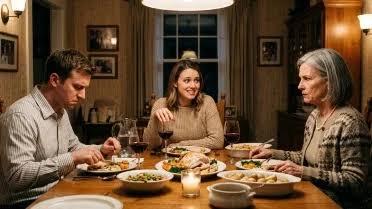
Everything came to a head when she spent weeks organizing a special dinner to celebrate an important milestone in their relationship. She carefully planned every detail, hoping it would remind them of the bond they once shared. On the evening of the celebration, her husband sent a brief message saying he had accepted a last-minute invitation from coworkers and wouldn’t be coming home until late. There was no apology, no attempt to reschedule, and no sign that he understood how much the evening meant to her. Sitting alone at the beautifully prepared table, she realized she had spent years waiting for someone who never seemed willing to make her a priority. Instead of crying or starting another argument that would likely lead nowhere, she quietly cleaned up the dinner and made a decision that would change the direction of their marriage.
She Finally Matched His Energy
From that day forward, she stopped chasing his attention and decided to match the same level of effort he had been giving the relationship. She no longer rearranged her schedule to accommodate his last-minute plans or reminded him about family events he had ignored in the past. Instead, she invested her time in reconnecting with friends, pursuing hobbies she had abandoned, and focusing on her own happiness. When her husband eventually noticed the change and questioned why she seemed distant, she calmly explained that she was simply treating the relationship the way he always had. For the first time, he experienced what it felt like to come second, and the realization forced him to confront the consequences of years of emotional neglect.

Advertisement
Read Story…
Decided to “decenter” my husband a couple of years ago and here’s how it’s going
ETA: went through the comments, not going to respond to all of them but a couple of things:
-A lot of people saying, sounds like roommates but more depressing. Yeah, maybe like roommates but the best version of roommates I’ve ever had. Does his share of the housework, contributes entirely equally to the finances, obviously loves our kid, always down to build something I want for the house/yard.
-Why don’t I get a divorce? Because I’m really not in the mood for it, tbh. I’m genuinely pretty happy. The big stressors in my life don’t include anything about my marriage, at the moment. If I had the money on hand to waltz on out of here and into a similar quality of life, I might consider it more closely. But I don’t so it’s not an option worth considering when my day to day is pleasant. Housing prices have skyrocketed since we bought our house, along with everything else. Some people might think it’s shallow but you know what’s worse than roommate husband? Being unable to afford rent or access medical care.
-Sounds like he doesn’t even like me – no I don’t think that’s true. We just hung out in the driveway for an hour after he put our kid to bed and talked about the stars and life and how to manage the native plant areas in our yard and it was pretty great. Does he like me in the way I thought he did when we got married? Maybe not. Is there tension/bad energy/snippy attitudes in our house/silent treatment/manipulation/lying? Nope.
– a few comments assuming my husband doesn’t work. He does work quite a lot and our incomes are about equal, he pulls 5-10k more than me annually (I’m salary, he’s hourly). We make okay money for a rural MCOL area. Someone said something about me paying him alimony – yeah no haha
-I’ll fall for someone else/I deserve someone better/this sounds more lonely than being single – I honestly think if we got a divorce I’d just be done with dating. Not super interested in there being a “someone else” I’m a pretty strong introvert and men are exhausting.
-I don’t read messages or chats or whatever they’re called on Reddit.
Came to the realization that I was pretty lonely in my marriage. Didn’t feel like my husband and I were spending enough time together. He got in the habit of staying up late doing his hobbies or watching youtube or whatever and then just not coming to bed. He would sometimes talk like date nights are some obligation, mentioned in the same sentence as chores he’d rather not do or work related tasks he he had to do on weekends. I started to feel like spending time together was the last thing on his list. Something to do after all other boxes are checked. This also applied to our sex life. I was the only one initiating and he would often turn me down (in a nice way but still) or tell me “yes later” but later never came.
Overall the whole vibe I got was that he feels like he never has “free time” and anything other than what he has planned for himself is an obligation he has to meet.
To be fair, sometimes what he wants to do is a certain chore, often something that does need to be done now or soon, but it’s almost always something he can go off and do by himself with headphones in. No child nearby. No distractions, just him and headphones and tools. Sometimes these are chores I could totally do and would like to do but instead he does them and I am relegated to things I can do while also keeping an eye on a 4yo.
We’d have conversations about these issues, and others. I have been very open about my feelings. Lots of good suggestions from both of us and promises from him that never came to fruition.
I don’t want a divorce. I love my husband and also a divorce is just not practical even if I wanted that. I put real thought into whether I wanted to keep this going and if yes, how do we stay married in a way that is less lonely for me and also doesn’t require him to change himself or his actions because clearly he won’t be doing that.
I started by thinking about it as “matching his effort”. I realized I was spending a lot of time just making myself available for free time or sex or whatever, and for what? He’s not doing the same for me. I started filling that time with my own hobbies. Instead of scrolling some garbage in the living waiting for him to be done with his thing, I’ve been reading more. Got back into yoga a bit. Playing around with art in ways I haven’t before. Big upgrades to my garden.
The I watched some content about The Abby Eckel about “decentering” it it clicked and I watched more and started applying it to more areas of our life.
I stopped trying to carry our sex life by myself. Bought some toys and just take care of my own needs. I have things I need to do to feel “ready” for sex, like if I haven’t showered in the past 8 hours then it’s a no-go. Or shaved my armpits in the last few days. For a while I was making sure to have those boxes checked for all the time, in case he was in the mood. Even when I was really tired and just wanted to go to bed, I’d shower and wash my hair in case maybe sex was an option. When in reality, I could just prioritize myself and go to sleep and shower in the morning.
Developed bedtime and wakeup routines that are incredibly self centered and would be kind of rude if I were sharing a bed. Bought cute sheets. Started decorating the bedroom walls in a way that appeals to me, because he’s never in there.
A lot of our “together time” in the evening involves watching something together on the couch, often youtube videos. But our couch isn’t conducive to snuggling so we end up on opposite ends and I almost always fall asleep, wake up at 3am, and then have to go to bed and it interrupts my sleep. I’ve shared with him that this kind of “quality time” actually doesn’t do much for me. Mostly I was doing it because that’s the quality time that was available. That bums him out, but not enough to suggest other modes of quality time. Or to decide on a better couch which I’m also open to. So if I really do want to watch youtube with him, I will. But I’m not doing it anymore just because it’s the opportunity for quality time.
The important thing to note here is that none of this is meant as some kind of manipulation to get him to change his behavior. Its just meant to redirect my own energy where it can serve me.
This started about two years ago and here’s how it’s gone:
I’m way less stressed. More time for hobbies. More time with my friends. The time I spend with my husband is higher quality, because it’s when we’re both fully engaged with each other.
Has he noticed or said anything? Yes and I’m not mean and don’t try to make him feel bad but I tell it how it is, calmly.
Like one time he said something about how I used to use my hair to tickle his face when we snuggled. I pointed out to him that this is thing you usually do at night or in the morning in bed with your partner. He’s never in bed. So I don’t do it. I have made it clear he’s welcome to sleep in the bed, but it’s not something I need from him. He almost never does.
A few times, he’s asked for sex and I’ve turned him down. This never used to happen. I’ve told him, I used to wait around for sex and now I don’t. When I decided I was done carrying that aspect of the relationship, I made that clear to him – explicitly – and then he didn’t initiate anything for a year. I pointed that out to him and he said “well. Yeah.” and that was it. One time after that he said something about me “never being in the mood when he is” and I pointed out, once again, that he only every tries to make things happen like, 4 times a year. I’m still in the mood very often, but instead of going to him I’m taking care of it myself, because doing it myself is guaranteed satisfaction. He did suggest to me that he is more in the mood early in the morning vs evenings so maybe I should try then. I told him, HE is welcome to come on upstairs and make something happen. Until then, I’m happy with my DIY situation.
He said something a couple of months ago about how we never “cuddle” on the couch and watch youtube or movies together anymore. I reminded him that doing that, really doesn’t do anything for me. The cuddles are low quality on opposite ends of the couch and I hate falling asleep on the couch in any situation. “Well I know but I miss it”. “You can bring the laptop upstairs and we can watch something up there” he has not done that.
We have had conversations about this magical “dad” ability to walk out the door on a Saturday morning and start a project that renders him basically unavailable and how unfair that is. He acknowledges that this is real and unfair, but does nothing about it. So I’ve started wandering away to do my own projects before he does, or announcing I have an errand to run, and then he can figure it out. He does not give me any static about this, because again he knows it’s a thing. He takes it in stride and adjusts his expectations for the day.
So, yeah, Decenter the main man in your life, find greater personal fulfillment.
Her Absence Changes Everything
Over the following weeks, her husband barely noticed the changes at first. Used to having everything organized for him, he assumed dinner would still be ready, appointments would still be remembered, and family gatherings would still appear on his calendar without any effort on his part. When those little conveniences quietly disappeared, he found himself missing meetings, forgetting birthdays, and scrambling to keep up with responsibilities she had handled for years without recognition. For the first time, he began to realize how much of their daily life depended on her invisible efforts.
Advertisement
Instead of spending her evenings waiting for him to come home, she accepted invitations from friends she had ignored for years. She joined a local book club, started taking weekend photography classes, and even planned short day trips that she had always postponed because her husband was “too busy.” The more she invested in herself, the happier and more confident she became. People around her noticed the difference immediately, complimenting her energy and asking what had changed. She simply smiled and replied that she had finally decided to make herself a priority.
One Friday evening, her husband came home expecting another quiet night together, only to find the house empty. A note on the kitchen counter informed him that she was attending a concert with friends and would be home later. The realization caught him off guard because she had always checked with him before making plans. Sitting alone in the silent house, he experienced the same loneliness she had felt countless times while waiting for him.
As weeks passed, the emotional distance between them became impossible to ignore. Their conversations grew shorter, and the warmth that once existed in the relationship slowly faded. His attempts at casual conversation were often met with polite but brief responses. She wasn’t trying to punish him; she had simply stopped exhausting herself trying to maintain a one-sided relationship. The imbalance he had ignored for years was finally impossible to overlook.
Concerned by the sudden shift, he asked one of their mutual friends if something was wrong. The friend answered honestly, explaining that his wife had spent years feeling overlooked and emotionally exhausted. Everyone close to the couple had noticed how often she put him first while receiving very little appreciation in return. Hearing those words from someone else forced him to consider that the problem wasn’t a recent argument—it was years of accumulated disappointment.
Determined to repair the damage, he surprised her with flowers one evening. Although she appreciated the thoughtful gesture, she recognized that a single romantic moment couldn’t erase years of neglect. She thanked him sincerely but explained that what she needed wasn’t occasional gifts—it was consistent effort, respect, and emotional presence. Her calm response made him realize just how deeply the issue had affected her.
Over the next month, he began making genuine changes rather than relying on grand gestures. He left work on time more often, started planning date nights himself, and paid closer attention to important family events. Instead of waiting for reminders, he took responsibility for remembering birthdays, anniversaries, and commitments. For the first time in years, she saw him actively contributing to the relationship instead of expecting her to carry the emotional burden alone.
Despite his efforts, rebuilding trust proved far more difficult than either of them expected. Emotional wounds that had formed over many years couldn’t disappear overnight. There were moments when old habits resurfaced, leading to disappointment and frustration. However, instead of ignoring those moments, they began discussing them openly, something they had rarely done before. Honest communication gradually replaced silent resentment.
The couple eventually agreed to attend marriage counseling together. During their sessions, they discovered that many of their problems weren’t caused by a lack of love but by years of poor communication and unspoken expectations. The counselor encouraged both of them to express their needs clearly instead of assuming the other person should simply know what they wanted. Those conversations were uncomfortable at first, but they also became the foundation for rebuilding mutual respect.
Her husband later admitted that he had mistaken her constant support for something that would always be there. Because she had never stopped showing up for him, he assumed she never needed the same level of care in return. Watching her create a fulfilling life without depending on him forced him to confront how much he had taken her presence for granted. It was a realization he wished had come much sooner.
As time went on, she remained committed to the boundaries she had established. She no longer sacrificed her happiness simply to avoid conflict or keep the peace. Even as their relationship improved, she continued pursuing her hobbies, friendships, and personal goals. The independence she had developed reminded both of them that a healthy marriage should support each partner’s individuality rather than require one person to lose themselves.
Friends and family who watched the transformation noticed a healthier dynamic developing between the couple. Decisions were made together, responsibilities were shared more equally, and appreciation became part of their daily conversations. The marriage wasn’t perfect, but it was no longer one-sided. Both partners understood that love is demonstrated through consistent actions, not just promises or occasional romantic gestures.
Looking back, she realized that matching her husband’s energy had never been about revenge or teaching him a lesson. It was about refusing to keep investing in a relationship that lacked balance. Ironically, stepping back became the wake-up call that endless arguments had failed to achieve. Whether their marriage ultimately succeeded or failed, she knew one thing for certain: she would never again allow herself to be treated as an afterthought in her own relationship.

Advertisement