78 Funny, Deep, And Weird Posts That Prove Tumblr Is A Unique Internet Experience (New Pics)

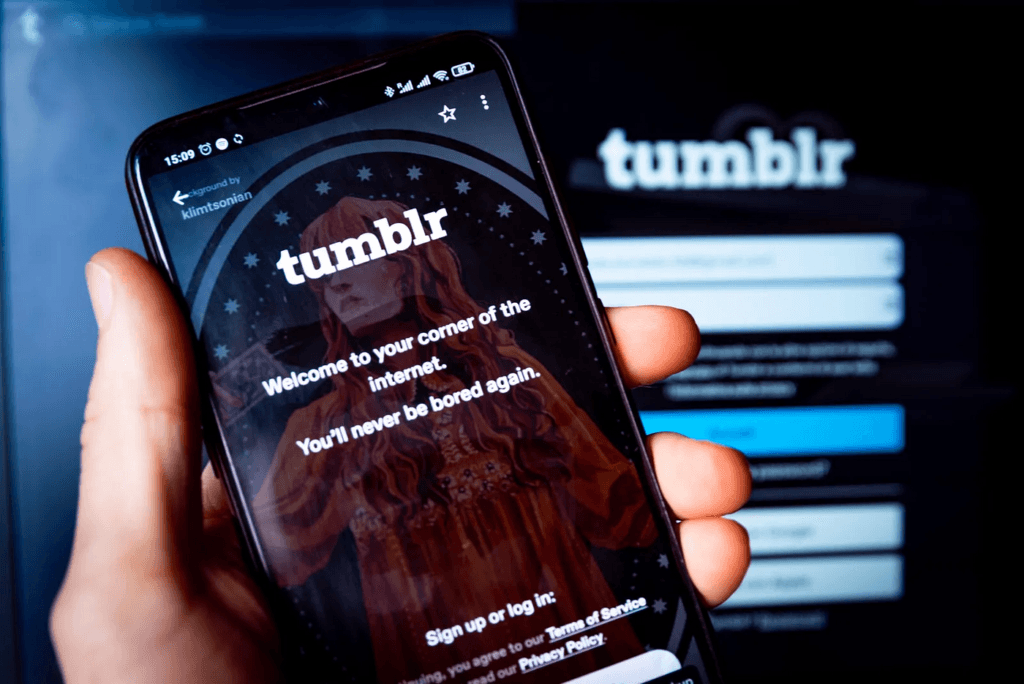
Tumblr has always been one of the most unusual corners of the internet, where creativity, humor, emotions, and random thoughts come together in a way that feels completely different from other social media platforms. Unlike many modern platforms that focus on trends and short attention spans, Tumblr became famous for its unpredictable posts, unique communities, and the freedom users had to share almost anything. From hilarious observations about everyday life to deep reflections about human emotions, Tumblr posts often capture moments that are strange, relatable, and surprisingly meaningful.
One of the biggest reasons Tumblr remains memorable is the way users turn ordinary situations into entertaining stories. A simple experience at a grocery store, a funny conversation with a friend, or a random thought that pops into someone’s head can become a viral post that thousands of people connect with. Many Tumblr users have a special talent for finding humor in unexpected places, making even the most normal events feel exciting. These posts often remind people that the internet can still be a place for creativity rather than just advertisements and carefully edited content.Beyond the jokes and funny moments, Tumblr is also known for its deep and emotional posts. Many users have shared personal experiences, life lessons, and thoughtful observations about relationships, society, and personal growth. These posts often gain attention because they express feelings that many people experience but struggle to describe. A single sentence written by a stranger can sometimes make readers feel understood and connected, proving that online communities can create genuine emotional bonds.
The weird side of Tumblr is another reason why the platform has developed such a unique reputation. From unusual theories and creative artwork to bizarre questions and unexpected discussions, Tumblr has always encouraged people to embrace their imagination. Some posts are so random that they make people laugh simply because nobody could have predicted them. This unpredictable nature is what makes scrolling through Tumblr feel like entering a world where anything can happen.
Advertisement
The collection of 78 funny, deep, and weird Tumblr posts shows exactly why the platform continues to be remembered as a special part of internet culture. These posts represent the creativity, humor, and individuality of millions of users who made Tumblr different from traditional social networks. Whether they make people laugh, think, or question the world around them, these moments prove that sometimes the most unexpected ideas can become the most memorable ones. Tumblr’s unique style continues to inspire people who appreciate a more authentic and creative online experience.

Advertisement
Read Story…
The Ultimate Checklist for Choosing a Safe Domain Registrar (that won’t sell you out)
Planning to launch an online business—or already running one and worried about competitors, false abuse reports, or malicious complaints? This guide will show you how to evaluate domain registrars based on what truly matters: their abuse policies, legal jurisdiction, reliability, and pricing, so you can make an informed decision before problems arise.
Your domain name is not just a URL. It is your business and brand itself. Customers recall your domain name every time they want to check out your business, and quickly, your domain and ‘you’ are indistinguishable.
For any business operating online, a single suspension or automated takedown can wipe out years of SEO, customer trust, search rankings, and revenue overnight. This risk is especially critical for businesses in grey-area or abuse-prone industries, but in reality, every business faces it—particularly in highly competitive markets where competitors, bad actors, or automated reporting systems can trigger disruption.
Over the past several years, the Trustname Protection & Safety Department has reviewed a ton of abuse reports, and a shocking number of them turned out to be misleading, fraudulent, and weaponized abuse reports targeting legitimate online businesses.
Many of these reports were not submitted by regulators or genuine victims, but by competitors, extortionists, black-hat operators, and opportunists attempting to damage brand reputation, disrupt rankings, or pressure businesses into paying ransoms.
The problem is clear: Most domain registrars don’t investigate abuse reports before taking down domains, and have unknowingly given bad actors all the leverage to hold brands at ransom.
If you plan to launch an abuse-prone business soon or have already been a victim of unfair domain takedowns, in this guide, we’ll show you what you should actually consider when choosing a registrar — abuse handling, jurisdiction, pricing transparency, privacy protections, recovery policies, and legal resilience — so you can run your business with peace of mind.
Online Casinos and Online Pharmacies: Prime Targets for Fake Abuse Reports
Based on Trustname’s investigations, online casinos and online pharmacies are among the most frequently targeted industries for abuse complaints. Of these two sectors, online pharmacies have generated the highest number of false, misleading, or unsupported abuse reports, often requiring extensive manual review before any action can be justified.
In a particular case, we were able to tie dozens of seemingly isolated incidents for online pharmacies to something much bigger: a years-long pattern of domain sabotage allegedly connected to a single bad actor.
The perpetrator had a unique way of targeting online pharmacies: posing as an “SEO specialist” to gain access to the brand’s website backend, and he was incredibly successful with it.
The same actor targeted some of the largest online pharmacy brands and brought down dozens of domains, tanked the traffic of many, and caused businesses to lose millions in revenue.
Entire market leaders vanished almost overnight, and many of these companies never recovered. Others spent years hopping between registrars after discovering that the registrar they trusted would suspend domains first and ask questions later, and never truly gained stability.
But one company survived.
Why? Because they eventually discovered a domain registrar that upheld due process and didn’t just buckle under pressure from abuse reports to unfairly take down domains they’d been entrusted with.
Why This Guide Exists
Most new domain owners pick a registrar without considering the qualities that actually matter: they search Google for a recommended registrar, type “[domain name] .com”, filter by first-year price to find the cheapest, and click the top result. Their whole decision process takes five minutes.
Then the problems start to show up.
A random person filed an abuse report, and the registrar is holding your domain hostage. They’re hit with a monster renewal price that’s several times what they paid for in the first year because the registrar was not transparent.
Or worse, a domain takedown request issued by someone they have never heard of, and then, suddenly, they realize the decision they made in five minutes is now going to cost them their business.
This guide is going to flip how you evaluate domains so you focus on what actually matters, especially if you plan to run an abuse-prone business, aka choosing a registrar based on what happens after the signup form.
You’ll learn how the registrar handles disputes, where it operates legally, how it prices renewals, and what it does when something goes wrong.
We’ll be discussing a domain evaluation framework that applies to any registrar, including the one publishing this guide. Where this guide mentions specific registrars, we’ll only show verifiable claims based on publicly available terms and pricing pages, all compiled at the bottom of the comparison table.
Your business depends on your registrar. If your domain is your business, the cost of a bad registrar is not the renewal fee. It is the day your site goes dark, and you are talking to a chatbot.
What Happens When an Abuse Report Hits Your Domain
An abuse complaint can come from almost anyone: a competitor, a disgruntled customer, an attorney representing a brand, an automated copyright bot, or a commercial monitoring service. These reports are received by the registrar you registered your domain with. What happens next is where registrars stand out from each other.
How most registrars handle abuse reports
Most major US-based registrars handle domain abuse reports and complaints similarly. The process usually follows:
- Complaint received: The registrar receives a complaint, usually via their abuse email address or a web form.
- Internal review: the registrar evaluates whether the complaint falls under a category that triggers action (copyright, fraud, spam, brand abuse). This is usually automated through a bot.
- Action first: If the report falls even loosely under one of their action-triggering categories, the domain is suspended. The DNS stops resolving, and visitors can no longer access the website tied to the domain.
- Owner gets notified after: Depending on the registrar, the owner may receive a generic email notifying them that their domain has been suspended. If not, the owner finds out for themselves.
- Burden of proof on the owner: To have a chance at getting their domain back, the owner must prove the domain is legitimate, often within a short time window. And worse, this is often done through support tickets that take days to be escalated.
This typical abuse handling process is designed to protect the registrar’s legal exposure, not the owner’s business continuity. Suspending first is the safe move for the registrar. The cost of the suspension is borne entirely by the domain owner.
How customer-focused registrars should handle abuse reports
A registrar genuinely operating in the owner’s interest should flip the typical abuse handling process on its head:
- Complaint received: For all registrars, receiving the abuse report or complaint is the starting point.
- Evidentiary review: Before taking any action, a customer-focused registrar will first ask if the complaint comes from a real complainant. Is there supporting documentation that proves the basis of the complaint? Is the claim verifiable? E.g., Trustname only looks at complaints from real business email addresses and ignores u/gmail and u/proton addresses.
- Notify the owner: Next, the registrar should notify the owner that an abuse report has been filed on their domain, with the details of the complaint, and give a defined response window.
- The owner should be given a reasonable window: The registrar should give the owner a sufficient response window to submit counter-evidence, respond to the claim, or contest the standing of the complainant.
- Fair decision based on evidence: Next, the registrar should make a decision based on real evidence submitted from both sides, not based on whoever complained first.
- Suspension as a last resort: The domain should only be suspended as a last resort and when there’s indisputable evidence that the business was conducting illegal activities. And even so, the registrar should give the owner the option of transferring their domain out.
The difference between these two approaches is directly evident in lost revenue, lost search authority, and lost customer trust. For an e-commerce site or a business with active customer traffic, even a wrongful five-minute suspension can cause more financial damage than the combined cost of hundreds of domain registrations, renewals, and hosting plans over many years.
The Five Principles a Registrar Should Live By
Across the hundreds of registrar abuse and dispute policies we have read, five principles separate the genuinely owner-protective from the merely “fine on paper” registrars. When evaluating any registrar, these are the five things to look out for to ensure your domain is bulletproof:
1. Evidence-based decisions
Registrars should only take action as a last resort and only after specific, verifiable evidence has been submitted. More so, the registrar should require evidence FROM THE COMPLAINANT not the domain owner. The registrar shouldn’t act based on vague allegations, unverified email reports, or commercial monitoring service flags without supporting documentation.
A registrar that acts on unsubstantiated complaints will, sooner or later, act on a frivolous one against a legitimate business owner. Reports from free email e.g. u/gmail addresses, should be subject to thorough scrutiny and enhanced verification procedures.
Before you register: read the registrar’s abuse policy page. Do they specify whether or how much evidence a complainant must provide when submitting an abuse report? Domain owners should be wary of vague language like “any credible report” or “we evaluate at our discretion”.
2. Legal compliance
Most domain registrars follow standard processes set by the ICANN, plus the laws of the region where the registrar is situated. Trustname can only be compelled to act on court orders issued in Estonia. Anyone filing an abuse report within the EU or outside Estonian jurisdiction must go through the MLAT process, which typically takes at least 6 months to verify their legitimacy.
Before you commit: Confirm that the registrar is committed to requiring proper legal process — court orders, UDRP decisions, formal regulatory demands — before acting on third-party requests.
3. Presumption of innocence
This is easily the most often ignored yet one of the most important factors to consider when choosing a registrar. You trusted the registrar with your business and the least they should do is assume you’re running a legitimate business until evidence demonstrates otherwise.
But in reality, most registrars prioritize the word of the complainant over their customers. After a complaint is received, they suspend right away, and the owner can prove innocence later. This is the industry norm and the primary reason for wrongful takedowns.
Before you commit: Go through the registrar’s published process on how they handle domain abuse reports. Do they start with the owner being notified and given time to respond? Or does it start with action?
4. Transparency and fairness
The domain dispute resolution process should be open to all parties involved and well-documented. Owners should know what evidence was presented against them, who the complainant is (if legally permitted), and on what criteria a decision is being made. Black-box or vague dispute processes favor the complainant or whichever party has more lawyers.
Before you commit: Confirm whether the registrar has published its dispute resolution process. Will the registrar disclose who filed a complaint about your domain? Are decisions documented in writing? If there’s no publication, then you should consider other options.
5. The principle of self-doubt
A good registrar should acknowledge that its own judgement is fallible. Mistakes can and will be made; the question is whether the registrar has safeguards in place to catch them.
Registrars with second reviews, generous owner response windows, appeal processes, and reinstatement procedures for wrongful suspensions are what you should look out for. A registrar with an appeals process built around them never being wrong means decisions (even unfair ones) are final.
Before you commit: Confirm that there’s an appeal process for suspension decisions. Can a wrongfully suspended domain be reinstated, and within what timeframe?
Seven Questions to Ask Your Registrar Before Committing
When purchasing a new domain, most buyers focus only on pricing and the bare minimum features. However, this guide teaches you differently. Before you commit, ask the support agents of your current registrar or any registrar you’re considering these questions and get answers in writing. The quality of the answers tells you what you need to know.
1. Do you notify domain owners before acting on an abuse complaint?
- Good answer: Yes, with a defined response window.
- Acceptable: Yes, except for narrow categories like CSAM or the sale of illegal weapons, where action is legally required.
- Red flag: “Depends on the case” without specifics.
2. What evidence do you require from complainants?
- Good answer: We require the complainant to be named, verify their identity, give a specific claim, provide supporting documentation, and that the report came from a verifiable business email address.
- Red flag: “We evaluate each report on a case-by-case basis” without further specification.
3. How long is the owner’s response window?
- Good answer: “We give the domain owner up to 14 days or longer to refute abuse reports. Industry minimum: 5 days.”
- Red flag: If they specify 48 hours or less, or “case-by-case.” A response window shorter than the time it takes to engage a lawyer is not a real response window.
4. What legal jurisdiction governs my domain registration?
- Good answer: A clear single jurisdiction or a transparent multi-jurisdiction structure with named entities is a good sign.
- Red flag: “We comply with all applicable laws” is too vague to verify, and often means US-default exposure. Trustname is out of the US jurisdiction, meaning we do not have to act on the DMCA, Patriot Act, Cloud Act, and similar internet-related acts. Your registrar should be outside the US for max privacy.
5. What is your renewal price compared to your first-year price?
- Good answer: You pay the same amount you paid on registration, or a clearly published renewal price that’s not too far from the initial price.
- Red flag: “$0.01 or $0.99” registration prices almost never tell the full story. There’s a good chance you’ll be paying several to more than a dozen times that amount on renewal.
6. Is your WHOIS privacy free, and is it permanent?
- Good answer: WHOIS privacy should be free, permanent, and included on every domain for the full life of registration.
- Red flag: Domain privacy that’s only free for the first year, then paid; or “available as an add-on” at any price.
- Trustname offers a one-of-a-kind two-layer domain privacy that allows you true domain anonymity by leveraging two proxy companies, and it’s completely free.
7. What categories of legal demands will you and will not act on?
- Good answer: Registrars with publicly available policies that make it super clear what warrants action are the best.
- Red flag: “We comply with valid legal requests” without defining what makes a request valid in the registrar’s eyes is a big red flag.
Why Jurisdiction Matters More Than People Think
Most domain owners assume that the rules ICANN sets cover everything around handling disputes. ICANN sets the technical contractual rules of the domain industry, but in fact, ICANN does not override national law. The registrar is also subject to the laws of the country where it is incorporated, and to any country whose courts can compel its action.
Registrar jurisdiction matters more than it appears at registration time.
A US-incorporated registrar operates under US jurisdiction and is subject to a broad range of federal laws and legal processes, including court orders, subpoenas, the DMCA, the CLOUD Act, the USA PATRIOT Act, and other regulatory frameworks. US registrars also receive volume requests from commercial copyright monitoring services with quasi-legal authority. These requests are often complied with quickly, because of the registrar’s legal exposure in the US.
A registrar incorporated outside the US, say in countries like Estonia (EU), the Caribbean, Malaysia, Hong Kong, and Singapore, operates under different rules. To compel a non-US registrar to act on a domain, a foreign party generally needs to use mutual legal assistance treaties (MLATs), which require proper legal process and typically take months or years to process.
Abuse-prone businesses must make jurisdiction a prime consideration
For domain owners whose businesses are exposed to overreaching legal demands, e.g., small media, privacy-focused services, businesses operating across borders, or just anyone whose competitors have lawyers and big pockets, evaluating a registrar’s jurisdiction directly impacts the continuity of your business, and should not be treated as an administrative detail.
The most bulletproof jurisdiction structure is a multi-jurisdiction setup: the registrar operates legal entities and proxy services across two or more countries, on purpose. This is designed so a complaint that succeeds in one jurisdiction may fail in another. Bringing simultaneous claims across two or three jurisdictions is expensive and is rarely worth the cost for meager complaints.
Trustname is one of the only domain registrars that use a multi-jurisdictional structure to protect users.
Note: Jurisdiction is the difference between a complaint being processed against your favor in three days and a complaint being processed in three years.
The Renewal Trap
Pricing in the registrar industry has become mostly a toxic plot designed to lure in domain owners to commit, only to be hit with huge maintenance costs for their domains. When considering a new registrar, watch out for:
- low first-year promotional prices: $0.01 for a .com is too unrealistic, and most registrars will make you pay back on renewal. $14.99 is a more normal range;
- high renewal pricing in year two and beyond: $20-$25 is typical for .com domains at the popular registrars. Some registrars price renewals at 2-3x the first-year price.
Choosing the right registrar
- fixed renewal pricing: The best pricing structure for registrars is one where the price at registration equals the price at renewal, indefinitely. While rare in the industry, this allows you to know exactly how much you’re spending, and you can pay for your domain for years upfront;
- unconditional grace period: All registrars should have a defined grace window after expiration during which the owner can renew at the standard renewal price and not expect a redemption fee, just a few days after expiry;
- no automatic auction: Some registrars send expired domains to auction within hours of expiration, and once someone places a winning bid, getting the domain back is impossible. Avoid registrars that do this, regardless of headline price.
How Trustname Handles Domain Abuse Reports
Trustname is the publisher of this guide. To be transparent, here is our policy on each of the factors/qualities discussed above, stated as plainly as we can:
- abuse handling: The very first step we take after receiving an abuse report is to notify you, the owner. The abuse report must include a named complainant, a verifiable claim, and supporting documentation. Then we grant the domain owner a response window of 14 days. We don’t suspend first;
- jurisdiction: Trustname has a primary corporate entity in Estonia. Then we power our two-tier domain privacy through WHOIS proxy services operating in St Kitts and Nevis. And finally, our multi-jurisdiction MLAT framework protects our customers’ domains from any cross-border legal demand;
- pricing: At Trustname, the price you pay to register a domain is the same price you pay on renewal. There are no promotional rates that lure you in only to be multiplied several times over;
- WHOIS privacy: Trustname offers a free, two-tier WHOIS privacy, included on every domain for the full life of registration;
- published policies: All of the above features and our policies are documented at trustname.com/safe-place, with the underlying corporate structure explained.
If your current registrar matches Trustname on all six criteria, there is no urgent reason to switch. The purpose of this guide is not to sell Trustname (we’d be honored if you chose us though). Rather, it is to give domain owners a framework to avoid a registrar decision that hurts them later. If we can get the right answer, that is good. If not, the framework will help you to choose a trusted domain registrar that offers bulletproof privacy as standard.
Try the Framework on Your Current Registrar
If you have already suffered from fraudulent abuse complaints, fake takedown requests, registrar pressure, or competitor attacks — or simply want to protect your business before it happens — your registrar matters far more than most people realize.
If you are unsure whether your registrar is truly trustworthy, especially if it is US-based or relies heavily on automated abuse enforcement, now is the best time to evaluate your options and make the switch. It may already be too late if you wait until a real abuse report happens to see how your registrar handles it.
If you’re already considering moving your domain, transferring it typically takes 5 days under normal conditions, but many registrars can expedite the process within hours or even minutes upon approval. There is zero downtime for your website during the transfer process since your DNS and nameservers remain unchanged.
For many domain owners, moving to a privacy-focused, abuse-resistant registrar such as Trustname provides not only stronger protection, but also: better privacy; transparent renewals; free WHOIS protection; a human monitored, manual abuse review system; and no risk of automated suspensions.
Your domain is too important to leave with the wrong registrar.
TRANSFER888 — Limited-Time Domain Transfer Promo
Move your domains to Trustname and protect your business with a registrar built for privacy, stability, and resistance to abuse. Use the promo code TRANSFER888 to get discounted transfer pricing:
- .COM — $8.88
- .NET — $8.88
- .ORG — $8.88
Why transfer to Trustname? You get: an ICANN-accredited registrar (IANA ID 4318); EU-based privacy protections; free two-layer WHOIS privacy; manual abuse review process; no surprise renewal hikes; crypto payments accepted; built for privacy-sensitive and high-risk businesses; multi-region jurisdiction protection.
Your domain is a valuable business asset. Protect it before someone else controls it.
“Why Tumblr Became a Unique Corner of the Internet”
Tumblr has always been one of the most fascinating and unpredictable places on the internet. While many social media platforms focus on trends, popularity, and carefully edited content, Tumblr became famous for being a space where people could freely express their thoughts, creativity, and imagination. Over the years, millions of users have shared funny jokes, emotional stories, strange observations, and random ideas that perfectly represent the unique culture of the platform. The combination of humor, honesty, and creativity is what makes Tumblr unlike any other online community.

Advertisement
One of the most interesting things about Tumblr is how ordinary moments can become unforgettable posts. A simple experience during a normal day, a funny conversation with a stranger, or a small personal observation can turn into something thousands of people enjoy reading. Tumblr users have a special ability to notice unusual details in everyday life and transform them into entertaining content. These posts often become popular because they remind people that humor can be found almost anywhere.
The funny side of Tumblr is one of the main reasons people continue to visit the platform. Users often create clever jokes, unexpected comments, and hilarious reactions to situations that everyone can relate to. Some posts are funny because they describe common experiences in a way nobody has thought about before, while others are entertaining because they are completely random. This unpredictable humor has created countless memorable moments that continue to be shared across the internet.
However, Tumblr is not only about comedy. The platform has also become a place where people share deep thoughts and meaningful reflections about life. Many users write about personal struggles, friendships, relationships, emotions, and lessons they have learned along the way. These posts often connect with readers because they express feelings that many people experience but cannot easily explain. A thoughtful Tumblr post can sometimes provide comfort and make someone feel less alone.
Another unique feature of Tumblr is the creativity displayed by its users. The platform has always attracted artists, writers, photographers, and creative thinkers who use it as a place to share their work. From imaginative stories to unique artwork and original ideas, Tumblr has helped many talented individuals showcase their creativity. The freedom of the platform allows users to experiment and create content that might not fit anywhere else.
The weird and unexpected side of Tumblr is perhaps what makes it the most entertaining. Users often share strange questions, unusual theories, random thoughts, and bizarre conversations that leave people laughing or wondering how someone came up with such an idea. While some posts may seem completely unusual at first, they often become popular because they represent the creative and unpredictable nature of internet culture.
Tumblr also became famous because of the strong communities that developed around different interests. Whether someone was interested in books, movies, games, art, science, or personal experiences, there was always a group of people ready to discuss and share ideas. These communities allowed users to connect with others who had similar interests and created a sense of belonging that many people appreciated.
Many Tumblr posts have also influenced internet culture beyond the platform itself. Memes, jokes, phrases, and creative ideas that started on Tumblr have often spread to other websites and social media networks. The platform played an important role in shaping the way people communicate online by encouraging creativity, humor, and a more personal style of expression.
The collection of 78 funny, deep, and weird Tumblr posts perfectly represents the different sides of this unique internet experience. Some posts will make readers laugh, some will make them think, and others may leave them completely confused in the best possible way. Together, these posts show how diverse and unpredictable online creativity can be when people are given the freedom to express themselves.
Even as social media continues to change, Tumblr remains remembered as a special place where authenticity and creativity were highly valued. The platform allowed people to share their real thoughts without always worrying about perfection or popularity. This genuine approach helped Tumblr build a loyal community that still appreciates the unusual and creative content created there.
Ultimately, these funny, deep, and weird Tumblr posts prove that the internet can be more than just a place for quick entertainment. It can also be a space for connection, creativity, and unexpected moments that bring people together. Tumblr’s unique combination of humor, emotion, and randomness has made it one of the most memorable online experiences, and these posts are a perfect example of why the platform continues to inspire internet users around the world.