Grieving Woman Considers Divorcing Husband For How He Treated Her After Miscarriage
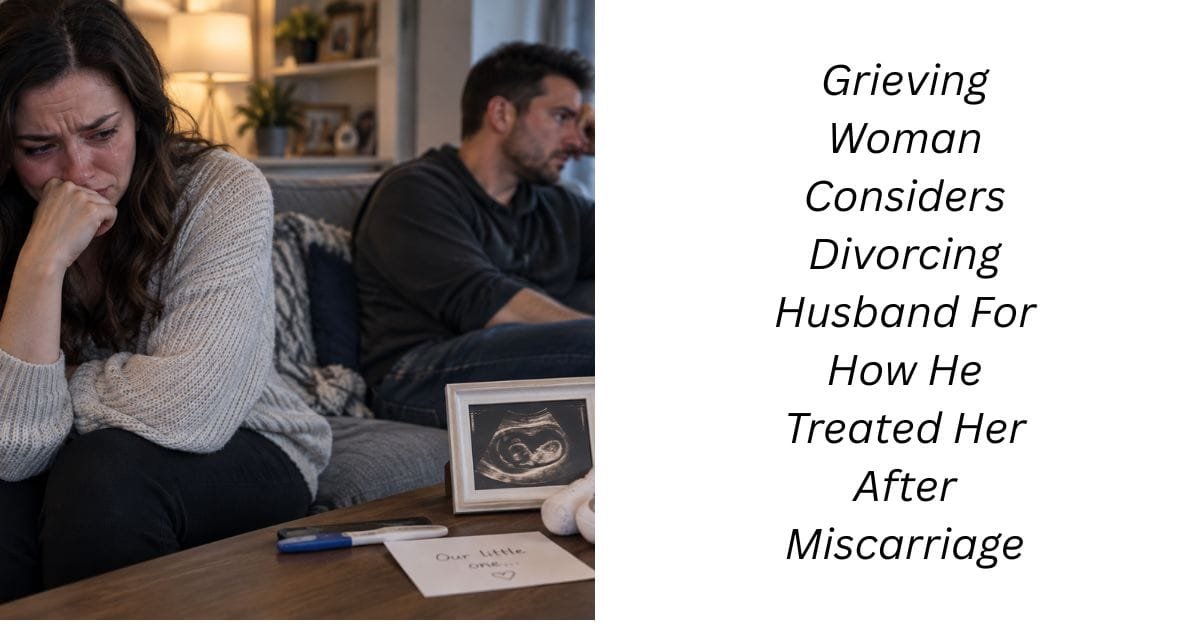
I never imagined that the hardest moment of my life would also become the moment when I started questioning my marriage. A few months ago, I suffered a miscarriage, and even now, writing those words makes my chest feel heavy. My husband and I had been excited about becoming parents, and although the pregnancy was still relatively early, we had already started imagining what our future would look like. We talked about names, made small plans, and imagined how different our home would feel with a baby in it. When I lost the pregnancy, I felt like a part of my future disappeared overnight. I was physically exhausted, emotionally devastated, and struggling to understand how I was supposed to return to normal life. What hurt almost as much as the miscarriage itself was the way my husband responded afterward. Instead of feeling like we were grieving together, I felt completely alone.
At first, I tried to convince myself that my husband was simply processing the loss differently. I knew people reacted to grief in different ways, and I didn’t expect him to cry or express his emotions exactly as I did. However, his behavior went far beyond simply grieving differently. He seemed impatient with my sadness and acted as though I should be able to move on after a short amount of time. There were days when I could barely get out of bed, and instead of asking how I was feeling, he would become irritated because I wasn’t doing household chores or acting like myself. When I cried, he sometimes left the room because he said he didn’t know what to say. I understand that grief can make people uncomfortable, but I desperately needed some compassion from the person I had expected to stand beside me during the worst experience of my life. Instead, I felt like my sadness was becoming an inconvenience to him.
The situation became even more painful when I tried to talk to him about how deeply the miscarriage was affecting me. I told him that I wasn’t expecting him to fix anything and that I simply wanted him to listen and understand that I was hurting. I wanted reassurance that we were still a team and that we could get through this together. Instead, he told me that constantly talking about the miscarriage wasn’t going to change what happened. He said we needed to focus on the future and that I was making things harder by refusing to move on. Those words stayed with me because I wasn’t refusing to move on. I was grieving. There is a huge difference between being stuck in grief and needing time to process something traumatic. I also noticed that he rarely mentioned the baby or acknowledged that he had lost something too. It started to feel like I was the only person in our marriage who considered the pregnancy a meaningful part of our lives.
Over the following weeks, the distance between us became impossible to ignore. I stopped feeling comfortable telling him when I was having a difficult day because I already knew he would become frustrated. I started crying privately so he wouldn’t see me, and that made me realize how lonely I had become while still living with my own husband. My family and a few close friends were much more supportive than he was, and I found myself turning to them whenever I needed someone to listen. Eventually, I told my husband that his behavior was making me question whether our marriage could survive this. I explained that the miscarriage had changed me, but his reaction to my grief had changed the way I saw him. He seemed surprised that I was even considering divorce and insisted that he had been struggling too. I believe he was hurting in his own way, but I also believe that pain does not give someone permission to dismiss another person’s grief.
Now I am seriously considering whether staying married is actually healthy for me. I don’t want to make a permanent decision while I am still grieving, and part of me hopes that counseling could help us understand what happened and whether there is anything left to rebuild. At the same time, I cannot ignore how alone I felt during one of the most painful periods of my life. Losing our pregnancy was devastating, but realizing that I couldn’t depend on my husband emotionally afterward was another kind of heartbreak. I keep asking myself whether I am expecting too much by wanting my husband to support me through something like this. I don’t expect him to grieve exactly the way I do, but I do expect empathy, patience, and basic compassion. Right now, I am trying to figure out whether our marriage can recover from the way he treated me after the miscarriage, or whether this experience revealed something about our relationship that I can no longer ignore.
Read Story…
“AITAH for wanting to leave my husband after my miscarriage?”
The original poster (OP) explained:
“I (34, female) have been married to my husband (43, male) for 3 years, together for 5. His 3 kids (ages 18-21) live with us too.”
“We’ve been struggling with infertility pretty much since we got married. Last year was a really rough year for us because I got laid off from my tech job and a couple weeks later he had a stroke.”
“During his stroke I took on EVERYTHING because he literally couldn’t and that was fine. We took a pretty major hit financially and depleted our savings and wracked up quite a bit of debt.”
“Fast forward to June this year. We’d started going to a fertility clinic, I was working fulltime, my husband was doing much better and had made about a 90% recovery, but I was still doing literally everything for the house (cleaning, finances, letting the kids use my car for school and work, cooking, etc…).”
“Anytime I asked for help, it was either dismissed or turned into an argument where he’d shut me out/give me the silent treatment then have the audacity to expect sex later that night with no apology or accountability.”
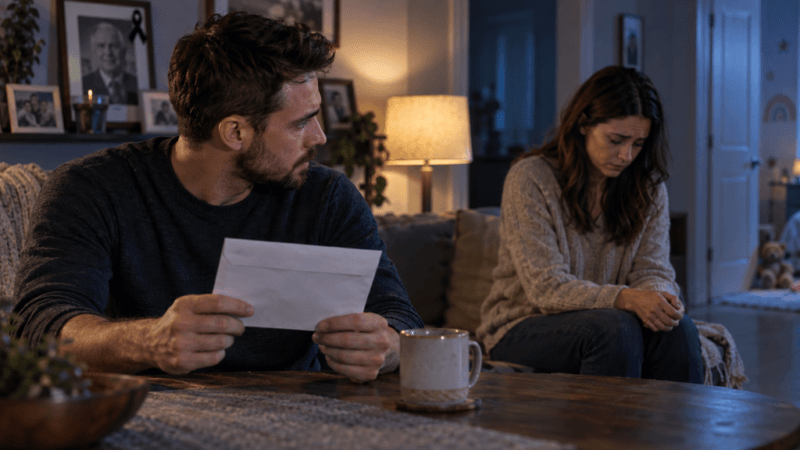
“I finally got pregnant late May, but lost it 6 weeks later. That experience broke me. I didn’t get out of bed for a week, I was in pain, I wasn’t feeding myself, and I was miserable.”
“During the roughly 4 weeks I was out of work and just depressed, he didn’t do a single thing around the house, let the dishes and laundry pile up, and basically carried on as if life was fine.”
“One night in particular, he asked if I was ‘okay’ and I told him no and that I was in pain and hadn’t eaten and he just got on his phone. Didn’t even offer to get me food.”
“To make it worse, when I finally got up and said I’m making myself something, he asked me to make something for him too, knowing I was still bleeding and in pain.”
“It took me a few more months before I kind of woke up from the depression of losing my baby and began seeing just how emotionally neglectful he’d really been this whole year. Not to mention the financial abuse—withholding that he was $15k behind on taxes and lying about having money for our vacation, only to have nothing and make me max out my credit cards to cover it.”
“So now we’re filing bankruptcy on top of all this. I decided to have a very serious conversation with the ultimatum of marriage counseling and he completely dismissed everything I had to say, said I was overreacting, that the financial stuff wasn’t a big deal, and he refused marriage counseling.”
“That’s the soft version. But after that convo was the first time I seriously considered just packing up and leaving.”
“After nearly 2 weeks of silent treatment, lots of hurtful comments, and defensiveness, he finally caved and apologized and agreed to do counseling even though he said he won’t like it.”
“I thought his apology was genuine, and as soon as I kissed him and said I felt better, he immediately asked for sex. So now I feel like he’s only sexually motivated, but not because he actually cares about how much he’s hurt and neglected me.”
“So even though he’s agreed to counseling, I feel like I don’t even want to work on this relationship anymore. But I also feel guilty because he’s a good person, goes to work every day, doesn’t cheat, etc…”
“But he’s the definition of emotionally unavailable/neglectful. I’ve recently realized he’s a dismissive avoidant for those who know about attachment theory.”
“So, am I the a**hole for wanting to ‘give up’ without trying to work on the relationship more?”
The OP later added:
“His children are mostly self-sufficient and do their own laundry. They don’t clean their dirty dishes or help clean common areas, but they do clean their rooms, bathrooms, and handle the trash.”
“At this point, they contribute more than my husband, so how can I expect them to contribute more to the house when their own dad doesn’t do anything?”
“100% there’s no way I would’ve married him if he’d acted like this while dating. And also, I tell myself if this were happening to a friend, I’d be screaming for her to leave.”
“One piece that keeps holding me back is that I feel like he changed after his stroke, so maybe he just needs therapy and to work on himself. Or maybe he’s always been this way and he just dropped the facade when he was no longer healthy enough to keep it up.”
“He used to always say ‘one day you’re going to get tired of me and leave’ and I’d just laugh it off, but maybe he was lowkey warning me this whole time.”
“And yes, I’ve had thoughts lately that maybe my body was protecting me by having the miscarriage, but then I spiral into self-guilt around that. I’ve started therapy to try and work on that piece more.”
Some Redditors weighed in by using the AITA voting acronyms:
- NTA – Not The A**hole
- YTA – You’re The A**hole
- NAH – No A**holes Here
- ESH – Everyone Sucks Here
Redditors decided the OP was not wrong to stop trying to save her marriage (NTA).
“NTAH. This guy will never improve. People like this will go to counseling, learn new vocabulary, and get new tools to use and abuse their partner. I’ve been there, and it’s horrible and incredibly disheartening.”
“OP, my heart breaks for you. You deserve so much better than this. Being single is better than having a sh*tty partner.” ~ jadedbeats
“NTAH. Leave and be done with him.” ~ t-mckeldin
“And be done with his ADULT age ‘children’ too! Nowhere does OP mention where they’ve done anything to help out around the house or contribute to the household in any way.”
“And last, but not least!”
“Don’t have any children with this man. He’s not going to change. He’s showing you who he is in living color, and if you have to beg for common decency and love from him, you are doomed to be miserable if you stay married to him.” ~ NotTheBadOne
“NTA. He abandoned you emotionally when you needed him most. Counseling won’t fix someone who doesn’t actually want to change. You’re not giving up, you’re choosing yourself.” ~ lovelopetir
“Personality changes after a brain injury are a real thing. Sounds like you lost the guy you fell in love with. You really need to look out for your own well-being at this point and let his adult children take over his care. Let him implode all on his own. His brain will likely not get better, unfortunately.” ~ HappyDoggos
“My ex-fiancé had a stroke 10 months into our relationship. I stayed with him, but he changed. He became emotionally abusive, and although we tried couples counselling, that only made it more clear that he was treating me badly.”
“It took me several years to leave him because I kept thinking he would get past it, it was the stroke, and he was getting better. But he didn’t, and I finally walked away. Sometimes you just need to walk to save yourself.” ~ Edmee
“It is possible that he changed after his stroke, but not in a way that therapy can fix. Depending on what area of the brain the stroke affected, he may permanently have less empathy and emotional control. This behavior may have always been part of his personality, but he knew it wasn’t socially acceptable or conducive to a relationship.”
“At the very, very least, I would stop with the fertility treatments and speak to his doctors about whether personality changes are a symptom of his type of stroke, and, if so, would therapy be helpful.”
“Because if not, this is the man who your husband is going to be for the rest of his life. And it does not sound like a man who is a good partner or who you want to have children with, but that is a decision you’ll have to come to together.”
“Also, good for you for getting into therapy for yourself—miscarriage is so hard, and there is so much unwarranted guilt attached to it. You’ve got so much going on. I’m really glad that you’re seeking help.” ~ nursejacqueline
“It’s highly probable the stroke changed him. My dad had a 3 day coma and a very mild stroke 6 months later, and while doctors said there was no damage, we noticed the small differences.”
“Here’s the kicker; my dad took the initiative to get himself a neurologist, therapy, and meds because he saw the problems and didn’t want them to get worse.”
“Your husband doesn’t see a problem with his behavior and doesn’t want to change. He just wants to keep the sex machine working.”
“No amount of marriage counseling or individual therapy will help if he doesn’t want to get better. Why would he?”
“He abandoned you during your miscarriage—he might have physically been there, but he did nothing to ease your burden, just let everything build up around him because he saw that as your job to handle—and you still stayed.”
“It’s not your responsibility to fix someone who likes being broken.” ~ Straystar-626
Therapy is only effective for individuals who are willing to change.
OP can’t force her husband to treat her better. She can only control what she does in response to his mistreatment.
The Miscarriage That Changed Everything
I never imagined that the hardest experience of my life would also make me question whether my marriage was worth saving. A few months ago, I suffered a miscarriage, and since then, almost everything about my life has felt different. My husband and I had been excited about becoming parents, even though the pregnancy was still in its early stages. We had talked about names, imagined what our child might look like, and started thinking about how our lives would change. We knew there was still a long road ahead, but we were happy and hopeful. When I lost the pregnancy, that future disappeared in a matter of hours. I was devastated physically and emotionally, and I honestly didn’t know how I was supposed to return to normal life afterward.
The miscarriage itself was terrifying and painful, but what happened afterward has stayed with me in a different way. I expected my husband to be there for me because we were supposed to be experiencing the loss together. I didn’t expect him to know exactly what to say or to grieve in the same way I did. I understood that he had lost a child too, and I knew his pain might look different from mine. What I did expect was compassion. I wanted him to understand that I wasn’t going to recover emotionally just because the doctors had told me that my physical recovery would take a certain amount of time. Instead, I quickly began feeling as though my grief was something he wanted me to get over as soon as possible.
During the first few days, I was mostly focused on recovering physically. I was exhausted, emotional, and constantly overwhelmed. There were moments when I would suddenly start crying without even knowing exactly what had triggered me. Sometimes I would look at the things we had bought for the baby and completely break down. My husband would tell me that I needed to stop thinking about it and focus on getting better. At first, I tried not to take those comments personally. I told myself that maybe he was trying to help me in the only way he knew how. I thought perhaps he was uncomfortable with grief and simply wanted to push both of us toward a future where we could try again.
As the days turned into weeks, however, his attitude became harder to excuse. I wasn’t asking him to spend every minute talking about the miscarriage. I wasn’t expecting him to stop working or completely change his life. I simply wanted him to acknowledge that I was hurting. Instead, whenever I became emotional, he often seemed irritated. If I cried at night, he would sometimes turn away or leave the room. If I mentioned the baby, he would quickly change the subject. Eventually, I started feeling embarrassed about showing my emotions around him because I knew he didn’t seem to want to deal with them.
One evening, I finally told him how alone I felt. I explained that I wasn’t blaming him for the miscarriage and wasn’t expecting him to magically make everything better. I just wanted my husband to sit beside me and listen when I needed to talk. I told him that sometimes I didn’t even need advice. I needed someone to tell me that it was okay to be sad. Instead, he told me that constantly talking about the miscarriage wasn’t healthy and that I needed to move forward. He said that what happened couldn’t be changed and that staying upset wasn’t going to bring the baby back. I knew technically he was right, but hearing those words from my husband felt incredibly cold.
What hurt me most was that he seemed to believe that moving forward meant pretending the pregnancy had never happened. I wasn’t trying to live in the past. I simply couldn’t erase several weeks of hopes, plans, and emotions because the pregnancy ended. I had already imagined myself becoming a mother. I had already started thinking about our child as part of our family. Losing that future was a real loss to me, even though some people might think an early miscarriage should be easier to get over. I didn’t expect everyone around me to understand that, but I expected my husband to at least try.
I also noticed that he never seemed interested in talking about his own feelings. Whenever I asked him whether he was hurting, he would simply say that he was fine. I wondered if perhaps he was secretly struggling and dealing with the pain by shutting down. I tried to give him the benefit of the doubt because I knew men sometimes process grief differently. I even wondered whether his emotional distance was actually his way of protecting himself. Because of that, I kept making excuses for him even while I was becoming more and more unhappy.
There were moments when I tried to reach out to him physically because I needed comfort. Sometimes I would ask him to hold me, but he seemed uncomfortable and would quickly change the subject afterward. I remember one night lying beside him and crying quietly while he slept. I stared at the ceiling for a long time and realized that I felt completely alone despite having another person lying right beside me. That was one of the first moments when I seriously wondered whether something fundamental had changed between us.
My family noticed that I wasn’t myself. My mother called me frequently, and whenever I spoke to her, I could hear the concern in her voice. Eventually, I told her that my husband wasn’t really supporting me emotionally. She didn’t immediately tell me to leave him or get divorced. Instead, she encouraged me to give myself time to heal and suggested that I talk to someone professionally. I appreciated that because I didn’t want anyone making the decision for me. I needed to understand what I wanted before taking such a serious step.
A few weeks later, I started seeing a therapist. I initially went because I needed help processing the miscarriage, not because I planned to leave my marriage. During one of our conversations, I realized that I had been spending most of my energy trying to make my husband’s behavior understandable. I kept asking myself why he was acting this way instead of asking how his behavior was affecting me. My therapist reminded me that understanding someone’s reasons doesn’t automatically mean accepting the way they treat you. That distinction was difficult for me to hear because I had spent weeks trying to defend my husband in my own mind.
Eventually, I asked my husband if he would attend counseling with me. I thought couples therapy might help us communicate about the miscarriage and the problems that had developed afterward. He initially resisted. He said he didn’t think our marriage had a problem and that I was making things bigger than they needed to be. That response hurt almost as much as everything else because I realized we weren’t even agreeing that there was a problem. To him, the miscarriage was something terrible that had happened and needed to be left behind. To me, it had exposed how we handled hardship as a couple.
After some convincing, he agreed to attend one counseling session. During that session, he admitted that he had also been devastated by the miscarriage but didn’t know how to handle his emotions. He said that seeing me cry constantly made him feel helpless, so he tried to push me toward moving on because he thought that would help both of us. Hearing him say that made me feel conflicted. Part of me felt relieved that he had finally acknowledged his pain. Another part of me was angry because his inability to process his own grief had resulted in him dismissing mine.
I asked him why he couldn’t simply tell me that he was struggling too. He admitted that he didn’t want to appear weak and thought he needed to stay strong. I told him that I never needed him to be strong in that way. I needed him to be honest. I would have rather cried with him than cry alone because he didn’t want to talk about what happened. For the first time since the miscarriage, we both cried during the same conversation. It was painful, but it was also the first time I felt like we were finally acknowledging the same loss.
Unfortunately, that conversation didn’t instantly fix our marriage. Once we left counseling, I still felt resentment toward him. I couldn’t simply forget all the nights I had cried alone or all the times he had told me to move on. He also seemed frustrated that one emotional conversation hadn’t solved everything. I realized that rebuilding trust after emotional neglect would take much longer than either of us wanted. I needed to see consistent changes rather than hear apologies only when we were sitting in a therapist’s office.
There were still difficult moments. Sometimes I would have a bad day because something reminded me of the pregnancy. A certain date, a baby announcement, or even seeing someone who was visibly pregnant could bring everything back. When that happened, I needed patience. My husband gradually became better at recognizing when I was struggling, but there were still times when he seemed unsure of what to do. I started telling him directly when I needed comfort instead of expecting him to automatically understand. That helped somewhat, although I still wished he had learned some of these things without me having to ask.
One of the hardest parts has been dealing with the feeling that my husband and I experienced completely different losses. I know he lost something too, and I don’t want to minimize his grief. But I carried the pregnancy physically, went through the physical process of losing it, and then had to live with the emotional consequences afterward. There were reminders everywhere inside my own body and mind. Sometimes I felt guilty for grieving so intensely because I knew he was hurting too. At the same time, I didn’t think his pain should mean I had to hide mine.
Some people around me have told me that I should simply forgive him because he was grieving too. Others have said that the way he treated me after the miscarriage shows that he isn’t the kind of partner I can depend on when life becomes difficult. I understand both perspectives, which is why I’m struggling so much with the decision. I don’t want to throw away a marriage because of one terrible period in our lives. But I also can’t pretend that this period didn’t reveal serious problems in the way we communicate and support each other.
The question of having another child has made everything even more complicated. My husband has already mentioned trying again in the future, but I’m not ready. The idea of becoming pregnant again scares me because I still haven’t completely recovered emotionally from the loss. I’m terrified of experiencing another miscarriage and terrified of becoming hopeful again. When he brought up trying again, I told him that I needed time. He initially seemed disappointed, but eventually said he understood. That was one of the first times I felt that he was genuinely listening to me rather than trying to push me toward what he thought would make everything better.
I also realized that I don’t want another pregnancy to become a way of replacing the child we lost. I know that if we eventually have another baby, that child will be loved completely and independently. But the pregnancy we lost will always be part of our story. I don’t want to erase it. I don’t want to pretend it didn’t matter simply because we might have another child someday. My husband is slowly beginning to understand that. We have started talking about the miscarriage more openly, and although those conversations are painful, they have helped me feel less alone.
Despite everything, there are still parts of our marriage that I love. We have shared many good years together, and he isn’t a cruel person in every aspect of his life. He has been supportive in other situations, and there are many memories that remind me why I fell in love with him. That’s what makes this decision so difficult. If the entire marriage had always been terrible, leaving would probably feel easier. Instead, I’m trying to decide whether this was a terrible failure during an incredibly difficult period or evidence of a deeper incompatibility that will continue whenever life becomes painful.
I have also had to ask myself whether I can genuinely forgive him. Forgiveness doesn’t mean pretending nothing happened. It doesn’t mean saying his behavior was acceptable. For me, forgiveness would mean eventually being able to remember that period without feeling the same anger and loneliness I feel now. I’m not there yet. Some days I think we can rebuild our relationship, and other days I wonder whether the emotional damage is already too deep. I don’t want to make a decision based entirely on anger, but I also don’t want to stay simply because I’m afraid of starting over.
My husband now says that he regrets how he handled everything. He has apologized several times and admitted that telling me to move on was unfair. He has also continued going to counseling with me, which I see as a positive sign. I can tell that he is trying harder to communicate, and I appreciate that. Still, part of me wonders whether he would have changed if I hadn’t mentioned divorce. I don’t want him to support me only because he is afraid of losing me. I want him to understand why his actions hurt me and genuinely want to become a better partner.
For now, I have told him that I am not ready to make a final decision about our marriage. I need time to grieve without also feeling pressured to decide whether our relationship will survive. We are continuing counseling and trying to communicate more honestly. I have also stopped pretending that I’m okay when I’m not. If I need to cry, I cry. If I need to talk about the baby, I talk about the baby. I am slowly learning that my grief doesn’t need to be convenient for other people. My husband is learning that too, although I still don’t know whether he can become the partner I need.
The miscarriage changed me in ways I never expected, but perhaps the most painful change was realizing that love alone doesn’t automatically teach people how to support each other. Marriage isn’t only about being together during happy moments. It’s also about how two people respond when something happens that neither of them can fix. I needed my husband during the worst moment of my life, and for a while, I didn’t feel like he was there. Whether we can repair that damage is something I still don’t know. Right now, I’m taking things one day at a time and trying to decide whether the marriage we rebuild can be stronger and more compassionate than the one we had before.