Redditor Concerned After Ex Plans To Move Their Kid Into Yurt In The Woods Without Electricity
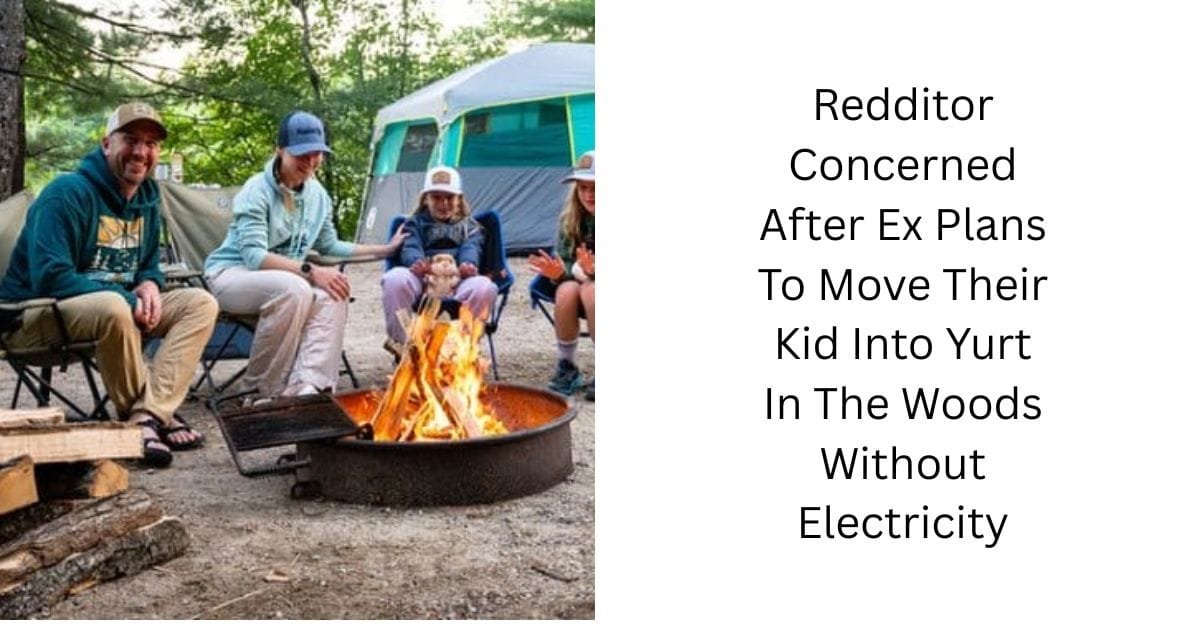
I never expected my biggest concern as a parent to involve my ex-wife wanting to move our child into a yurt in the woods. My ex and I had been separated for several years, and although our relationship was no longer easy, we had managed to establish a parenting arrangement that generally worked for our child. We didn’t always agree on everything, but we both understood that our child needed stability, access to school, and a safe environment. Things changed when my ex told me that she wanted to leave her current home and move to a remote property surrounded by woods. She described it as a peaceful lifestyle where our child could spend more time outdoors and be away from what she called the stress and distractions of modern life. At first, I assumed she meant moving to a small house in the countryside. Then she explained that she planned to live in a yurt with our child, and there would be no electricity connected to the property. I honestly thought she was joking. When I realized she was serious, I immediately started asking questions about how our child would sleep, study, stay warm, communicate with others, and handle emergencies. She told me that I was overreacting and that people had lived without modern conveniences for thousands of years.
My biggest concern wasn’t the idea of living somewhere rural. I actually understood why someone might want a quieter lifestyle. The problem was that my ex wasn’t talking about spending a few weekends camping or taking our child on outdoor trips. She was talking about making this their permanent home. She said the yurt would be comfortable and that they would use alternative methods for cooking, heating, and lighting. She had plans for collecting water, using solar-powered equipment when necessary, and relying on other basic systems instead of traditional utilities. She seemed incredibly excited about the idea and described it as an opportunity for our child to learn independence and practical skills. I asked what the plan would be if there were severe weather, a medical emergency, or some other unexpected problem. She said they would be prepared and that I was focusing too much on worst-case scenarios. I told her that emergencies were exactly what parents were supposed to think about. Our child was still young and shouldn’t be expected to manage adult-level risks simply because one parent wanted to live differently.
The conversation became more tense when I asked about school. My ex said she was considering homeschooling and believed she could provide a better education outside the traditional school system. I wasn’t completely against homeschooling, but I wanted to know what curriculum she planned to use, how often our child would interact with other children, and how she would make sure the education remained consistent. She didn’t have clear answers to all of my questions. She kept returning to the idea that our child would learn from nature and everyday life. I agreed that those experiences could be valuable, but I didn’t think they should replace everything else without a carefully thought-out plan. I also worried about basic communication. If there was no electricity and limited cell service, how would our child contact someone during an emergency? What would happen if my ex became sick or injured? How far would they be from the nearest hospital, grocery store, or school? Every time I raised another concern, she accused me of trying to control her lifestyle. I kept explaining that I wasn’t trying to decide where she lived. My concern was that our child would be living there too, and I believed I had a responsibility to make sure the arrangement was safe and practical.
Eventually, our disagreement turned into a much larger argument about parenting. My ex said that I was stuck in a conventional mindset and that I wanted our child to grow up exactly like everyone else. She believed children benefited from being disconnected from technology and spending most of their time outdoors. I actually agreed with part of what she was saying. I didn’t think children needed to spend every waking hour staring at screens, and I liked the idea of teaching our child practical skills. But I didn’t believe those goals required living without basic utilities in an isolated location. I told her that there were plenty of ways to give our child outdoor experiences without making a remote yurt their primary residence. She disagreed and said that I was only objecting because I couldn’t handle not having control over the situation. That accusation really bothered me because I had never tried to control her personal life after the divorce. She could make her own choices about where she lived. But when those choices directly affected our child, I believed I had the right to raise serious concerns. I eventually told her that I couldn’t simply agree to the move without understanding exactly where our child would be living and how their daily needs would be handled.
Now I’m stuck trying to figure out what the next step should be. I don’t want to turn this into a battle with my ex or make our child feel caught between us. At the same time, I don’t feel comfortable ignoring the situation simply because my ex believes her intentions are good. She genuinely believes the move will give our child a healthier and more meaningful childhood, and I don’t think she is trying to put our child in danger. My concern is that good intentions don’t automatically guarantee that a plan is safe or sustainable. I want our child to have the freedom to explore nature, learn practical skills, and experience a simpler lifestyle, but I also want reliable access to education, healthcare, communication, and basic necessities. For now, I’m trying to have another calm conversation with my ex and focus on specific questions instead of arguing about whether her lifestyle is right or wrong. If we can’t reach an agreement, we may need to involve a family-law professional or another appropriate third party to determine what arrangement is in our child’s best interests. I never imagined that co-parenting would lead to a disagreement this complicated, but I know that whatever happens, I need to keep the focus on our child’s safety and stability rather than turning the situation into a personal fight with my ex.
Read Story…
“Am I overreacting by reaching out to a lawyer after my ex-wife revealed her plan to move into the woods with my child, with no running water or plumbing, and very little electricity?”
The OP coparented amicably after their divorce.
“I’ve been divorced for about five years.”
“We have never needed lawyers and have been able to work things out ourselves. We coparent a nine-year-old and a fifteen-year-old.”
But the OP’s ex-wife made a decision that they could not accept.
“My ex recently met a man, maybe eight months ago, and she is now pregnant and moving onto his land.”
“One of our two children will be with her Monday through Friday; that’s been our arrangement because of his school.”
“There are a couple of solar panels; water comes from a brook, which they gather and filter; and there is an outhouse.”
“There’s no real house, just yurts and tents, and three other people living there, including her new partner.”
“She will be having a baby in January, so a baby, a 10-year-old, and herself all living in the middle of the woods with very few modern amenities in New England.”
“We have long, cold winters. Personally, I think this could be doable in Humboldt County; New Hampshire is much colder and snowier.”
The OP felt it might be time to get a lawyer involved.
“I recently reached out to a lawyer and am considering trying to get custody of our children.”
“Our 15-year-old is with me most of the time already, especially since all of the changes in the past year.”
“Our younger child is excited about the move for now, but our older one hates going there and is with me almost full-time since this began. They do NOT want to visit her there.”
“Am I overreacting? Should I give this time to play out and see how it goes? I’m worried I’m going to be scrambling to find a new school for my younger son come November, when the cold and dark set in.”
“I have voiced my concerns and was told I’m being neurotic.”
“AIO?”
Fellow Redditors weighed in:
- NOR: Not Overreacting
- YOR: You’re Overreacting
Some agreed with the OP that they were right to be concerned about how this could impact their children.
“Uh, no. Just no. We had friends who grew pot in Humboldt in the 1980s, and they raised two daughters out in the boonies, but they had real structures: a trailer and an outhouse. That was far better than this situation and the cold, good Lord.”
“You are not overreacting. Go for it, Dad.” – SuggestionOdd6657
“Who told you that you were neurotic, the ex? How does the child feel about moving into the woods? Get a lawyer; I doubt any judge would force a kid to live in the cold for months. NOR.” – Top-Bit85
“NOR. A friend of mine was raised this way, and it f**ked her up. After the kids were grown, the parents decided their cute little experiment had run its course and now live in a suburb.” – laurenyou
“NOR. They will be at serious risk of exposure and illness come winter. The no-running-water thing would be a hard stop for me if it were my children.”
“Primitive camping like that is fun for like a week or so in summertime, but I would absolutely not let them live there.”
“Also, you don’t know any of these other people, and they could pose a safety risk to your children.”
“A couple with their one-year-old and dog died in the Sierras a couple of years back from exposure and lack of water. Another family of three died in 2023 in Colorado from exposure and malnutrition after trying to live ‘off the grid’ through the winter.”
“Don’t risk your kids for these people who want to cosplay as wilderness nomads.” – StarshipCaterprise
“Last year, we got three feet of snow in some parts of New England, my brother-in-law had his town washed out by rain, and the cape has wildfires right now. No fricken way would I live in a tent in these woods!”
“OP should totally get emergency custody before it gets cold and before school starts.” – chaoticnormal
Others pointed out that the ex-wife had the right to choose this lifestyle, but the OP also had the right to get a lawyer involved and explore coparenting options.
“NOR. Your ex is allowed to make whatever bizarre choices she wants with her new family, but she doesn’t get to drag your child into it. Let them visit her on weekends if they want.” – occasionallystabby
“Honestly, let them visit her when the weather is mild, there ISN’T a drought, and fire conditions are MINIMAL. And verify that the living site is NOT flood-prone.”
“Or wildfire-prone…which most of the New England wilderness is.”
“Plus, before either kid stays, get background info on ALL the adults, including her partner.”
“And in the event of an emergency, does anyone in this group own a vehicle? Will the ex be giving hers up on her behalf (another blazing red flag)?”
“It feels like there is not a single pro to this arrangement; it is all cons. But if she agrees to all of these terms, an occasional weekend in nature might be nice, rejuvenating, educational, etc.”
“But if she does not agree, I’d be getting a lawyer involved yesterday.” – Wrong-Pension-4975
“Of COURSE the nine-year-old is excited about it! A cabin in the woods! What fun!”
“Meanwhile, your ex-wife is probably going to pull the nine-year-old out of school and ‘homeschool’ them instead, and if they manage to win over your fifteen-year-old, I’m sure she’ll parentify them into raising the baby. Or worse, isolate both of them out there and then ignore them in favor of the baby.”
“You need to get a lawyer and formalize custody and decision-making very quickly, because without legally binding arrangements, she can do what she pleases with the children.” – Pokeynono
“NOR. Just a few years ago, a woman, her sister, and her child died thinking they could live off-grid in the cold.”
“I looked and found another one about a little girl who died last winter in similar conditions.”
“Maybe these folks aren’t like your ex and her friends. Maybe your ex’s group has more experience and can actually hack living off-grid. But you don’t know this man or his friends.”
“Beyond issues of preparation, these types of living situations are too often rife with parentification, physical and emotional abuse, and educational neglect.”
“Talk to an attorney and figure it out. You can enroll your child in your local public school in 30 minutes or less.” – LexiePiexie
“A man she’s known for a short time, who’s already impregnated her, is now moving to isolate her AND YOUR CHILDREN.”
“I’d try for custody. The school’s rationale for your one-child arrangement is now moot, so it’s a logical time to revisit it in court anyway. And given all the other red flags? I wouldn’t wait another day.” – Burnt_and_Blistered
One Redditor who had off-grid experience spoke up in the comments, further validating the OP’s concerns.
“I live off-grid in a similar setup to what your ex has in mind, and I love it. The key word is ‘I.’ I’m a child-free 30-year-old.”
“It is hard, and it is exhausting. I’ve gotten sick. I often have issues with my solar. I often have issues with my water. I’ve been stung by scorpions and had to wrestle snakes.”
“This lifestyle is not built for everybody, ESPECIALLY NOT A NEWBORN!! It would be completely irresponsible to live this way with an infant.”
“A 10-year-old, maybe. But while also having to care for a newborn and being new to this life? Your child is in immediate danger, and I would SERIOUSLY question the safety of allowing her to parent if she’s making these types of decisions.”
“Again, I say this as a person who lives this way currently. I know you’ll probably get some ‘people lived this way for thousands of years’ comments. But kids have died living this way!”
“Also, I live off-grid in a geodesic dome in the Caribbean, not New England.”
“I have two solar panels and a single battery setup; I collect rainwater in a cistern for my sink, shower, and toilet (pump is powered by my solar), and have a propane fridge and stove.”
“I have internet through mobile data. My solar powers/charged my electronics, a couple of small DC fans, a single light, and my water pump, and that’s it.”
“In the five years I’ve lived here, every one of my systems has failed at least once. We have had droughts that have made it so I don’t have any running water for weeks at a time (which is a huge biohazard and makes sanitation incredibly difficult).”
“My fridge and propane have failed, making it so I have no way to store or prepare food safely. And my solar has gone down several times, leaving me with no electronics and no way to use my water or use my fans.”
“I’ve gotten incredibly sick on multiple occasions because of this lifestyle. But I chose it, knowing what I was getting myself into. A child can not make an informed decision about a choice like this.”
“I’ve also gotten sick because of nature; bugs and other creatures are a reality when living this way. I’ve had rat infestations; I’ve had snakes and raccoons break into my house.”
“I also work remotely and have lost work because of unreliable power and internet. Is any of your son’s schooling reliant on a computer or being able to get online? Because that will likely not be possible consistently.”
“Again, I chose this. I am an adult who made an informed decision.”
“Your son is a child, and one of his parents is not acting with his best interest at heart and is not informed of the risk or doesn’t care.”
“NOR. You need to protect your child.” – Ilbboutique
The subReddit completely understood where the OP was coming from, and they validated the parent’s concerns about their children’s safety.
With no electricity, running water, or traditional housing, countless accidents were possible, as was illness, and there was no telling if the children would receive the care and education they deserved while their mother was adjusting to life off-grid and parenting a newborn baby in the woods.
Our Child’s Stability Had Always Come First
I never expected a disagreement with my ex-wife about where our child should live to become one of the biggest parenting conflicts we’ve ever had. We had been divorced for several years, and while our relationship wasn’t perfect, we had managed to create a routine that worked reasonably well. We shared custody, communicated about school and appointments, and generally tried to keep our personal disagreements away from our child. We didn’t always see eye to eye, but I believed we both understood that our child’s stability had to come first.
My ex had always been interested in living a simpler life. Even when we were married, she talked about spending more time outdoors, growing some of our own food, and eventually moving somewhere quieter. I never thought much of those ideas because they seemed more like dreams than actual plans. After our divorce, she started exploring those interests more seriously. She began spending weekends in rural areas and talking about finding property away from the city.
At first, I wasn’t particularly concerned. I actually understood some of her reasons. She disliked traffic, noise, crowded neighborhoods, and the amount of time our child spent around screens. She believed that children should spend more time outside and learn practical skills. I agreed with some of that. I also wanted our child to spend time in nature and develop independence.
Then she told me she had found a property that she wanted to move to permanently. I assumed she had found a small house or cabin. Instead, she told me she planned to live in a yurt located on a remote piece of land surrounded by woods.
I initially thought she was exaggerating. When I asked what she meant by a yurt, she explained that it was a circular tent-like structure that she believed would provide everything they needed. She said she had researched different models and had already started planning how to arrange the interior. She seemed extremely excited about the idea.
The part that immediately caught my attention was when she said there would be no electricity connected to the property. She explained that she wanted to avoid traditional utilities and live as independently as possible. She talked about alternative lighting, heating, cooking, and other methods that didn’t require a normal electrical connection.
I asked her whether she was seriously planning to have our child live there full-time. She said yes. According to her, our child would benefit from being surrounded by nature instead of spending childhood in what she considered an artificial environment.
That was when I started asking more detailed questions. Where exactly was the property? How far was it from the nearest town? What was the plan for heating during winter? How would they get clean water? Where would food come from? How would our child get medical care if something happened?
She told me that she had already considered most of those things. She planned to use wood for heating and cooking, collect and store water, and travel into town when supplies were needed. She also said she had researched solar-powered equipment that could provide limited energy without connecting the property to the electrical grid.
I wasn’t convinced. My concern wasn’t that I thought rural living was automatically dangerous. People live in remote areas all the time. My concern was that this wasn’t simply a vacation or weekend camping trip. My ex wanted our young child to live in an isolated location as part of a completely different lifestyle.
I asked her how our child would communicate during an emergency. She said they would have a phone and some battery-powered equipment. I asked what would happen if there was no signal. She said they would figure it out. That answer made me even more uncomfortable.
I also asked about transportation. Our child would still need regular appointments, activities, and other commitments. My ex said she could drive whenever necessary. But the property was significantly farther from town than where they currently lived, meaning even simple errands would require much more planning.
School became another major issue. My ex said she was considering homeschooling because she didn’t want our child spending hours commuting to school every day. She believed homeschooling would fit better with the lifestyle she wanted to create.
I wasn’t automatically against homeschooling. I told her that I would be willing to discuss it if there were a structured curriculum and a clear educational plan. But I wanted to know what subjects would be taught, how progress would be measured, and how our child would maintain regular social interaction with other children.
She said that our child would learn things that weren’t taught in traditional classrooms. They would learn gardening, cooking, animal care, outdoor survival, basic construction, and other practical skills. She believed those experiences would be just as valuable as traditional academic subjects.
I agreed that practical skills were valuable. But I told her that I didn’t think it had to be one or the other. Our child could learn practical skills while also having access to a conventional education. We could take hiking trips, grow vegetables, learn basic repairs, and spend weekends outdoors without completely isolating ourselves from modern life.
She became frustrated with me and said I was missing the point. She didn’t want to simply give our child occasional outdoor experiences. She wanted our child to grow up with nature as a central part of everyday life.
She also said that she believed our current lifestyle was unhealthy. According to her, our child spent too much time indoors, relied too heavily on technology, and was surrounded by unnecessary conveniences. She wanted to teach our child that people could live happily without depending on modern systems.
I told her that I respected her desire to live differently, but our child wasn’t an adult who could independently choose that lifestyle. As parents, we had to make decisions based on what was practical and appropriate for a child.
That comment made her accuse me of trying to control her. She said I was only objecting because I didn’t want her to make major decisions without my approval. I told her that wasn’t true. She was free to live however she wanted as an adult, but our child was also my responsibility.
Our conversations became increasingly hostile after that. Every time I raised a concern, she interpreted it as criticism of her lifestyle. Every time she explained another part of her plan, I found myself thinking of another question.
Eventually, I started wondering whether we should involve a neutral professional before the move happened. I didn’t want to immediately turn the situation into a legal battle, but I also didn’t want to wait until our child was already living in the woods before addressing my concerns.
I spoke with people close to me, and their reactions were mixed. Some thought my concerns were completely reasonable, while others said I was being too dramatic and that living in a yurt didn’t automatically mean our child would be unsafe. That made the situation even harder because I didn’t want to judge the entire plan simply because it sounded unusual.
I realized that the real issue wasn’t whether living in a yurt was good or bad. The important questions were whether the specific property was safe, whether there was reliable access to water and sanitation, whether heating and cooking could be handled safely, whether our child could receive proper medical care, and whether education and communication needs would be met.
I eventually told my ex that I was willing to consider the idea if she could provide a detailed plan addressing those issues. I wasn’t asking her to abandon everything she believed in. I simply wanted evidence that our child’s basic needs would be reliably handled.
She didn’t immediately agree. She said she felt like I was putting her on trial. I explained that wasn’t my intention. I wanted us to approach the decision as two parents instead of two adults arguing about different lifestyles.
For now, the situation remains unresolved. My ex still wants to move to the property, and I still have serious questions about whether it is appropriate for our child. I don’t want our child to become the center of a custody war, and I don’t want to speak negatively about their mother.
At the same time, I don’t think ignoring my concerns would be responsible. I believe our child deserves the opportunity to experience nature and learn independence, but also deserves reliable access to basic necessities, education, healthcare, communication, and a stable environment. I’m hoping my ex and I can find a compromise that allows her to pursue the simpler lifestyle she wants without forcing our child into an arrangement that hasn’t been fully planned. If we can’t reach an agreement ourselves, I’m prepared to seek appropriate professional guidance so that the discussion stays focused on our child’s actual needs rather than becoming another argument between two divorced parents.