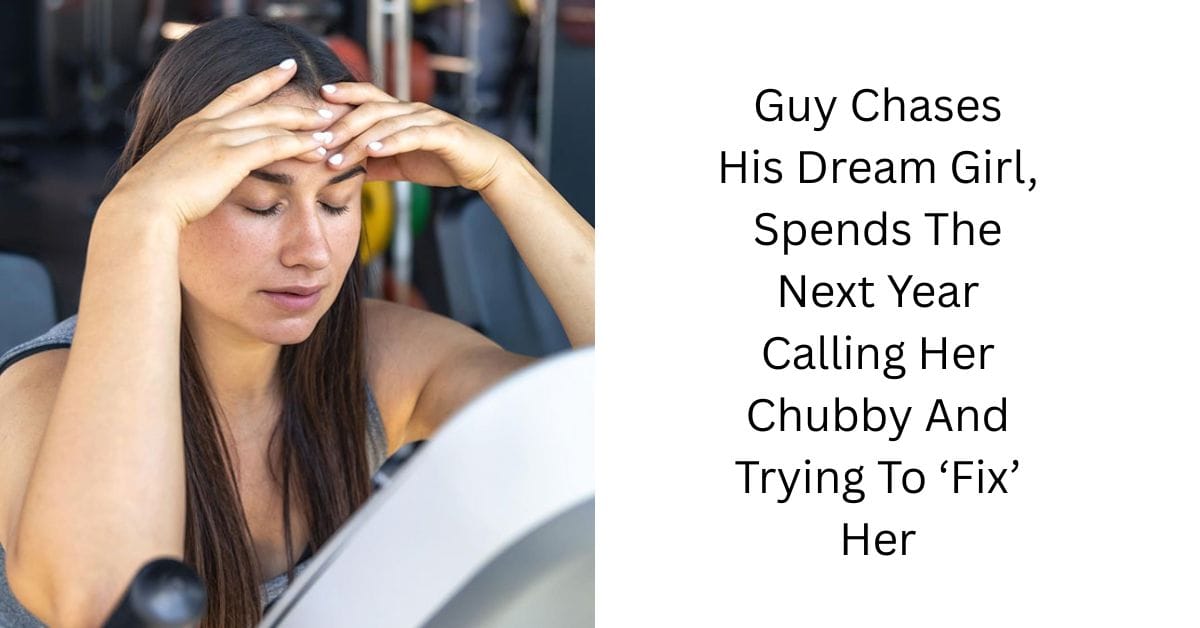
Guy Chases His Dream Girl, Spends The Next Year Calling Her Chubby And Trying To ‘Fix’ Her
Twenty-eight-year-old Mia met Ethan through mutual friends at a weekend charity event, and their connection seemed effortless from the very beginning. Ethan was charming, attentive, and always found ways to make Mia laugh. After months of getting to know each other, they officially started dating, and Mia believed she had found someone who genuinely appreciated her personality, kindness, and confidence. During the early months of their relationship, Ethan often complimented her smile, sense of humor, and positive outlook, making Mia feel valued for who she was rather than how she looked.
As time passed, however, Ethan’s compliments slowly became less frequent and were replaced by subtle comments about Mia’s appearance. He would casually suggest she should “live a healthier lifestyle” or compare her to fitness influencers on social media, insisting he was only trying to motivate her. Although Mia maintained a balanced lifestyle and felt comfortable with herself, Ethan repeatedly focused on changing her appearance instead of appreciating the person she already was. Each remark seemed small on its own, but together they gradually affected her confidence.
Mia initially tried to dismiss the comments, believing Ethan didn’t realize how hurtful they were. One evening, she calmly explained that constant criticism disguised as advice was damaging her self-esteem. Ethan insisted he was simply encouraging her to become “the best version” of herself and couldn’t understand why his words upset her. Rather than listening to her concerns, he continued offering unsolicited opinions about her clothing, meals, and exercise habits, causing tension to grow between them.
Eventually, Mia began talking openly with close friends and her older sister about what she had been experiencing. They reminded her that a healthy relationship should be built on respect, encouragement, and acceptance—not on repeated attempts to reshape someone into an ideal image. Their support helped Mia recognize that constructive concern is very different from constant criticism. She realized she deserved a partner who celebrated her strengths instead of making her feel as though she was never good enough.

Advertisement
After several honest conversations failed to bring meaningful change, Mia decided to end the relationship. The decision wasn’t easy, but she understood that protecting her confidence and emotional well-being was essential. In the months that followed, she rediscovered hobbies she loved, spent more time with supportive friends, and rebuilt the self-assurance that had slowly faded. Looking back, Mia realized that genuine love doesn’t begin with trying to change someone—it begins with respect, acceptance, and encouraging one another to grow through kindness rather than criticism.
Read Story…
Boyfriend keeps trying to “upgrade” or “improve” me by calling me chubby
I’ve F(23) been dating my boyfriend M(27) for a year. I am 5”4’ and 125lbs. He pursued me. Slowly he keeps making more and more negative comments about my appearance.
He made me a workout and eating plan and constantly asks if I follow it. He basically wants me to go vegan. Honestly I’m not into the vegan lifestyle and I don’t eat horrible. When we order in yesterday I got baked ziti. He looked at me and said how could I be ordering this when we both agreed I need to lose weight.
Everytime I try to dump him over this, he tells me I don’t understand where he is coming from. He told me I’m average and he wants me to stand out. That he noticed I have low self esteem and he is trying to make me confident and be happy with myself. Everyday he asks me if I did my work outs.
He will send me photos of other girls and say if I follow what he says I will look like that. He REALLY pursued me and now I feel like he’s killing my self esteem. Why pursue someone so hard if you aren’t that attracted to them? He told me if I lose fifteen pounds I’ll be perfect.
He sends me pictures of women who have post pregnancy bodies or not good bodies at all and he tells me that they are like me, that they are chubby and not curvy. Or he will send me pictures of girls I don’t consider pretty and say if I listen to him I will look like that, I just need to lose weight. I tell him I think I’m thinner than those girls and he tells me that he has better eyes.
Honestly at this point I don’t want to break up because I feel no one will find me attractive. I feel like I want his approval. I’ve been wearing baggy clothes because I’m so ashamed of my body. I use to like my body but now I’m ashamed.
Why is he dating me if I’m so unattractive? How do I gain my self esteem back? Why pursue me?
Edit: I would like to thank everyone for the overwhelming response. I can’t get back to everyone, but I appreciate each and every message. Honestly I didn’t realize my situation was that bad, I am going to assume he had me under control. This really was reassuring and I’m so happy I found this community and made this thread. I broke up with him over text message and explained to him how you talk and treat me is not how you talk to anyone let alone your girlfriend who you are suppose to love.
That I hope he changes for the next girl he dates because he’s a miserable person and no one deserves his abuse. I blocked his number, I’m sure he might try to show up at my house, but I just felt the need to end it as soon as possible. I think I’m going to take some time for myself since my self esteem is still in the gutter, but thank you all 💕
She Built A Happy Life Without Waiting For A Relationship
Twenty-eight-year-old Ava had spent years focusing on her career, her friendships, and building a life she genuinely enjoyed. She wasn’t searching desperately for a relationship, believing the right person would appreciate her for who she was rather than expect her to become someone else.
At a mutual friend’s birthday party, she met twenty-nine-year-old Ryan. Confident and outgoing, Ryan immediately became interested in Ava. He admired her intelligence, sense of humor, and the confidence she carried wherever she went.
Advertisement
Over the following weeks, Ryan made every effort to win her affection. He planned thoughtful dates, remembered small details from their conversations, and regularly told friends that Ava was everything he had been looking for.
Eventually, Ava agreed to begin a relationship. During the first several months, everything seemed healthy. Ryan constantly complimented her smile, encouraged her career ambitions, and made her feel genuinely appreciated.

Advertisement
Their families and friends believed they made an excellent couple. They laughed together, traveled on weekends, and supported each other’s professional goals.

Advertisement
As time passed, however, Ryan’s compliments slowly changed. Instead of praising Ava’s personality, he began making casual remarks about her appearance.
One evening after dinner, Ryan joked that Ava should probably skip dessert because “it wouldn’t hurt to lose a few pounds.” He laughed afterward, insisting it was only a joke.
Although Ava smiled politely, the comment lingered in her mind. She had always been comfortable with her appearance and had never asked for advice about her body.
Over the following months, similar comments became more frequent. Ryan suggested different diets, recommended workout programs, and constantly shared fitness videos through social media.
Whenever Ava questioned his remarks, Ryan insisted he only wanted her to become “the healthiest version of herself.”
At first, Ava believed his intentions were positive. She even joined him for morning walks and occasional gym sessions because she enjoyed spending time together.
Unfortunately, Ryan’s focus gradually shifted away from health and toward appearance. He frequently compared Ava to celebrities and fitness influencers online.
Those comparisons slowly affected Ava’s confidence. She found herself questioning outfits she once loved wearing and becoming unusually self-conscious in photographs.
Her closest friend, Emily, noticed the change almost immediately. Ava no longer laughed as freely and often criticized herself over things that had never bothered her before.
Emily gently asked whether Ryan’s comments were contributing to her declining confidence. Ava admitted they probably were but still hoped things would improve.
Determined to save the relationship, Ava calmly explained how Ryan’s repeated remarks made her feel judged rather than supported.
Ryan apologized and promised to be more careful with his words. For a short time, everything seemed better.
Within a few weeks, however, the comments returned. Instead of criticizing directly, Ryan began making subtle observations about calories, clothing sizes, and exercise routines.
He even purchased fitness equipment as a “surprise gift,” assuming Ava would appreciate encouragement she had never requested.
Rather than feeling loved, Ava increasingly felt like a project someone was trying to improve instead of a partner who deserved acceptance.
One weekend, the couple attended a family barbecue. Ryan casually commented that Ava should avoid certain foods because she was “working toward a better figure.”
Several relatives looked uncomfortable. Later, Ryan’s older sister privately told him his remarks were unnecessary and disrespectful.
Instead of reflecting on the criticism, Ryan insisted everyone was misunderstanding his intentions. He genuinely believed he was helping.
Ava realized the real issue wasn’t fitness or appearance. The problem was Ryan’s inability to accept her exactly as she already was.
After weeks of careful thought, Ava decided to end the relationship. She explained that love should inspire confidence instead of creating insecurity.
Although Ryan was surprised, Ava remained calm. She wished him well but explained she needed a relationship built on mutual respect rather than constant criticism.
The months following the breakup weren’t easy, but Ava gradually rediscovered the confidence she had lost. She spent more time with supportive friends, returned to hobbies she loved, and focused on her own happiness.
Ryan eventually reflected on the relationship and began recognizing how often he had confused control with care. His words, even when intended as encouragement, had repeatedly hurt someone he claimed to love.
The experience taught both of them valuable lessons. Ava learned never to ignore repeated behavior that damaged her self-esteem, while Ryan realized that genuine support begins with listening instead of criticizing.
When Ava eventually entered another relationship, she noticed the difference immediately. Her new partner encouraged healthy habits without making her appearance the center of every conversation.
Looking back, Ava understood that lasting love isn’t about reshaping another person into an ideal image. Healthy relationships are built on respect, trust, acceptance, and encouragement. The strongest partners help each other grow by offering kindness and support—not by making someone feel they are never enough.